Virology and Epidemiology in the Time of COVID-19 (Coursera)

Virology and Epidemiology in the Time of COVID-19 (Coursera)

This course covers the science and social impacts of viral infectious diseases. We will begin by covering the basics: what a virus is, the structural and functional diversity of viruses, and how viruses use our bodies and the bodies of other organisms to replicate. Then we will dive into the human response: how our immune systems work to protect us from pathogenic viruses and how we use science and social systems to fend off viruses through vaccines and public health measures.

Class Deals by MOOC List - Click here and see Coursera's Active Discounts, Deals, and Promo Codes.

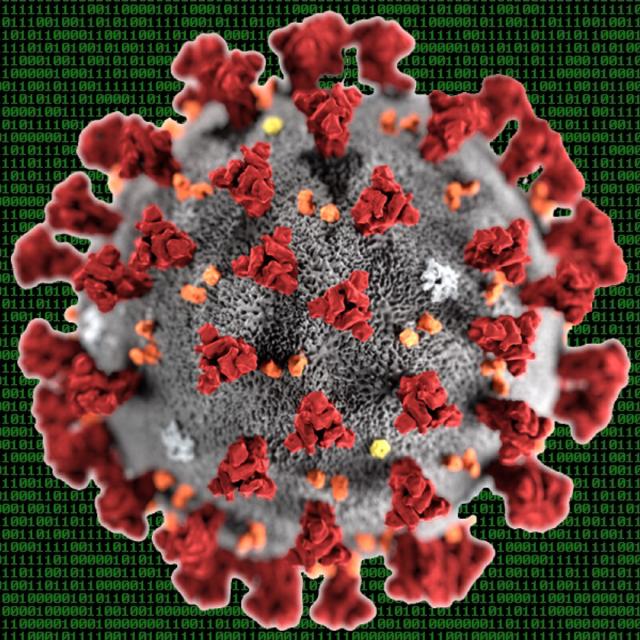
We will look closely at the COVID-19 pandemic, examining the emergence of the SARS-CoV-2 virus, the development of the vaccines, and how social and economic disparities influenced risk during the pandemic. Throughout the course, we will hear from experts in the fields of molecular biology, epidemiology, environmental biology, medicine, and public health to learn how technology and engineering solutions are helping scientists understand, track, and model viruses and disease outbreaks.

Syllabus

WEEK 1
What is a Virus?
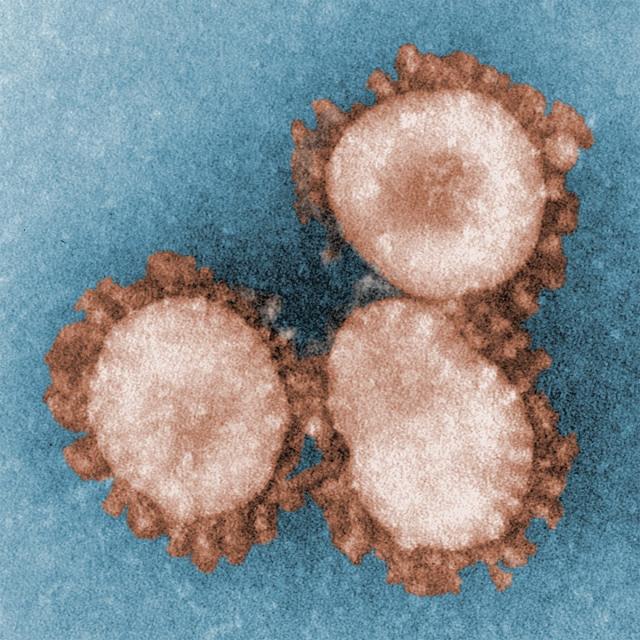
Course author Dr. Rob DeSalle starts by posing a few seminal questions: What is a virus? Are viruses alive? What even is life? While there are no simple answers and much is still unknown, scientists have developed frameworks to understand how viruses fit into the complexity of life on Earth. In the first essay of the course, we cover virus basics: the difference between viruses and microorganisms such as bacteria; viral geometry and structural diversity; and viral life cycles and replication. Next, virologist Dr. Koenraad Van Doorslaer explains how viruses are classified and why this classification is important. When COVID-19 became a pandemic, understanding how viruses are related to one another enabled scientists to quickly identify SARS CoV-2 and its variants. This week’s video explores the connections among humans, viruses, other organisms, and the ecosystems we all inhabit.

WEEK 2
How Do Viruses Make Us Sick?
The key to understanding what a virus is lies in understanding how it replicates itself within its host. Dr. DeSalle explains the three categories of viruses—DNA viruses, RNA viruses, and reverse-transcribing viruses—and their replication cycles. While they employ different strategies, they all produce mRNA, which is translated into proteins that all viruses need to function. Next, Dr. Michael Tessler explains how scientists use genomics and bioinformatics to identify viruses that become pathogenic. Finally, we take a closer look at two viral diseases: HIV and HPV. In one case (HIV), scientists have been working toward a vaccine for more than 40 years and a vaccine is beyond their grasp. In the other case (HPV), a vaccine has successfully prevented cancers for over a decade. In the first of the four-part video series about the making of a COVID-19 vaccine, we set the stage by asking: How do you prepare for a pandemic of a virus that doesn’t yet exist?

WEEK 3
How Do We Fight Viruses?
As we have learned, viruses that cause disease are formidable foes, but our bodies have ways of fighting back. We have an innate immune system that works to stop all invading microbes, and an adaptive immune system that learns how to fight particular ones. We explain some of the mechanisms of this very complex system and the medicines that we use to aid our natural defenses. Dr. Tessler breaks down the different methods that scientists use to identify viruses that have broken through our defenses and made us sick. In the week’s final essay, we meet Dr. Julie Ledgerwood, who oversaw the clinical trials that led to a revolutionary mRNA vaccine for COVID-19. Two videos cover vaccines: how they work and how they were developed and tested.

WEEK 4
How Do Viruses Spread Through Populations?
While diseases have shaped the course of humanity for millennia, we are witnessing the emergence of novel pathogens and pandemics at an unprecedented rate. COVID-19 is at least the seventh pandemic to affect humans in the past century. Why is this? How do pathogens that start off in nonhuman animal species spread to humans? This week we are introduced to Dr. Pallavi Kache and Dr. Neil Vora and the field of disease ecology, which seeks to understand the interactions between pathogens and their hosts in the context of their evolution and environment. They explain how pathogens emerge from nonhuman hosts into human populations and how our increasingly urban environments affect the spread of disease. Then, Dr. Jeffrey Shaman explains how, once a pathogen has infected humans, it then spreads from human to human, and how we measure the dynamics of disease spread. A series of videos explores pandemics from history to the present, and we discuss how we know that the COVID-19 vaccines are safe and effective.

WEEK 5
What Is the Impact of Viral Spread on Populations and How Do We Know?
Computer modeling has been an important tool during the COVID-19 pandemic. Dr. DeSalle explains the process by which epidemiologists use models to monitor the spread of the pandemic, to evaluate efforts to control it, and to guide policymakers as they make decisions about measures like vaccination, closing schools, and allocating healthcare resources. In this week’s case study of Dr. Jude Kong, we learn how modeling helped one community make informed decisions about public health policy during the COVID-19 pandemic and saved lives. Finally, we look at how diseases and pandemics affect different communities differently, and how public health experts are working to address health inequities. In the final part of the video series about the making of a COVID-19 vaccine, we ask how we can use our new knowledge about mRNA technology and health inequities to ensure better outcomes for the future.

WEEK 6
How Do We Manage Future Viral Outbreaks?
We start this week by zooming in on New York City, which was one of the epicenters of the COVID-19 pandemic in early 2020. Officials at the New York City Department of Heath describe what it was like to manage the pandemic on the ground and explain lessons they learned. Then we zoom out to look at the past, present, and future of emerging infectious diseases. Humans have lived with infectious diseases for millenia, but why are there an increasing number of spillover events, in which viruses jump from nonhuman animals to us? What do we know now that could protect us from future outbreaks? In the final essay of the course, Dr. DeSalle answers the question: How can we prepare for future pandemics locally and as a global community, through testing, vaccines, surveillance, and treatment?
Go to Class
MOOC List is learner-supported. When you buy through links on our site, we may earn an affiliate commission.

Related Courses

Global Health at the Human-Animal-Ecosystem Interface (Coursera) Coursera
University of Geneva

Global Health at the Human-Animal-Ecosystem Interface (Coursera)

The University of Geneva, Institute Pasteur, University of Montreal and Centre Virchow-Villermé/University Paris Descartes welcome you to this new MOOC on "Global Health at the Human-Animal-Ecosystem Interface"! Over the next 5 weeks, you will explore and learn about some of the major and current Global Health Challenges at the Human-Animal-Ecosystem Interface: zoonotic emerging infections (e.g. Ebola, Nipah, MERS, Avian Influenza), antimicrobial resistance, neglected tropical diseases (e.g. rabies, leishmaniasis, zoonotic TB), snakebite and other human-animal conflicts etc.

Sep 21st 2026
5-12 Weeks
Immunology: Adaptive Immune System (Coursera) Coursera
Imperial College London

Immunology: Adaptive Immune System (Coursera)

In this course, you will learn about the role of immune responses of the adaptive (acquired) immune system which provides specialised immunity against pathogens. Guided by our researchers in the Department of Immunity and Inflammation, we will take a closer look at the lymphocyte subsets and mechanisms involved in this delayed finely tuned response occurring days to weeks after the initial exposure to microbial antigens.

Sep 21st 2026
5-12 Weeks
Health, Society, and Wellness in COVID-19 Times (Coursera) Coursera
University of Colorado Boulder

Health, Society, and Wellness in COVID-19 Times (Coursera)

You may be encountering a world unlike any other generation. The public health crisis of the COVID-19 pandemic has created a context of pervasive uncertainty, heightened anxiety, and social isolation that overlaps with a critical time of your own learning and development. The COVID-19 pandemic also has exacerbated long-standing inequalities and disparities, and recent events in the United States have laid bare historical and current realities of racism and systemic oppression.

Sep 28th 2026
4 Weeks
Interventions and Calibration (Coursera) Coursera
Imperial College London

Interventions and Calibration (Coursera)

This course covers approaches for modelling treatment of infectious disease, as well as for modelling vaccination. Building on the SIR model, you will learn how to incorporate additional compartments to represent the effects of interventions, such the effect of vaccination in reducing susceptibility. You will learn about ‘leaky’ vaccines and how to model them, as well as different types of vaccine and treatment effects.

Sep 21st 2026
4 Weeks
Public Health in Humanitarian Crises 2 (Coursera) Coursera
Johns Hopkins University

Public Health in Humanitarian Crises 2 (Coursera)

This course, Public Health in Humanitarian Crises 2, addresses public health issues of people affected by disasters, both natural or conflict-related. It discusses the many changes that occur in people’s lives when they are uprooted by a disaster, including many important topics related to humanitarian crises, such as when there is an epidemic a public health emergency; what do we mean with the humanitarian development nexus; what are the basics of disaster epidemiology and surveillance; humanitarian principles; and other very relevant topics. We will explore what humanitarian interventions could look like if we want to mitigate the effects of disasters.

Sep 28th 2026
5-12 Weeks
Hacking COVID-19 — Course 1: Identifying a Deadly Pathogen (Coursera) Coursera
University of California, San Diego

Hacking COVID-19 — Course 1: Identifying a Deadly Pathogen (Coursera)

In this course, you will follow in the footsteps of the bioinformaticians investigating the COVID-19 outbreak by assembling the SARS-CoV-2 genome. Whether you’re new to the world of computational biology, or you’re a bioinformatics expert seeking to learn about its applications in the COVID-19 pandemic, or somewhere in between, this course is for you!

Sep 21st 2026
2 Weeks
Foundations of Public Health Practice: Health Protection (Coursera) Coursera
Imperial College London

Foundations of Public Health Practice: Health Protection (Coursera)

The Health Protection course is the fourth instalment of the wider Foundations of Public Health Practice specialisation from Imperial College London's Global Master of Public Health (MPH). The scope and content of this course has been developed from the ground up by a combined team of academics and practitioners drawing on decades of real-world public health experience as well as deep academic knowledge. Through short video lectures, practitioner interviews and a wide range of interactive activities, learners will be immersed in the world of public health practice.

Sep 21st 2026
3 Weeks
COVID Vaccine Ambassador Training: How to Talk to Parents (Coursera) Coursera
Johns Hopkins University

COVID Vaccine Ambassador Training: How to Talk to Parents (Coursera)

Vaccination is a key strategy for preventing serious illness and death from COVID-19. COVID-19 vaccines are available for children 5 and older, but many parents have questions about vaccinations. This training course prepares parents of school-age children, PTAs, community members, and school staff to be Vaccine Ambassadors and promote vaccine acceptance in their communities. **Free enrollment available until December 31, 2022. Valid for one enrollment per person.**

Sep 21st 2026
1 Week
Reflections from 40 Years Fighting International Epidemics (Coursera) Coursera
Dartmouth College

Reflections from 40 Years Fighting International Epidemics (Coursera)

Reflections on patients, policies, pan-epidemics, prose and medical humanities from a 40-year career fighting epidemics around the world by an infectious disease public health physician. Examples include HIV/AIDS, Anthrax, SARS, MERS, H5N1 and H1N1 influenza, Nipah, Ebola (with MSF 2014), Zika, Plague (with WHO 2017) and COVID-19. Working side-by-side with international colleagues to provide hands-on patient care and to share stories is an expression of medical humanities.

Sep 28th 2026
5-12 Weeks
Hacking COVID-19 — Course 3: Unraveling COVID-19's Origins (Coursera) Coursera
University of California, San Diego

Hacking COVID-19 — Course 3: Unraveling COVID-19's Origins (Coursera)

In this course, you will follow in the footsteps of the bioinformaticians investigating the COVID-19 outbreak by investigating the origins of SARS-CoV-2. Whether you’re new to the world of computational biology, or you’re a bioinformatics expert seeking to learn about its applications in the COVID-19 pandemic, or somewhere in between, this course is for you!

Sep 21st 2026
2 Weeks
Building on the SIR Model (Coursera) Coursera
Imperial College London

Building on the SIR Model (Coursera)

The other two courses in this specialisation require you to perform deterministic modelling - in other words, the epidemic outcome is predictable as all parameters are fully known. However, this course delves into the many cases – especially in the early stages of an epidemic – where chance events can be influential in the future of an epidemic.

Sep 21st 2026
4 Weeks
An Introduction to Global Health (Coursera) Coursera
University of Copenhagen

An Introduction to Global Health (Coursera)

This course will provide you with an overview of the most important health challenges facing the world today. You will gain insight into how challenges have changed over time, we will discuss the likely determinants of such changes and examine future projections. Successful international strategies and programs promoting human health will be highlighted and global health governance structures will be mapped and the role of the key actors explored.

Sep 28th 2026
5-12 Weeks