EdX

Stability and Design of Structural Members (edX)

Offered by Purdue University, PurdueX,
Stability and Design of Structural Members (edX)

Learn fundamental concepts of buckling analysis and design of structural members for stability concerns for beam and column elements. Buckling can be a controlling limit state for many structural elements. This course will cover the intersection of buckling and member design – specifically the behavior of columns and beam elements.

Class Deals by MOOC List - Click here and see EdX's Active Discounts, Deals, and Promo Codes.

Students will leave this course with an in-depth knowledge of governing differential equations for stability analysis of column and beam elements. This course is best suited for students with an undergraduate civil engineering background including a structural analysis course and will build on these concepts.
Students will learn from an awarded structural engineering researcher with over 20 years of experience in the field. Professor Varma focuses on teaching through exploring example problems and applications of fundamental concepts, encouraging his students to both understand the principles of structural stability and be able to apply these concepts in realistic design scenarios.

What you'll learn

  • Theoretical behavior of beam and column elements
  • Origin of code equations for beam and column design
  • Application of theory and code equations for beam and column design

Syllabus

Week 1: Inelastic Buckling of Columns
Introduction to inelastic buckling of columns including the effects of residual stresses and geometric imperfections and the tangent modulus theory.
Week 2: Column Inelastic Buckling Continued
Discuss the history of inelastic column buckling and the implications of the tangent modulus theory.
Week 3: Column Design
Detail column design using the tangent modulus theory and current US and international column bucking curves.
Week 4: Beam Buckling
Introduce beam buckling including solutions using the finite difference and inverse iteration methods. Discuss the effect of uniform moment distribution for different end conditions.
Week 5: Beam Design
Discuss the effect of non-uniform moment and beam design.
Go to Class
MOOC List is learner-supported. When you buy through links on our site, we may earn an affiliate commission.

Related Courses

Groundscape Architecture Lab. Carpark Futures (edX) EdX
École Polytechnique Fédérale de Lausanne,EPFLx

Groundscape Architecture Lab. Carpark Futures (edX)

Developing architectural and design knowledge for the urban underground. ‘Groundscape’ is a new word coined by architect Dominique Perrault to integrate underground spaces into architecture knowledge. The general focus of this course is to provide students with underground design strategies that respond to contemporary urban challenges. Indeed, The underground of cities has become one of the most innovative and radical terrains of experimentation for future urban development by providing much needed spaces capable of optimizing existing city centers, by making them more resilient, responsible, durable and beautiful.

Self Paced
Self-Paced
Introduction to 3D Modeling (Coursera) Coursera
University of Michigan

Introduction to 3D Modeling (Coursera)

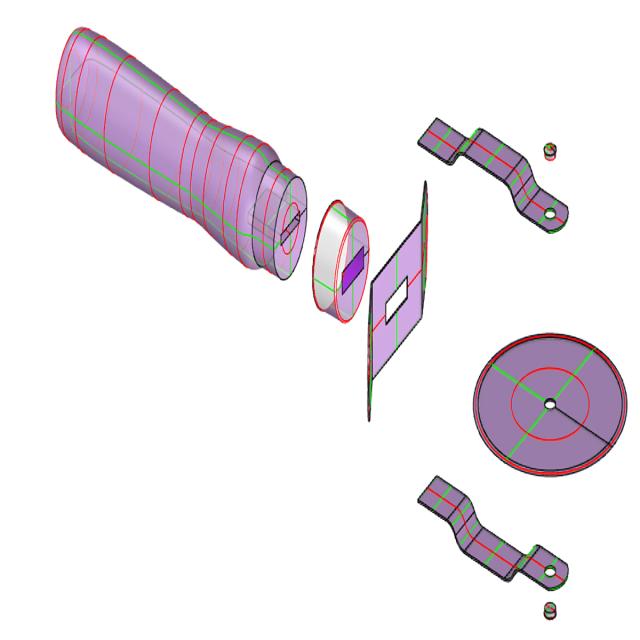
On this four-week practical course from the University of Michigan, you’ll not only learn how to use the Rhino software to create your 3D models, but you’ll also gain basic design skills to help bring your imagination to life. This course will guide you through 3D modeling within Rhino, so you’ll cover the fundamentals of the software as well as 3D modeling in general. You’ll first look at how to navigate the user interface and the different tools that you’ll be using to create models throughout this course. You’ll familiarize yourself with the 3D space and 3D objects before jumping straight in to create your own objects and building blocks.

Oct 5th 2026
4 Weeks
Elastic Stability and Behavior of Members (edX) EdX
Purdue University,PurdueX

Elastic Stability and Behavior of Members (edX)

Learn elastic stability concepts including methods to evaluate stability including bifurcation method and energy methods. Learn the differential equations governing behavior of structural members, and use them for column buckling analysis. Stability is a critical design limit state for structural members and systems.

No sessions available
5-12 Weeks
Learning Experience Design: Orientation to the Profession (Coursera) Coursera
University of Michigan

Learning Experience Design: Orientation to the Profession (Coursera)

In Orientation to the Profession, you’ll be introduced to the “big ideas” of LXD. Begin with the essential aspects of the design process, from ideation to evaluation. During this section, you’ll also take a brief look at learning theories and design frameworks that help LXDs move from an initial concept to a completed course.

Sep 21st 2026
4 Weeks
Human-Computer Interaction IV: Evaluation, Agile Methods & Beyond (edX) EdX
Georgia Institute of Technology,GTx

Human-Computer Interaction IV: Evaluation, Agile Methods & Beyond (edX)

Complete your understand of the design life cycle by learning to take interface ideas, prototype them quickly, and evaluate them with real users. Finally, tie principles and methods together and learn the next steps you could take in HCI. This course takes you through the last nine lessons of CS6750: Human-Computer Interaction as taught in the Georgia Tech Online Master of Science in Computer Science program.

Self Paced
Self-Paced
Revit for Structural Engineers (edX) EdX
University System of Maryland - USM,USMx

Revit for Structural Engineers (edX)

Learn how to model basic building structural systems in Autodesk Revit. Building Information Modeling (BIM) has initiated a sea change in the way that buildings are designed and constructed. Old methods rooted in two-dimensional thinking have been pushed aside to make way for new three-dimensional approaches that leverage the latest advancements in computing technology.

Self Paced
Self-Paced
AI Materials (Coursera) Coursera
Korea Advanced Institute of Science and Technology - KAIST

AI Materials (Coursera)

Learn about the materials that have advanced the performance of artificial intelligence, and the machine learning models that could help accelerate the design and development of novel materials. This course defines artificial intelligence (AI) as a machine to which some or all of the functions of the human brain have been delegated. It highlights the need, and explains in an easy-to-understand way how machine learning from artificial intelligence can dramatically accelerate the development of new materials.

Oct 5th 2026
5-12 Weeks
Design and Conduct of Clinical Trials (Coursera) Coursera
Johns Hopkins University

Design and Conduct of Clinical Trials (Coursera)

In this course, you’ll learn how to design and carry out clinical trials. Each design choice has implications for the quality and validity of your results. This course provides you and your team with essential skills to evaluate options, make good design choices, and implement them within your trial. You’ll learn to control for bias, randomize participants, mask treatments and outcomes, identify errors, develop and test hypotheses, and define appropriate outcomes.

Sep 21st 2026
4 Weeks
Elements of Structures (edX) EdX
MIT,MITx

Elements of Structures (edX)

An introductory course on statics and on the mechanical behavior of deformable structural elements like beams, shafts and rods. 2.01x introduces principles of structural analysis and strength of materials in applications to three essential types of load-bearing elements: bars in axial loading, axisymmetric shafts in torsion, and symmetric beams in bending.

No sessions available
5-12 Weeks
The Art of Structural Engineering: Bridges (edX) EdX
Princeton University

The Art of Structural Engineering: Bridges (edX)

Learn about bridge design and discover how structural engineering is a creative discipline and art form. With a focus on some significant bridges built since the industrial revolution, the course illustrates how engineering is a creative discipline and can become art. We also show the influence of the economic and social context in bridge design and the interplay between forces and form.

No sessions available
Self-Paced