FUN

Se former pour l’ICN Informatique et Création Numérique (FUN)

Offered by INRIA,
Se former pour l’ICN Informatique et Création Numérique (FUN)

Un MOOC d’initiation à l'Informatique et à la Création Numérique, pour aider les enseignants de l'option ICN au Lycée et au delà tout citoyen ou citoyenne désirant être éclairé sur ces sujets. Les lycéennes et lycéens de toutes sections commencent à apprendre de l'informatique pour ne plus être de simples consommateurs mais devenir créateurs du numérique : c’est l’enseignement de l'option "Informatique et Création Numérique, I.C.N.", de la seconde à la terminale pour toutes les sections.

Comment aider les enseignants d'I.C.N ? Quels savoirs partager avec eux ? Quelles ressources sélectionner ? Quelles compétences leur transmettre pour qu'ils puissent assurer ce nouvel enseignement ? Ce sera un MOOC un peu particulier : un endroit de partage et d'entraide, où chacune et chacun construira son parcours selon ses besoins et ce qu'il sait déjà, un espace qui va évoluer avec le temps ; on le commence quand on veut et on y revient aussi longtemps qu'on en a besoin.

Le N ? Des grains de culture scientifique pour découvrir le numérique et ses sciences dans le réel, lié au quotidien de ces jeunes. Montrer où sont les systèmes numériques et ce qu'ils sont exactement, les données et les algorithmes qui nous entourent, les impacts sociétaux des mutations qui en découlent, leur montrer tant les opportunités que les risques (ex: crowdsourcing, nouveaux contacts sociaux, ...) qui sont devant elles et eux.

Le I ? Commencer à apprendre l'informatique et ses fondements. On part ici de l'hypothèse (vraie pour quelques années) que presque tout le monde débute en informatique, on a donc à découvrir, le codage de l'information, l'algorithmique et la programmation, les systèmes numériques (les réseaux, les bases de données). Vous croyez ne rien savoir ou tout savoir ? Venez voir comme c'est accessible !

Le C ? S'outiller pour accompagner les initiatives de création et les projets scientifiques des élèves. L'ICN est une vraie formation par le faire à travers des projets. On partagera une méthode pour faire des projets de création numérique, et des leviers pour encadrer ces jeunes en situation de projets.

What you will learn
At the end of this course, you will be able to:

  • transmettre une culture des sciences du numérique aux jeunes ou à des proches et expliquer ce que sont leurs applications dans le quotidien.
  • connaître les fondements du numérique
  • s'outiller pour accompagner les activités de création numérique et les projets scientifiques des élèves

Plan du cours

Partie I
Le numérique et ses sciences dans le réel

  • Voir les entrailles matérielles et logicielles d'un objet numérique
  • Le Web et ses usages sociétaux : les réseaux sociaux et le cloud
  • Robotique et intelligence artificielle
  • L'informatique n'appartient pas qu'aux informaticiens

Partie 2
L’informatique et ses fondements

  • Le codage binaire
  • L'algorithmique
  • La programmation
  • L' architecture des ordinateurs et des réseaux

Partie 3
Créer des projets pour l'ICN

  • Pour faire un site web interactif
  • Créer un jeu vidéo
  • Du selfie à l'oeuvre d'art interactive
Go to Class
MOOC List is learner-supported. When you buy through links on our site, we may earn an affiliate commission.

Related Courses

Probabilistic Graphical Models 3: Learning (Coursera) Coursera
Stanford University

Probabilistic Graphical Models 3: Learning (Coursera)

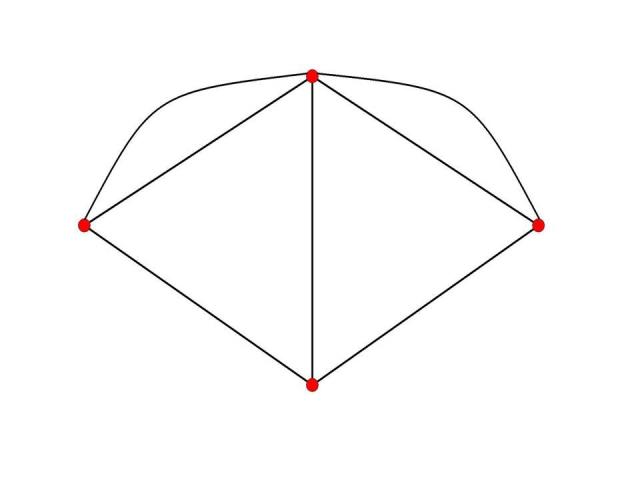
Probabilistic graphical models (PGMs) are a rich framework for encoding probability distributions over complex domains: joint (multivariate) distributions over large numbers of random variables that interact with each other. These representations sit at the intersection of statistics and computer science, relying on concepts from probability theory, graph algorithms, machine learning, and more. They are the basis for the state-of-the-art methods in a wide variety of applications, such as medical diagnosis, image understanding, speech recognition, natural language processing, and many, many more. They are also a foundational tool in formulating many machine learning problems.

Nov 23rd 2026
5-12 Weeks
Network Dynamics of Social Behavior (Coursera) Coursera
University of Pennsylvania

Network Dynamics of Social Behavior (Coursera)

How do revolutions emerge without anyone expecting them? How did social norms about same sex marriage change more rapidly than anyone anticipated? Why do some social innovations take off with relative ease, while others struggle for years without spreading? More generally, what are the forces that control the process of social evolution –from the fashions that we wear, to our beliefs about religious tolerance, to our ideas about the process of scientific discovery and the best ways to manage complex research organizations?

Nov 23rd 2026
5-12 Weeks
Introduction à HTML5 - Animations et jeux (FUN) FUN
INSA

Introduction à HTML5 - Animations et jeux (FUN)

Vous avez envie de développer des animations ou des petits jeux pour le web, mais sans trop savoir comment vous y prendre ; vous avez peut-être entendu parler d'HTML5, mais vous n'avez pas de connaissance particulière des langages web. En revanche, vous avez quelques notions d'algorithmique et peut-être que vous programmez déjà un peu. Ce MOOC est pour vous. Mais si vous avez déjà une expérience de développement web, ce MOOC vous intéressera également, car il vous propose de découvrir quelques unes des nouveautés introduites par HTML5 et de les mettre en oeuvre de façon efficace sur un projet d'animation ou de jeu.

No sessions available
5-12 Weeks
Introduction to Functional Programming in OCaml (FUN) FUN
Université Paris Diderot

Introduction to Functional Programming in OCaml (FUN)

Functional programming is a programming paradigm which is rapidly attracting interest from a broad range of developers because it allows to write expressive, concise and elegant programs. In this course you will discover the power of Functional Programming, using the OCaml language to write concise, efficient and elegant programs.

No sessions available
5-12 Weeks
Analysis of Algorithms (Coursera) Coursera
Princeton University

Analysis of Algorithms (Coursera)

This course teaches a calculus that enables precise quantitative predictions of large combinatorial structures. In addition, this course covers generating functions and real asymptotics and then introduces the symbolic method in the context of applications in the analysis of algorithms and basic structures such as permutations, trees, strings, words, and mappings.

Nov 23rd 2026
5-12 Weeks
Approximation Algorithms Part II (Coursera) Coursera
École normale supérieure

Approximation Algorithms Part II (Coursera)

This is the continuation of Approximation algorithms, Part 1. Here you will learn linear programming duality applied to the design of some approximation algorithms, and semidefinite programming applied to Maxcut. By taking the two parts of this course, you will be exposed to a range of problems at the foundations of theoretical computer science, and to powerful design and analysis techniques.

Nov 23rd 2026
4 Weeks
Statistical Mechanics: Algorithms and Computations (Coursera) Coursera
École normale supérieure

Statistical Mechanics: Algorithms and Computations (Coursera)

In this course you will learn a whole lot of modern physics (classical and quantum) from basic computer programs that you will download, generalize, or write from scratch, discuss, and then hand in. Join in if you are curious (but not necessarily knowledgeable) about algorithms, and about the deep insights into science that you can obtain by the algorithmic approach.

Nov 23rd 2026
5-12 Weeks
Remote Sensing Image Acquisition, Analysis and Applications (Coursera) Coursera
UNSW Sydney - University of New South Wales

Remote Sensing Image Acquisition, Analysis and Applications (Coursera)

Welcome to Remote Sensing Image Acquisition, Analysis and Applications, in which we explore the nature of imaging the earth's surface from space or from airborne vehicles. This course covers the fundamental nature of remote sensing and the platforms and sensor types used. It also provides an in-depth treatment of the computational algorithms employed in image understanding, ranging from the earliest historically important techniques to more recent approaches based on deep learning.

Nov 30th 2026
13-24 Weeks
Social and Economic Networks: Models and Analysis (Coursera) Coursera
Stanford University

Social and Economic Networks: Models and Analysis (Coursera)

Learn how to model social and economic networks and their impact on human behavior. How do networks form, why do they exhibit certain patterns, and how does their structure impact diffusion, learning, and other behaviors? We will bring together models and techniques from economics, sociology, math, physics, statistics and computer science to answer these questions.

Nov 23rd 2026
5-12 Weeks