The Unix Workbench (Coursera)

The Unix Workbench (Coursera)

Unix forms a foundation that is often very helpful for accomplishing other goals you might have for you and your computer, whether that goal is running a business, writing a book, curing disease, or creating the next great app. The means to these goals are sometimes carried out by writing software. Software can’t be mined out of the ground, nor can software seeds be planted in spring to harvest by autumn. Software isn’t produced in factories on an assembly line. Software is a hand-made, often bespoke good. If a software developer is an artisan, then Unix is their workbench.

Class Deals by MOOC List - Click here and see Coursera's Active Discounts, Deals, and Promo Codes.

Unix provides an essential and simple set of tools in a distraction-free environment. Even if you’re not a software developer learning Unix can open you up to new methods of thinking and novel ways to scale your ideas. This course is intended for folks who are new to programming and new to Unix-like operating systems like macOS and Linux distributions like Ubuntu. Most of the technologies discussed in this course will be accessed via a command line interface. Command line interfaces can seem alien at first, so this course attempts to draw parallels between using the command line and actions that you would normally take while using your mouse and keyboard. You’ll also learn how to write little pieces of software in a programming language called Bash, which allows you to connect together the tools we’ll discuss. My hope is that by the end of this course you be able to use different Unix tools as if they’re interconnecting Lego bricks.

Syllabus

WEEK 1
Unix and Command Line Basics
This week we'll help you get access to Unix (you may already be using it), and you'll start using the command line. We'll draw parallels between using your mouse and keyboard with your computer's graphics versus only using the command line.

WEEK 2
Working with Unix
Now we'll get into the power of different Unix tools. We'll walk through several scenarios where you could use Unix to perform tasks at a much faster speed than you would be able to normally.

WEEK 3
Bash Programming
During this week we'll unleash the command line's usefulness as a programming language. By the end of this week you'll be writing your own little computer programs that you can use on the command line.

WEEK 4
Git and GitHub
First you'll learn how to use Git, which is like "track changes" for your code and plain text files, but much more powerful. We'll then explore how to use Git with GitHub, a social coding network where you can publish you projects and explore other's code.
Nephology
Finally we'll set up a cloud computing environment so we can explore how computers communicate with each other using the internet.

Go to Class
MOOC List is learner-supported. When you buy through links on our site, we may earn an affiliate commission.

Related Courses

Introdução ao Desenvolvimento de Aplicativos Android (Coursera) Coursera
Universidade Estadual de Campinas - UNICAMP

Introdução ao Desenvolvimento de Aplicativos Android (Coursera)

Este curso tem como objetivo propiciar um primeiro contato com a Programação para Dispositivos Móveis que operam na plataforma Android. O Android Studio será utilizado como ambiente de desenvolvimento desde o início do curso e você receberá dicas de como obter ajuda quando alguma tarefa estiver consumindo mais tempo do que o necessário. Ao solucionar problemas por conta própria, você irá adquirir a autonomia necessária para concluir projetos de programação.

Oct 5th 2026
5-12 Weeks
Alibaba Cloud Native Solutions and Container Service (Coursera) Coursera
Alibaba Cloud Academy

Alibaba Cloud Native Solutions and Container Service (Coursera)

This course demonstrates how to use Alibaba Cloud Container Service and Container Registry Service to design and develop architectures related to cloud native applications, services, and security solutions. This course helps you understand the basic concepts of cloud native, the commercial implementation of container technology, and Kubernetes technology as well as extra benefits provided by Alibaba Cloud. This course is intended to prepare users to take the Alibaba Cloud Native ACA certification exam.

Oct 5th 2026
5-12 Weeks
Computer Science: Algorithms, Theory, and Machines (Coursera) Coursera
Princeton University

Computer Science: Algorithms, Theory, and Machines (Coursera)

This course introduces the broader discipline of computer science to people having basic familiarity with Java programming. It covers the second half of our book Computer Science: An Interdisciplinary Approach (the first half is covered in our Coursera course Computer Science: Programming with a Purpose, to be released in the fall of 2018). Our intent is to demystify computation and to build awareness about the substantial intellectual underpinnings and rich history of the field of computer science.

Oct 5th 2026
5-12 Weeks
Estruturas de dados Python (Coursera) Coursera
University of Michigan

Estruturas de dados Python (Coursera)

Este curso apresentará as estruturas de dados centrais da linguagem de programação Python. Vamos superar os fundamentos da programação de procedimentos e explorar como podemos usar as estruturas de dados integradas do Python, como listas, dicionários e tuplas, para realizar análises de dados cada vez mais complexas. Este curso cobrirá os capítulos 6 a 10 do livro “Python para Todos”. Este curso aborda o Python 3.

Oct 5th 2026
5-12 Weeks
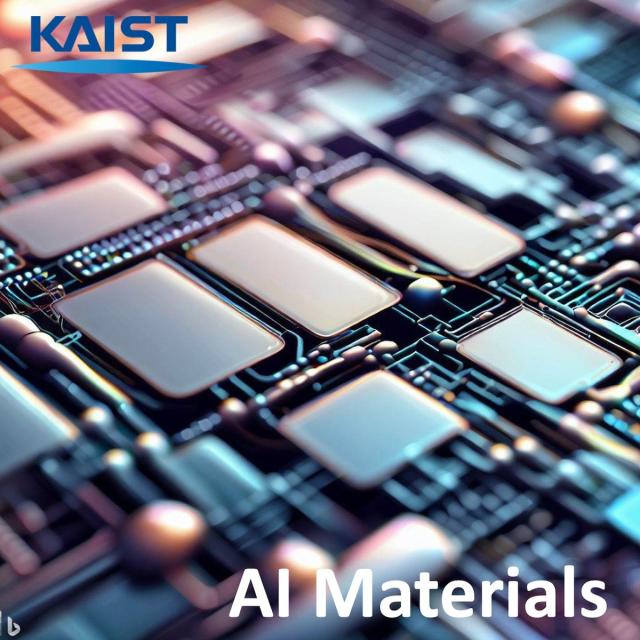
AI Materials (Coursera) Coursera
Korea Advanced Institute of Science and Technology - KAIST

AI Materials (Coursera)

Learn about the materials that have advanced the performance of artificial intelligence, and the machine learning models that could help accelerate the design and development of novel materials. This course defines artificial intelligence (AI) as a machine to which some or all of the functions of the human brain have been delegated. It highlights the need, and explains in an easy-to-understand way how machine learning from artificial intelligence can dramatically accelerate the development of new materials.

Oct 5th 2026
5-12 Weeks
Functional Program Design in Scala (Scala 2 version) (Coursera) Coursera
École Polytechnique Fédérale de Lausanne

Functional Program Design in Scala (Scala 2 version) (Coursera)

In this course you will learn how to apply the functional programming style in the design of larger Scala applications. You'll get to know important new functional programming concepts, from lazy evaluation to structuring your libraries using monads. We'll work on larger and more involved examples, from state space exploration to random testing to discrete circuit simulators. You’ll also learn some best practices on how to write good Scala code in the real world. Finally, you will learn how to leverage the ability of the compiler to infer values from types.

Oct 5th 2026
5-12 Weeks
Principles of Computing (Part 2) (Coursera) Coursera
Rice University

Principles of Computing (Part 2) (Coursera)

This two-part course introduces the basic mathematical and programming principles that underlie much of Computer Science. Understanding these principles is crucial to the process of creating efficient and well-structured solutions for computational problems. To get hands-on experience working with these concepts, we will use the Python programming language. The main focus of the class will be weekly mini-projects that build upon the mathematical and programming principles that are taught in the class.

Oct 5th 2026
4 Weeks