Desarrollo de Videojuegos en Unity: Una Introducción (Coursera)

Desarrollo de Videojuegos en Unity: Una Introducción (Coursera)

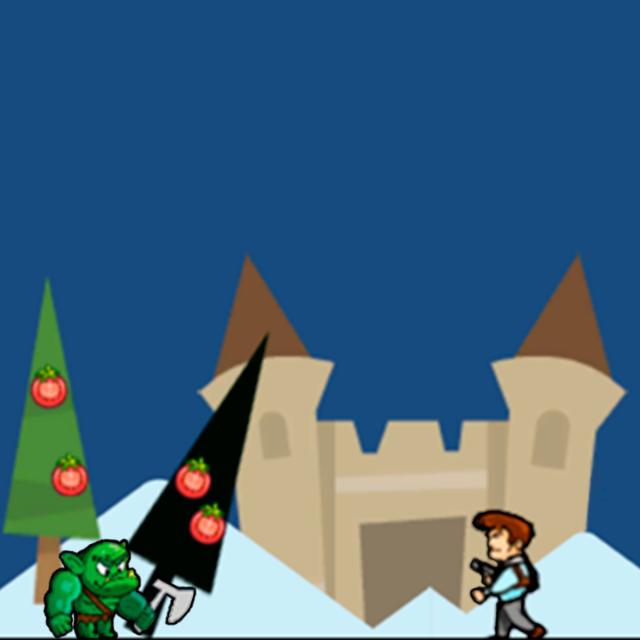
Bienvenidos a esta introducción al desarrollo de videojuegos en Unity! Al finalizar este curso habrás desarrollado un juego 2D sencillo, y conocerás los conceptos necesarios para hacer este desarrollo desde el punto de vista de un programador en Unity.

Class Deals by MOOC List - Click here and see Coursera's Active Discounts, Deals, and Promo Codes.

Aprenderás durante 8 semanas cómo crear la escena principal de un juego, cómo agregar código que defina el comportamiento de los personajes, cómo reflejar el estado del juego en elementos de interfaz y cómo publicar dicho prototipo en la web. Usamos Unity, un motor de juegos muy popular, con una gran cantidad de recursos disponibles y con una comunidad muy activa.
Tengas o no tengas una idea de juego, este curso te permitirá adquirir las habilidades básicas para desarrollar juegos 2D. Este curso es también útil si quieres hacer un juego para tu trabajo, investigación, ó por hobby, sea el tema que sea. Los conceptos acá aprendidos son también útiles para el desarrollo de simuladores, juegos educativos, y libros interactivos.
Es importante que tengas conocimientos básicos de programación en un lenguaje orientado por objetos como Python, Java o C#. Existen varios cursos en Coursera que puedes tomar con este propósito. Vamos a programar en C# dentro de Unity, y los conceptos en otros lenguajes orientados por objeto van a ser útiles para nuestro desarrollo en este curso.
Este curso es parte del Programa Especializado Coursera en desarrollo de videojuegos, en la cual aprenderás a diseñar y programar cierto tipo de videojuegos, comprender el mercado actual y lo que se requiere para crear un juego comercialmente exitoso. Estos cursos están inspirados en el Programa Especializado en Desarrollo de Videojuegos en la Universidad de los Andes, un programa de un año que forma los futuros productores, programadores, diseñadores y músicos en el sector.
Course 1 of 5 in the Desarrollo y Diseño de Videojuegos Specialization.

Syllabus

WEEK 1
Introducción y definición de un juego en 2D
Bienvenido al curso introductorio sobre Desarrollo de Videojuegos haciendo uso de Unity, la cual es una herramienta poderosa para crear y publicar juegos digitales, de la cual hay disponible una versión personal gratuita. Espero que nos acompañes en los siguientes 8 módulos desarrollando un nivel sencillo de tu propio juego en 2D, y aprendiendo conceptos fundamentales para el desarrollo de videojuegos en Unity. En este primer módulo vas a familiarizarte con los conceptos básicos para la creación de un nuevo proyecto 2D en Unity, empezando por la escena principal de tu propio juego.

WEEK 2
Física y movimiento 2D
¡Hola! En este módulo vas a profundizar sobre los conceptos de programación en Unity y hacer uso del sistema Mecanim para animación. Puntualmente, vas a agregar el comportamiento básico, basado en gravedad y colisiones, del personaje principal y de los demás elementos en tu escena 2D. ¡Suerte con tus desarrollos!

WEEK 3
Integración de animaciones
En este módulo llevarás tu proyecto de desarrollo de un video juego en 2D un paso más allá, al integrar las animaciones de tus personajes a su movimiento, definiéndolos en scripts. Con esto, tendrás una primera versión de tu juego con elementos animados... ¡Suerte y que te rinda!

WEEK 4
Interfaz y comportamiento (1)
Hemos llegado a la mitad del curso. ¡Felicitaciones! En este módulo agregarás a tu proyecto elementos de interfaz (sistema de comunicación hombre-máquina), los cuales le permiten al jugador conocer qué tan bien le está yendo en el juego. También comienzas a hacer uso de mecanismos para que los elementos del juego interactúen entre sí. Comenzarás a agregarle emoción a tu juego. !Suerte!

WEEK 5
Comportamiento (2)
Ya pasaste ¡la mitad del curso!. Complementa ahora tu juego 2D con el código necesario para agregar interacciones entre los elementos del espacio de juego. Agregarás varios tipos de interacción en el juego, por ejemplo entre los personajes y entre el jugador y los personajes. ¡Ya se puede sentir la adrenalina al jugarlo!. !Que te rinda!

WEEK 6
Ajustes en el juego: Sonido - Analytics - Publicación
Esta semana ¡terminas la primera versión del juego 2D que estás creando! En este módulo retocas los últimos detalles antes de publicar tu juego, como por ejemplo, el sonido. Agregarás código para saber cómo se utiliza el juego. También publicarás una versión de tu juego en la Web, para que tus compañeros y el mundo en general lo puedan disfrutar. ¡Felicitaciones por tu esfuerzo hasta ahora! ¡Falta poco!

WEEK 7
Experiencia de juego
¡En este módulo te dedicarás a jugar! Vamos a probar los juegos de los demás y darles retroalimentación positiva sobre su juego. Esta sesión nos servirá para obtener datos de analíticas de los juegos y para ver qué es lo más urgente a mejorar. ¡Suerte!

WEEK 8
Análisis de información del juego
Has llegado al último módulo de nuestro curso. En este módulo podrás analizar la información recopilada a partir del uso de tu juego, para derivar ideas acerca de qué cosas es necesario mejorar en él. Con este módulo terminas esta experiencia de aprendizaje, en la cual has desarrollado un juego 2D completo y lo has publicado ¡Felicitaciones!

Go to Class
MOOC List is learner-supported. When you buy through links on our site, we may earn an affiliate commission.

Related Courses

Computer Science: Programming with a Purpose (Coursera) Coursera
Princeton University

Computer Science: Programming with a Purpose (Coursera)

The basis for education in the last millennium was “reading, writing, and arithmetic;” now it is reading, writing, and computing. Learning to program is an essential part of the education of every student, not just in the sciences and engineering, but in the arts, social sciences, and humanities, as well. Beyond direct applications, it is the first step in understanding the nature of computer science’s undeniable impact on the modern world.

Oct 5th 2026
5-12 Weeks
IBM z/OS Rexx Programming (Coursera) Coursera
IBM

IBM z/OS Rexx Programming (Coursera)

This course is designed to teach you the basic skills required to write programs using the REXX language in z/OS. The course covers the TSO extensions to REXX and interaction with other environments such as the MVS console, running REXX in batch jobs, and compiling REXX. A total of 11 hands-on labs on an IBM Z server (via remote Skytap access) are part of this course.

Oct 5th 2026
5-12 Weeks
Applied Text Mining in Python (Coursera) Coursera
University of Michigan

Applied Text Mining in Python (Coursera)

This course will introduce the learner to text mining and text manipulation basics. The course begins with an understanding of how text is handled by python, the structure of text both to the machine and to humans, and an overview of the nltk framework for manipulating text. The second week focuses on common manipulation needs, including regular expressions (searching for text), cleaning text, and preparing text for use by machine learning processes. The third week will apply basic natural language processing methods to text, and demonstrate how text classification is accomplished. The final week will explore more advanced methods for detecting the topics in documents and grouping them by similarity (topic modelling).

Oct 12th 2026
4 Weeks
Computer Science: Algorithms, Theory, and Machines (Coursera) Coursera
Princeton University

Computer Science: Algorithms, Theory, and Machines (Coursera)

This course introduces the broader discipline of computer science to people having basic familiarity with Java programming. It covers the second half of our book Computer Science: An Interdisciplinary Approach (the first half is covered in our Coursera course Computer Science: Programming with a Purpose, to be released in the fall of 2018). Our intent is to demystify computation and to build awareness about the substantial intellectual underpinnings and rich history of the field of computer science.

Oct 5th 2026
5-12 Weeks
Big Data Analysis with Scala and Spark (Coursera) Coursera
École Polytechnique Fédérale de Lausanne

Big Data Analysis with Scala and Spark (Coursera)

Manipulating big data distributed over a cluster using functional concepts is rampant in industry, and is arguably one of the first widespread industrial uses of functional ideas. This is evidenced by the popularity of MapReduce and Hadoop, and most recently Apache Spark, a fast, in-memory distributed collections framework written in Scala. In this course, we'll see how the data parallel paradigm can be extended to the distributed case, using Spark throughout.

Oct 12th 2026
4 Weeks
An Introduction to Interactive Programming in Python (Part 1) (Coursera) Coursera
Rice University

An Introduction to Interactive Programming in Python (Part 1) (Coursera)

This two-part course is designed to help students with very little or no computing background learn the basics of building simple interactive applications. Our language of choice, Python, is an easy-to learn, high-level computer language that is used in many of the computational courses offered on Coursera. To make learning Python easy, we have developed a new browser-based programming environment that makes developing interactive applications in Python simple.

Oct 5th 2026
5-12 Weeks
Introduction to Software, Programming, and Databases (Coursera) Coursera
IBM

Introduction to Software, Programming, and Databases (Coursera)

There are many types of software and understanding software can be overwhelming. This course aims to help you understand more about the types of software and how to manage software from an information technology (IT) perspective. This course will help you understand the basics of software, cloud computing, web browsers, development and concepts of software, programming languages, and database basics.

Oct 12th 2026
5-12 Weeks
Foundations of Data Science: K-Means Clustering in Python (Coursera) Coursera
University of London,Goldsmiths, University of London

Foundations of Data Science: K-Means Clustering in Python (Coursera)

This MOOC, designed by an academic team from Goldsmiths, University of London, will quickly introduce you to the core concepts of Data Science to prepare you for intermediate and advanced Data Science courses. It focuses on the basic mathematics, statistics and programming skills that are necessary for typical data analysis tasks.

Oct 5th 2026
5-12 Weeks