Programming Mobile Applications for Android Handheld Systems: Part 1 (Coursera)

Programming Mobile Applications for Android Handheld Systems: Part 1 (Coursera)

This course introduces you to the design and implementation of Android applications for mobile devices. You will develop an app from scratch, assuming a basic knowledge of Java, and learn how to set up Android Studio, work with various Activities and create simple user interfaces to make your apps run smoothly.

Class Deals by MOOC List - Click here and see Coursera's Active Discounts, Deals, and Promo Codes.

Syllabus

WEEK 1: Android Platform and Development Environment
WEEK 2: Application Fundamentals and the Activity Class
WEEK 3: Intents, Permissions, and Fragments
WEEK 4: User Interface Classes
WEEK 5: Build From Scratch Assignment

Go to Class
MOOC List is learner-supported. When you buy through links on our site, we may earn an affiliate commission.
Related Courses

VLSI CAD Part I: Logic (Coursera) Coursera
University of Illinois at Urbana-Champaign

VLSI CAD Part I: Logic (Coursera)

A modern VLSI chip has a zillion parts -- logic, control, memory, interconnect, etc. How do we design these complex chips? Answer: CAD software tools. Learn how to build thesA modern VLSI chip is a remarkably complex beast: billions of transistors, millions of logic gates deployed for computation and control, big blocks of memory, embedded blocks of pre-designed functions designed by third parties (called “intellectual property” or IP blocks). How do people manage to design these complicated chips? Answer: a sequence of computer aided design (CAD) tools takes an abstract description of the chip, and refines it step-wise to a final design.

Sep 21st 2026
5-12 Weeks
Open Source Programming - Master's (Coursera) Coursera
Illinois Tech

Open Source Programming - Master's (Coursera)

Contemporary open-source programming languages and frameworks are presented in this course. Students will consider design and development topics in system, graphical user interface, network, and web programming. Dynamic scripting languages are covered using object-oriented, concurrent, and functional programming paradigms. Concepts gained throughout the course are reinforced with numerous exercises which will culminate in an open-source programming project.

Sep 28th 2026
5-12 Weeks
Introduction and Programming with IoT Boards (Coursera) Coursera
Pohang University of Science and Technology - POSTECH

Introduction and Programming with IoT Boards (Coursera)

Internet of Things (IoT) is an emerging area of information and communications technology (ICT) involving many disciplines of computer science and engineering including sensors/actuators, communications networking, server platforms, data analytics and smart applications. IoT is considered to be an essential part of the 4th Industrial Revolution along with AI and Big Data. This course will be very useful to senior undergraduate and graduate students as well as engineers who are working in the industry.

Sep 28th 2026
5-12 Weeks
Programação para todos (Conceitos básicos de Python) (Coursera) Coursera
University of Michigan

Programação para todos (Conceitos básicos de Python) (Coursera)

Este curso tem como objetivo ensinar a todos os conceitos básicos de programação de computadores usando Python. Abordamos o básico de como criar um programa a partir de uma série de instruções simples em Python. O curso não tem pré-requisitos e evita tudo, exceto a matemática mais simples. Qualquer pessoa com experiência moderada em computadores deve ser capaz de dominar os materiais deste curso. Este curso abordará os capítulos 1 ao 5 do livro “Python para Todos”.

Sep 21st 2026
5-12 Weeks
VLSI CAD Part II: Layout (Coursera) Coursera
University of Illinois at Urbana-Champaign

VLSI CAD Part II: Layout (Coursera)

A modern VLSI chip is a remarkably complex beast: billions of transistors, millions of logic gates deployed for computation and control, big blocks of memory, embedded blocks of pre-designed functions designed by third parties (called “intellectual property” or IP blocks). How do people manage to design these complicated chips? Answer: a sequence of computer aided design (CAD) tools takes an abstract description of the chip, and refines it step-wise to a final design.

Sep 21st 2026
5-12 Weeks
Programming Languages, Part C (Coursera) Coursera
University of Washington

Programming Languages, Part C (Coursera)

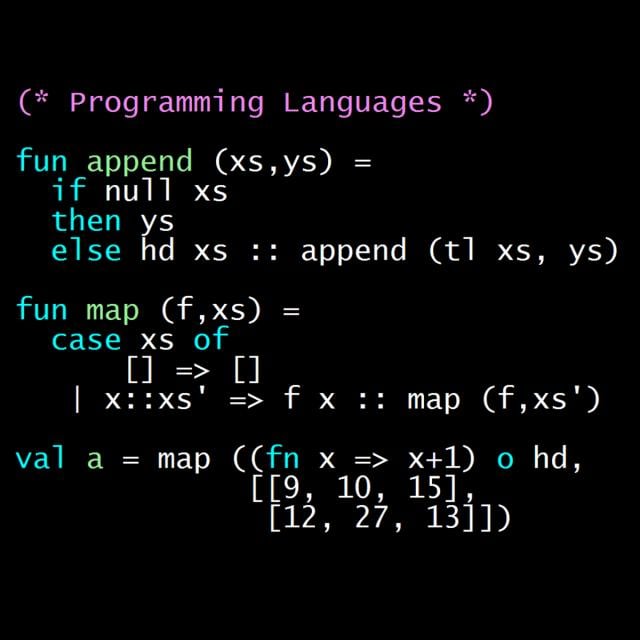
This course is an introduction to the basic concepts of programming languages, with a strong emphasis on functional programming. The course uses the languages ML, Racket, and Ruby as vehicles for teaching the concepts, but the real intent is to teach enough about how any language “fits together” to make you more effective programming in any language -- and in learning new ones.

Sep 21st 2026
3 Weeks
Development of Real-Time Systems (Coursera) Coursera
EIT Digital

Development of Real-Time Systems (Coursera)

This course is intended for the Master's student and computer engineer who likes practical programming and problem solving! After completing this course, you will have the knowledge to plan and set-up a real-time system both on paper and in practice. The course centers around the problem of achieving timing correctness in embedded systems, which means to guarantee that the system reacts within the real-time requirements.

Sep 21st 2026
5-12 Weeks
Developing Android Apps with App Inventor (Coursera) Coursera
The Hong Kong University of Science and Technology - HKUST

Developing Android Apps with App Inventor (Coursera)

The course will give students hands-on experience in developing interesting Android applications. No previous experience in programming is needed, and the course is suitable for students with any level of computing experience. MIT App Inventor will be used in the course. It is a blocks-based programming tool that allows everyone, even novices, to start programming and build fully functional apps for Android devices. Students are encouraged to use their own Android devices for hands-on testing and exploitation.

Sep 21st 2026
5-12 Weeks
Problem Solving, Python Programming, and Video Games (Coursera) Coursera
University of Alberta

Problem Solving, Python Programming, and Video Games (Coursera)

This course is an introduction to computer science and programming in Python. Important computer science concepts such as problem solving (computational thinking), problem decomposition, algorithms, abstraction, and software quality are emphasized throughout. The Python programming language and video games are used to demonstrate computer science concepts in a concrete and fun manner. However, a learner can take the knowledge and skills from this course and apply them to non-game problems, other programming languages, and other computer science courses.

Sep 21st 2026
5-12 Weeks