Problem Solving, Python Programming, and Video Games (Coursera)

Offered by University of Alberta,
Problem Solving, Python Programming, and Video Games (Coursera)

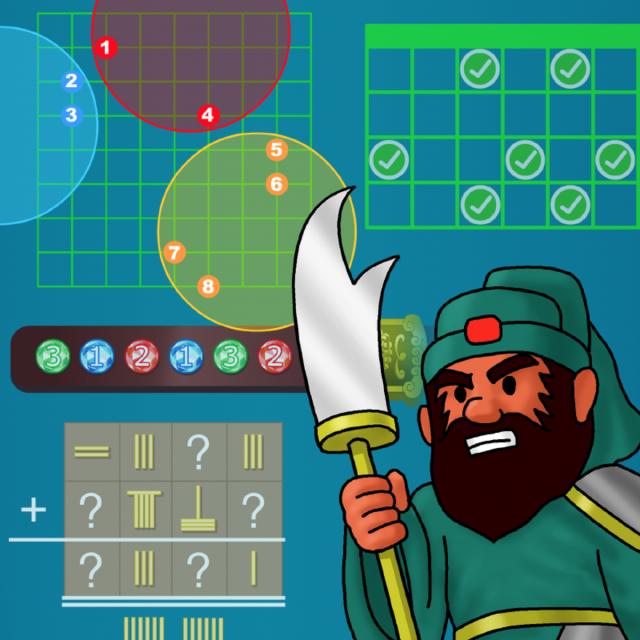
This course is an introduction to computer science and programming in Python. Important computer science concepts such as problem solving (computational thinking), problem decomposition, algorithms, abstraction, and software quality are emphasized throughout. The Python programming language and video games are used to demonstrate computer science concepts in a concrete and fun manner. However, a learner can take the knowledge and skills from this course and apply them to non-game problems, other programming languages, and other computer science courses.

Class Deals by MOOC List - Click here and see Coursera's Active Discounts, Deals, and Promo Codes.

Upon successful completion of this course, you will be able to:

  1. Take a new computational problem and develop a plan to solve it through problem understanding and decomposition.
  2. Follow a design creation process that includes specifications, algorithms, and testing.
  3. Code, test, and debug a program in Python, based on your design.

You do not need any previous programming, Python, or video game experience. However, some computer skills (e.g., mouse, keyboard, document editing), knowledge of algebra, attention to detail (as with many technical subjects), and a “just give it a try” spirit will be keys to your success. Despite the use of video games for all the programming examples, PVG is not about computer games. PVG will still provide valuable knowledge and skills for non-game computational problems.
The interactive learning objects (ILO) of the course provide automatic, context-specific guidance and feedback, like a virtual teaching assistant, as you develop problem descriptions, algorithms, and functional test plans. The course forums will be supported by the creators of the course, to help you succeed.
All videos, assessments, and ILOs are available free of charge. There is an optional certificate available for a fee.

Syllabus

Week 1
Module 0: Introduction
In Module 0, you will meet the instructional team and be introduced to the four themes of this course: computer science, problem solving, Python programming, and how to create video games.

Week 2
Module 1: Design Hacking Version 1
In Module 1, you will explore the game creation process that is used in this course. You will use this process to design Version 1 of the first game, Hacking. You will use two problem-solving techniques: problem decomposition and algorithms. You will explore five criteria for problem decomposition: experiential decomposition, feature selection, problem refinement, spatial decomposition, and temporal decomposition. To create your design for Hacking Version 1, you will use three interactive learning objects: the description builder, functional test plan builder, and algorithm builder.

Week 3
Module 2: Program Hacking Version 1
In Module 2, you will discover how lexics, syntax, and semantics can be used to understand and describe programming languages. You will use these concepts to understand your first Python statement (expression statement), first three Python expressions (literal, identifier, function call), and first five Python types (int, str, float, function, NoneType). You will use these Python constructs to write, test, and debug Hacking Version 1, a text-based game version. You will then reflect on your game version by using a third problem-solving technique called abstraction, including the specific technique of solution generalization, to solve similar problems.

Week 4
Module 3: Hacking Version 2
In Module 3, you will identify solution issues in your game. You will apply a second form of the abstraction problem-solving technique, called using templates, to solve a solution issue by using a graphics library. You will then use lexics, syntax, and semantics to learn two new Python statements (assignment, import), two new Python expressions (binary expression, attribute reference), and one new Python type (module). You will employ these Python constructs and a simple graphics library to write, test, and debug Hacking Version 2.

Week 5
Module 4: Hacking Version 3
In Module 4, you will modify your game design to support multiple gameplay paths using a new problem decomposition criteria called case-based decomposition, which utilizes a selection control structure. You will learn one new Python statement (if), one new Python expression (unary expression), and one new Python type (bool). You will employ these Python constructs to write, test, and debug Hacking Version 3.

Week 6
Module 5: Hacking Version 4 & 5
In Module 5, you will modify your game design using two new abstraction techniques, called control abstraction and data abstraction. You will explore two different control abstractions, called definite and indefinite repetition. You will learn two new Python statements (for, while), four new Python expressions (subscription expression, expression list, parenthesized expression, list display), and three new Python types (tuple, list, range). You will employ these Python constructs to write, test, and debug Hacking Version 4 and Hacking Version 5.

Week 7
Module 6: Hacking Version 6
In Module 6, you will learn a new control abstraction called a user-defined function. You will learn how to implement user-defined functions using two new Python statements (function definition, return). You will employ these Python constructs to significantly improve the quality of your code in Hacking Version 6.

Week 8
Module 7: Hacking Version 7
In Module 7, you will not learn any new problem-solving techniques or Python language features. Instead you will exercise your problem-solving skills and practice the language constructs you already know to improve your proficiency. You will add some fun features to the Hacking game by designing, coding, testing, and debugging Hacking Version 7.

Week 9
Module 8: Poke the Dots Version 1 & 2
In Module 8, you will design and implement Version 1 of a new graphical game called Poke the Dots. You will then modify your game design using data abstraction to create user-defined classes. You will learn two new Python statements (class definition, pass) that will allow you to construct your own Python types. You will employ these Python constructs to implement Poke the Dots Version 2.

Week 10
Module 9: Poke the Dots Version 3
In Module 9, you will not learn any new problem-solving techniques or Python language features. Instead you will exercise your problem-solving skills and practice the language constructs you already know to improve your proficiency. You will add some fun features to the Poke the Dots game by designing, coding, testing, and debugging Poke the Dots Version 3.

Week 11
Module 10: Poke the Dots Version 4
In Module 10, you will modify your game design using a new form of control abstraction called user-defined methods. User-defined methods allow you to restrict access to the attributes of a class to improve data abstraction. You will employ user-defined methods to implement Poke the Dots Version 4.

Week 12
Module 11: Poke the Dots Version 5
In Module 11, you will not learn any new problem-solving techniques or Python language features. Instead you will exercise your problem-solving skills and practice the language constructs you already know to improve your proficiency. You will add some fun features to the Poke the Dots game by designing, coding, testing, and debugging Poke the Dots Version 5.

Go to Class
MOOC List is learner-supported. When you buy through links on our site, we may earn an affiliate commission.

Related Courses

Programming with Scratch (Coursera) Coursera
The Hong Kong University of Science and Technology - HKUST

Programming with Scratch (Coursera)

Learning coding is not only about understanding the programming language being used, but also developing important computational thinking skills, which are useful for problem solving across many disciplinary areas. In this course, students will learn basic programming skills by creating interactive storybooks, animations, and games with Scratch, which is a block-based visual programming language for anyone new to coding.

Aug 3rd 2026
5-12 Weeks
Creative Thinking: Techniques and Tools for Success (Coursera) Coursera
Imperial College London

Creative Thinking: Techniques and Tools for Success (Coursera)

In today’s ever-growing and changing world, being able to think creatively and innovatively are essential skills. It can sometimes be challenging to step back and reflect in an environment which is fast paced or when you are required to assimilate large amounts of information. Making sense of or communicating new ideas in an innovative and engaging way, approaching problems from fresh angles, and producing novel solutions are all traits which are highly sought after by employers.

Aug 3rd 2026
5-12 Weeks
Programming Mobile Applications for Android Handheld Systems: Part 1 (Coursera) Coursera
University of Maryland, College Park

Programming Mobile Applications for Android Handheld Systems: Part 1 (Coursera)

This course introduces you to the design and implementation of Android applications for mobile devices. You will develop an app from scratch, assuming a basic knowledge of Java, and learn how to set up Android Studio, work with various Activities and create simple user interfaces to make your apps run smoothly.

Aug 3rd 2026
5-12 Weeks
Applied Social Network Analysis in Python (Coursera) Coursera
University of Michigan

Applied Social Network Analysis in Python (Coursera)

This course will introduce the learner to network analysis through the NetworkX library. The course begins with an understanding of what network analysis is and motivations for why we might model phenomena as networks. The second week introduces the concept of connectivity and network robustness.. The third week will explore ways of measuring the importance or centrality of a node in a network. The final week will explore the evolution of networks over time and cover models of network generation and the link prediction problem.

Aug 3rd 2026
4 Weeks
Agile Planning for Software Products (Coursera) Coursera
University of Alberta

Agile Planning for Software Products (Coursera)

This course covers the techniques required to break down and map requirements into plans that will ultimately drive software production. Upon successful completion of this course, you will be able to: create effective plans for software development; map user requirements to developer tasks; assess and plan for project risks; apply velocity-driven planning techniques; generate work estimates for software products.

Aug 3rd 2026
4 Weeks
Game Theory (Coursera) Coursera
Stanford University,The University of British Columbia

Game Theory (Coursera)

Popularized by movies such as "A Beautiful Mind," game theory is the mathematical modeling of strategic interaction among rational (and irrational) agents. Beyond what we call `games' in common language, such as chess, poker, soccer, etc., it includes the modeling of conflict among nations, political campaigns, competition among firms, and trading behavior in markets such as the NYSE.

Aug 3rd 2026
5-12 Weeks
Operations Research (1): Models and Applications (Coursera) Coursera
National Taiwan University

Operations Research (1): Models and Applications (Coursera)

Operations Research (OR) is a field in which people use mathematical and engineering methods to study optimization problems in Business and Management, Economics, Computer Science, Civil Engineering, Industrial Engineering, etc. This course introduces frameworks and ideas about various types of optimization problems in the business world. In particular, we focus on how to formulate real business problems into mathematical models that can be solved by computers.

Aug 3rd 2026
5-12 Weeks
Approximation Algorithms Part II (Coursera) Coursera
École normale supérieure

Approximation Algorithms Part II (Coursera)

This is the continuation of Approximation algorithms, Part 1. Here you will learn linear programming duality applied to the design of some approximation algorithms, and semidefinite programming applied to Maxcut. By taking the two parts of this course, you will be exposed to a range of problems at the foundations of theoretical computer science, and to powerful design and analysis techniques.

Aug 3rd 2026
4 Weeks
Big Data Analysis Deep Dive (Coursera) Coursera
Alibaba Cloud Academy

Big Data Analysis Deep Dive (Coursera)

The job market for architects, engineers, and analytics professionals with Big Data expertise continues to increase. The Academy’s Big Data Career path focuses on the fundamental tools and techniques needed to pursue a career in Big Data. This course includes: data processing with python, writing and reading SQL queries, transmitting data with MaxCompute, analyzing data with Quick BI, using Hive, Hadoop, and spark on E-MapReduce, and how to visualize data with data dashboards. Work through our course material, learn different aspects of the Big Data field, and get certified as a Big Data Professional!

Aug 3rd 2026
5-12 Weeks
International Cyber Conflicts (Coursera) Coursera
The State University of New York

International Cyber Conflicts (Coursera)

By nature, cyber conflicts are an international issue that span across nation-state borders. By the end of the course, you will be able to apply the knowledge gained for analysis and management of international cyber incidents and conflicts including for activities such as development of policy related to cybercrime and cyberwarfare. Management of cyber incidents and conflicts requires an interdisciplinary perspective including an understanding of: 1) characteristics of the cyber threats and conflicts themselves, 2) international efforts to reduce and improve cyber security, and 3) psychological and sociopolitical factors.

Aug 3rd 2026
5-12 Weeks
Approximation Algorithms Part I (Coursera) Coursera
École normale supérieure

Approximation Algorithms Part I (Coursera)

How efficiently can you pack objects into a minimum number of boxes? How well can you cluster nodes so as to cheaply separate a network into components around a few centers? These are examples of NP-hard combinatorial optimization problems. It is most likely impossible to solve such problems efficiently, so our aim is to give an approximate solution that can be computed in polynomial time and that at the same time has provable guarantees on its cost relative to the optimum.

Aug 3rd 2026
5-12 Weeks
Statistical Mechanics: Algorithms and Computations (Coursera) Coursera
École normale supérieure

Statistical Mechanics: Algorithms and Computations (Coursera)

In this course you will learn a whole lot of modern physics (classical and quantum) from basic computer programs that you will download, generalize, or write from scratch, discuss, and then hand in. Join in if you are curious (but not necessarily knowledgeable) about algorithms, and about the deep insights into science that you can obtain by the algorithmic approach.

Aug 3rd 2026
5-12 Weeks