VLSI CAD Part II: Layout (Coursera)

VLSI CAD Part II: Layout (Coursera)

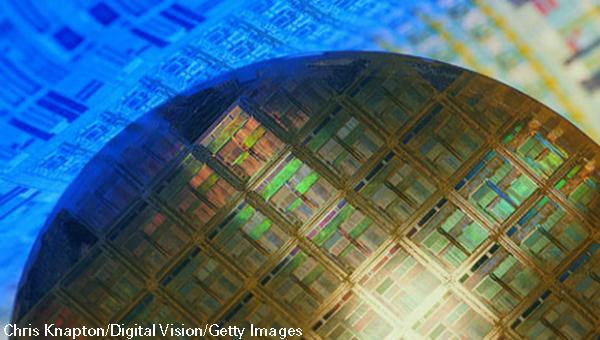
A modern VLSI chip is a remarkably complex beast: billions of transistors, millions of logic gates deployed for computation and control, big blocks of memory, embedded blocks of pre-designed functions designed by third parties (called “intellectual property” or IP blocks). How do people manage to design these complicated chips? Answer: a sequence of computer aided design (CAD) tools takes an abstract description of the chip, and refines it step-wise to a final design.

Class Deals by MOOC List - Click here and see Coursera's Active Discounts, Deals, and Promo Codes.

This class focuses on the major design tools used in the creation of an Application Specific Integrated Circuit (ASIC) or System on Chip (SoC) design. Our focus in this part of the course is on the key logical and geometric representations that make it possible to map from logic to layout, and in particular, to place, route, and evaluate the timing of large logic networks. Our goal is for students to understand how the tools themselves work, at the level of their fundamental algorithms and data structures. Topics covered will include: technology mapping, timing analysis, and ASIC placement and routing.

Recommended Background:
Programming experience (C, C++, Java, Python, etc.) and basic knowledge of data structures and algorithms (especially recursive algorithms). An understanding of basic digital design: Boolean algebra, Kmaps, gates and flip flops, finite state machine design. Linear algebra and calculus at the level of a junior or senior in engineering. Elementary knowledge of RC linear circuits (at the level of an introductory physics class).
You should complete the VLSI CAD Part I: Logic course before beginning this course.

Syllabus

WEEK 1
Orientation
In this module you will become familiar with the course and our learning environment. The orientation will also help you obtain the technical skills required for the course.
ASIC Placement
In this second part of our course, we will talk about geometry. We will begin with an overview of the ASIC layout process, and discuss the role of technology libraries, tech mapping (a topic we delay until the following week, to let those who want to do the Placer programming assignment have more time), and placement and routing. In this set of lectures, we focus on the placement process itself: you have a million gates from the result of synthesis and map, so, where do they go? This process is called “placement”, and we describe an iterative method, and a mathematical optimization method, that can each do very large placement tasks.

WEEK 2
Technology Mapping
Technology Mapping! We omitted one critical step between logic and layout, the process of translating the output of synthesis -- which is NOT real gates in your technology library -- into real logic gates. The Tech Mapper performs this important step, and it is a surprisingly elegant algorithm involving recursive covering of a tree. Another place where knowing some practical computer science comes to the rescue in VLSI CAD.

WEEK 3
ASIC Routing
Routing! You put a few million gates on the surface of the chip in some sensible way. What's next? Create the wires to connect them. We focus on Maze Routing, which is a classical and powerful technique with the virtue that one can "add" much sophisticated functionality on top of a rather simple core algorithm. This is also the topic for final (optional) programming assignment. Yes, if you choose, you get to route pieces of the industrial benchmarks we had you place in the placer software assignment.

WEEK 4
Timing Analysis
You synthesized it. You mapped it. You placed it. You routed it. Now what? HOW FAST DOES IT GO? Oh, we need some new models, to talk about how TIMING works. Delay through logic gates and big networks of gates. New numbers to understand: ATs, RATs, SLACKS, etc. And some electrical details (minimal) to figure out how delays happen through the physical geometry of physical routed wires. All together this is the stuff of Static Timing Analysis (STA), which is a huge and important final "sign off" step in real ASIC design.

WEEK 5
Final Exam
There is no new content this week. Instead, you should focus on finishing the last problem set and completing the Final Exam.
Go to Class
MOOC List is learner-supported. When you buy through links on our site, we may earn an affiliate commission.

Related Courses

Big Data Analysis with Scala and Spark (Coursera) Coursera
École Polytechnique Fédérale de Lausanne

Big Data Analysis with Scala and Spark (Coursera)

Manipulating big data distributed over a cluster using functional concepts is rampant in industry, and is arguably one of the first widespread industrial uses of functional ideas. This is evidenced by the popularity of MapReduce and Hadoop, and most recently Apache Spark, a fast, in-memory distributed collections framework written in Scala. In this course, we'll see how the data parallel paradigm can be extended to the distributed case, using Spark throughout.

Aug 17th 2026
4 Weeks
Laboratório de Programação Orientada a Objetos - Parte 2 (Coursera) Coursera
Universidade de São Paulo, Brasil

Laboratório de Programação Orientada a Objetos - Parte 2 (Coursera)

Esta é a segunda parte do curso avançado de Programação Orientada a Objetos oferecido pelo Departamento de Ciência da Computação do IME-USP. O curso é voltado para profissionais ou estudantes interessados em Desenvolvimento de Software Avançado e que já dominam uma linguagem de programação e já conhecem os fundamentos básicos da orientação a objetos.

Aug 17th 2026
5-12 Weeks
Introduction to Open Source Application Development (Coursera) Coursera
Illinois Tech

Introduction to Open Source Application Development (Coursera)

This course introduces basic concepts of systems programming using a modern open source language. You will learn to apply basic programming concepts toward solving problems, writing pseudocode, working with and effectively using basic data types, abstract data types, control structures, code modularization and arrays. You will learn to detect errors, work with variables and loops, and discover how functions, methods, and operators work with different data types. You will also be introduced to the object paradigm including classes, inheritance, and polymorphism.

Aug 17th 2026
5-12 Weeks
Creative Programming for Digital Media & Mobile Apps (Coursera) Coursera
University of London,Goldsmiths, University of London

Creative Programming for Digital Media & Mobile Apps (Coursera)

This course is for anyone who would like to apply their technical skills to creative work ranging from video games to art installations to interactive music, and also for artists who would like to use programming in their artistic practice. This course will teach you how to develop and apply programming skills to creative work. This is an important skill within the development of creative mobile applications, digital music and video games. It will teach the technical skills needed to write software that make use of images, audio and graphics, and will concentrate on the application of these skills to creative projects. Additional resources will be provided for students with no programming background.

Aug 17th 2026
5-12 Weeks
Basic Modeling for Discrete Optimization (Coursera) Coursera
University of Melbourne,The Chinese University of Hong Kong

Basic Modeling for Discrete Optimization (Coursera)

Optimization is a common form of decision making, and is ubiquitous in our society. Its applications range from solving Sudoku puzzles to arranging seating in a wedding banquet. The same technology can schedule planes and their crews, coordinate the production of steel, and organize the transportation of iron ore from the mines to the ports. Good decisions in manpower and material resources management also allow corporations to improve profit by millions of dollars.

Aug 17th 2026
4 Weeks
Remote Sensing Image Acquisition, Analysis and Applications (Coursera) Coursera
UNSW Sydney - University of New South Wales

Remote Sensing Image Acquisition, Analysis and Applications (Coursera)

Welcome to Remote Sensing Image Acquisition, Analysis and Applications, in which we explore the nature of imaging the earth's surface from space or from airborne vehicles. This course covers the fundamental nature of remote sensing and the platforms and sensor types used. It also provides an in-depth treatment of the computational algorithms employed in image understanding, ranging from the earliest historically important techniques to more recent approaches based on deep learning.

Aug 17th 2026
13-24 Weeks
Practical Steps for Building Fair AI Algorithms (Coursera) Coursera
Fred Hutchinson Cancer Center

Practical Steps for Building Fair AI Algorithms (Coursera)

Algorithms increasingly help make high-stakes decisions in healthcare, criminal justice, hiring, and other important areas. This makes it essential that these algorithms be fair, but recent years have shown the many ways algorithms can have biases by age, gender, nationality, race, and other attributes. This course will teach you ten practical principles for designing fair algorithms. It will emphasize real-world relevance via concrete takeaways from case studies of modern algorithms, including those in criminal justice, healthcare, and large language models like ChatGPT. You will come away with an understanding of the basic rules to follow when trying to design fair algorithms, and assess algorithms for fairness.

Aug 17th 2026
4 Weeks
Digital Signal Processing 4: Applications (Coursera) Coursera
École Polytechnique Fédérale de Lausanne

Digital Signal Processing 4: Applications (Coursera)

Digital Signal Processing is the branch of engineering that, in the space of just a few decades, has enabled unprecedented levels of interpersonal communication and of on-demand entertainment. By reworking the principles of electronics, telecommunication and computer science into a unifying paradigm, DSP is a the heart of the digital revolution that brought us CDs, DVDs, MP3 players, mobile phones and countless other devices.

Aug 17th 2026
3 Weeks
Introduction to Software, Programming, and Databases (Coursera) Coursera
IBM

Introduction to Software, Programming, and Databases (Coursera)

There are many types of software and understanding software can be overwhelming. This course aims to help you understand more about the types of software and how to manage software from an information technology (IT) perspective. This course will help you understand the basics of software, cloud computing, web browsers, development and concepts of software, programming languages, and database basics.

Aug 17th 2026
5-12 Weeks