Statistical Mechanics: Algorithms and Computations (Coursera)

Statistical Mechanics: Algorithms and Computations (Coursera)

In this course you will learn a whole lot of modern physics (classical and quantum) from basic computer programs that you will download, generalize, or write from scratch, discuss, and then hand in. Join in if you are curious (but not necessarily knowledgeable) about algorithms, and about the deep insights into science that you can obtain by the algorithmic approach.

Class Deals by MOOC List - Click here and see Coursera's Active Discounts, Deals, and Promo Codes.

Syllabus

WEEK 1
Monte Carlo algorithms (Direct sampling, Markov-chain sampling)
Dear students, welcome to the first week of Statistical Mechanics: Algorithms and Computations!

Here are a few details about the structure of the course: For each week, a lecture and a tutorial videos will be presented, together with a downloadable copy of all the relevant python programs mentioned in the videos. Some in-video questions and practice quizzes will help you to review the material, with no effect on the final grade. A mandatory peer-graded assignment is also present, for weeks from 1 to 9, and it will expand on the lectures' topics, letting you reach a deeper understanding. The nine peer-graded assignments will make up for 50% of the grade, while the other half will come from a final exam, after the last lecture.

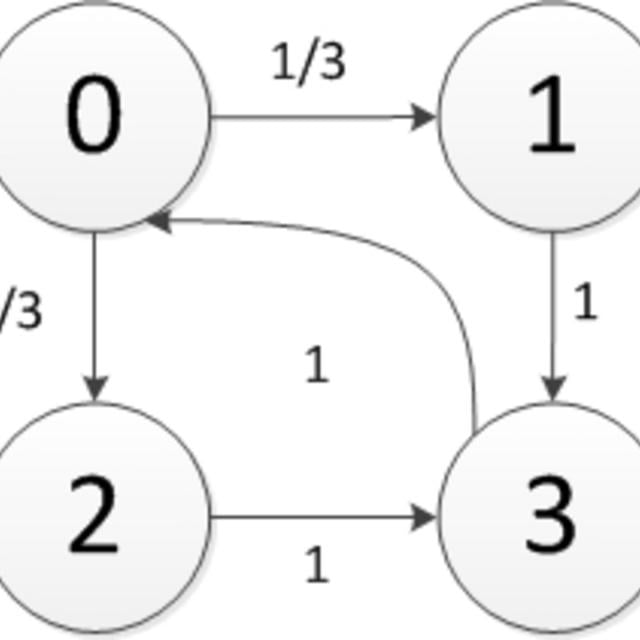
In this first week, we will learn about algorithms by playing with a pebble on the Monte Carlo beach and at the Monaco heliport. In the tutorial we will use the 3x3 pebble game to understand the essential concepts of Monte Carlo techniques (detailed balance, irreducibility, and a-periodicity), and meet the celebrated Metropolis algorithm. Finally, the homework session will let you understand some useful aspects of Markov-chain Monte Carlo, related to convergence and error estimations.

WEEK 2
Hard disks: From Classical Mechanics to Statistical Mechanics
In Week 2, you will get in touch with the hard-disk model, which was first simulated by Molecular Dynamics in the 1950's. We will describe the difference between direct sampling and Markov-chain sampling, and also study the connection of Monte Carlo and Molecular Dynamics algorithms, that is, the interface between Newtonian mechanics and statistical mechanics. The tutorial includes classical concepts from statistical physics (partition function, virial expansion, ...), and the homework session will show that the equiprobability principle might be more subtle than expected.

WEEK 3
Entropic interactions and phase transitions
After the hard disks of Week 2, in Week 3 we switch to clothe-pins aligned on a washing line. This is a great model to learn about the entropic interactions, coming only from statistical-mechanics considerations. In the tutorial you will see an example of a typical situation: Having an exact solution often corresponds to finding a perfect algorithm to sample configurations. Finally, in the homework session we will go back to hard disks, and get a simple evidence of the transition between a liquid and a solid, for a two-dimensional system.

WEEK 4
Sampling and integration
In Week 4 we will deepen our understanding of sampling, and its connection with integration, and this will allow us to introduce another pillar of statistical mechanics (after the equiprobability principle): the Maxwell and Boltzmann distributions of velocities and energies. In the homework session, we will push the limits of sampling until we can compute the integral of a sphere... in 200 dimensions!

WEEK 5
Density matrices and Path integrals (Quantum Statistical mechanics 1/3)
Week 5 is the first episode of a three-weeks journey through quantum statistical mechanics. We will start by learning about density matrices and path integrals, fascinating tools to study quantum systems. In many cases, the Trotter approximation will be useful to consider non-trivial systems, and also to follow the time evolution of a system. All these topics, including the matrix-squaring technique, will be reviewed in detail in the homework session, where you will also study the anharmonic potential.
Note that previous knowledge of quantum mechanics is not really necessary to go through the next three weeks. Follow us in our journey through algorithms and physics, and don't forget to ask on the forum if you have any doubt!

WEEK 6
Lévy Quantum Paths (Quantum Statistical mechanics 2/3)
In Week 6, the second quantum week, we will introduce the properties of bosons, indistinguishable particles with peculiar statistics. At the same time, we will also go further by learning a powerful sampling algorithm, the Lévy construction, and in the homework session you will thoroughly compare it with standard sampling techniques.

WEEK 7
Bose-Einstein condensation (Quantum Statistical mechanics 3/3)
At the end of our quantum journey, in Week 7, we discuss the Bose-Einstein condensation phenomenon, theoretically predicted in the 1920's and observed in the 1990's in experiments with ultracold atoms. In the path-integral framework, an elegant description of this phenomenon is in term of permutation cycles, which will also lead to a great sampling algorithm, to be discussed in the homework session.

WEEK 8
Ising model - Enumerations and Monte Carlo algorithms
In Week 8 we come back to classical physics, and in particular to the Ising model, which captures the essential physics of a set of magnetic spins. This is also a fundamental model for the development of sampling algorithms, and we will see different approaches at work: A local algorithm, the very efficient cluster algorithms, the heat-bath algorithm and its connection with coupling. All of these will be revisited in the homework session, where you will get a precise control over the transition between ordered and disordered states.

WEEK 9
Dynamic Monte Carlo, simulated annealing
Continuing with simple models for spins, in Week 9 we start by learning about a dynamic Monte Carlo algorithm which runs faster than the clock. This is easily devised for a single-spin system, and can also be generalized to the full Ising model from Week 8. In the tutorial we move towards the simulated-annealing technique, a physics-inspired optimization method with a very broad applicability. You will also revisit this in the homework session, and apply it to the sphere-packing and traveling-salesman problems.

WEEK 10
The Alpha and the Omega of Monte Carlo, Review, Party
The lecture of Week 10 includes the alpha and the omega of our course. First we repeat the experiment of Buffon's needle, already performed in the 18th century, and then we touch the sophisticated theory of Lévy stable distributions, and their connection with the central limit theorem. In the tutorial there will be time for a review of the entire course material, and then a little party is due, to celebrate the end of the course!
(There is no homework session for Week 10, but don't forget that the final exam is still there!)

Go to Class
MOOC List is learner-supported. When you buy through links on our site, we may earn an affiliate commission.

Related Courses

Practical Steps for Building Fair AI Algorithms (Coursera) Coursera
Fred Hutchinson Cancer Center

Practical Steps for Building Fair AI Algorithms (Coursera)

Algorithms increasingly help make high-stakes decisions in healthcare, criminal justice, hiring, and other important areas. This makes it essential that these algorithms be fair, but recent years have shown the many ways algorithms can have biases by age, gender, nationality, race, and other attributes. This course will teach you ten practical principles for designing fair algorithms. It will emphasize real-world relevance via concrete takeaways from case studies of modern algorithms, including those in criminal justice, healthcare, and large language models like ChatGPT. You will come away with an understanding of the basic rules to follow when trying to design fair algorithms, and assess algorithms for fairness.

Aug 17th 2026
4 Weeks
Aléatoire : une introduction aux probabilités - Partie 2 (Coursera) Coursera
École Polytechnique

Aléatoire : une introduction aux probabilités - Partie 2 (Coursera)

Ce cours d'introduction aux probabilités a la même contenu que le cours de tronc commun de première année de l'École polytechnique donné par Sylvie Méléard. Le cours introduit graduellement la notion de variable aléatoire et culmine avec la loi des grands nombres et le théorème de la limite centrale.

Aug 10th 2026
5-12 Weeks
Big Data Analysis with Scala and Spark (Coursera) Coursera
École Polytechnique Fédérale de Lausanne

Big Data Analysis with Scala and Spark (Coursera)

Manipulating big data distributed over a cluster using functional concepts is rampant in industry, and is arguably one of the first widespread industrial uses of functional ideas. This is evidenced by the popularity of MapReduce and Hadoop, and most recently Apache Spark, a fast, in-memory distributed collections framework written in Scala. In this course, we'll see how the data parallel paradigm can be extended to the distributed case, using Spark throughout.

Aug 17th 2026
4 Weeks
Introduction to Spreadsheets and Models (Coursera) Coursera
University of Pennsylvania

Introduction to Spreadsheets and Models (Coursera)

The simple spreadsheet is one of the most powerful data analysis tools that exists, and it’s available to almost anyone. Major corporations and small businesses alike use spreadsheet models to determine where key measures of their success are now, and where they are likely to be in the future. But in order to get the most out of a spreadsheet, you have know how to use it. This course is designed to give you an introduction to basic spreadsheet tools and formulas so that you can begin harness the power of spreadsheets to map the data you have now and to predict the data you may have in the future.

Aug 3rd 2026
4 Weeks
Parallel programming (Scala 2 version) (Coursera) Coursera
École Polytechnique Fédérale de Lausanne

Parallel programming (Scala 2 version) (Coursera)

With every smartphone and computer now boasting multiple processors, the use of functional ideas to facilitate parallel programming is becoming increasingly widespread. In this course, you'll learn the fundamentals of parallel programming, from task parallelism to data parallelism. In particular, you'll see how many familiar ideas from functional programming map perfectly to to the data parallel paradigm. We'll start the nuts and bolts how to effectively parallelize familiar collections operations, and we'll build up to parallel collections, a production-ready data parallel collections library available in the Scala standard library.

Aug 10th 2026
4 Weeks
Quantitative Model Checking (Coursera) Coursera
EIT Digital

Quantitative Model Checking (Coursera)

The integration of ICT (information and communications technology) in different applications is rapidly increasing in e.g. Embedded and Cyber physical systems, Communication protocols and Transportation systems. Hence, their reliability and dependability increasingly depends on software. Defects can be fatal and extremely costly (with regards to mass-production of products and safety-critical systems).

Aug 10th 2026
5-12 Weeks
Pattern Discovery in Data Mining (Coursera) Coursera
University of Illinois at Urbana-Champaign

Pattern Discovery in Data Mining (Coursera)

Learn the general concepts of data mining along with basic methodologies and applications. Then dive into one subfield in data mining: pattern discovery. Learn in-depth concepts, methods, and applications of pattern discovery in data mining. We will also introduce methods for data-driven phrase mining and some interesting applications of pattern discovery. This course provides you the opportunity to learn skills and content to practice and engage in scalable pattern discovery methods on massive transactional data, discuss pattern evaluation measures, and study methods for mining diverse kinds of patterns, sequential patterns, and sub-graph patterns.

Aug 3rd 2026
4 Weeks
Programming Fundamentals (Coursera) Coursera
Duke University

Programming Fundamentals (Coursera)

Programming is an increasingly important skill, whether you aspire to a career in software development, or in other fields. This course is the first in the specialization Introduction to Programming in C, but its lessons extend to any language you might want to learn. This is because programming is fundamentally about figuring out how to solve a class of problems and writing the algorithm, a clear set of steps to solve any problem in its class.

Aug 10th 2026
4 Weeks
Analysis of Algorithms (Coursera) Coursera
Princeton University

Analysis of Algorithms (Coursera)

This course teaches a calculus that enables precise quantitative predictions of large combinatorial structures. In addition, this course covers generating functions and real asymptotics and then introduces the symbolic method in the context of applications in the analysis of algorithms and basic structures such as permutations, trees, strings, words, and mappings.

Aug 3rd 2026
5-12 Weeks
Remote Sensing Image Acquisition, Analysis and Applications (Coursera) Coursera
UNSW Sydney - University of New South Wales

Remote Sensing Image Acquisition, Analysis and Applications (Coursera)

Welcome to Remote Sensing Image Acquisition, Analysis and Applications, in which we explore the nature of imaging the earth's surface from space or from airborne vehicles. This course covers the fundamental nature of remote sensing and the platforms and sensor types used. It also provides an in-depth treatment of the computational algorithms employed in image understanding, ranging from the earliest historically important techniques to more recent approaches based on deep learning.

Aug 17th 2026
13-24 Weeks