Resilient Architecture Research (OOEd)

Offered by Build Academy,
Resilient Architecture Research (OOEd)

This online course by Open Online Academy will explore existing and new solutions for resilient and sustainable design. It will crowd source resilient design solutions with an international community of thousands of architects, engineers, scientists, builders and others from all over the world. The course participants will work in international, multidisciplinary teams, exploring how architecture can respond to the natural disasters: floods, tsunamis, earthquakes, fires, typhoons, etc.

Resilient Architecture Research, will focus on precedent studies on resilient building techniques from all over the world. Some of the topics will be: foundations, roofs, windows, walls, floors, ceilings, doors, façades, stairs, water and energy management, etc. The research will span from vernacular to contemporary building techniques. The goal is to rediscover traditional building materials and methods and apply them to areas with similar conditions. New techniques can be used as such or adapted to local conditions when possible.
COURSE STRUCTURE:
Week 1: Welcome and Introduction
Week 2: Grounds, foundation and base
Week 3: Structure and materials
Week 4: Roof and rain water management
Week 5: Building enclosure
Week 6: Energy and Sustainability
Note: This course is currently not available.

Related Courses

Business Sustainability in the Circular Economy (Coursera) Coursera
University of London

Business Sustainability in the Circular Economy (Coursera)

We are surrounded by so much discussion of sustainability that it can sometimes become overwhelming. Important questions include: What role can business have in ensuring the sustainability of the planet? How should business work with society to preserve the environment? These questions will be answered in this course as we explore the meaning of sustainability and its impact on modern organisations as they move to circular ideas to reduce waste, increase recycling and become fit for our modern society.

Oct 12th 2026
3 Weeks
Sustainable Vikings: Sustainability & Corporate Social Responsibility in Scandinavia (Coursera) Coursera
Copenhagen Business School

Sustainable Vikings: Sustainability & Corporate Social Responsibility in Scandinavia (Coursera)

This course gives you immediate access to the world leading sustainability and corporate social responsibility (CSR) practices. Scandinavian firms dominate the major sustainability and CSR performance indicators including the Dow Jones Sustainability Index (DJSI). In this course we explore the concepts of sustainability and CSR and focus attention on how Scandinavian firms, like Novo Nordisk, have achieved superior sustainability and CSR performances.

Oct 12th 2026
5-12 Weeks
Ressources minérales et transition (Coursera) Coursera
Institut Mines-Telecom

Ressources minérales et transition (Coursera)

Ce MOOC sur les ressources minérales et les transitions invite à se questionner sur la soutenabilité de nos choix technologiques. Les transitions énergétiques et numériques sont en effet confrontées aux enjeux d'approvisionnement des ressources minérales et aux impacts que leur cycle de vie génère sur l’environnement et la société.

Oct 12th 2026
4 Weeks
Electric Vehicle Operation and Diagnosis (Coursera) Coursera
Starweaver

Electric Vehicle Operation and Diagnosis (Coursera)

"Electric Vehicle Operation and Diagnosis" is a course tailored to meet the increasing demand for professionals skilled in troubleshooting electric vehicles (EVs). Participants will gain a solid understanding of EV fundamentals, system operations, and diagnostic techniques. The course emphasizes environmental benefits and sustainable practices in transportation.

Oct 12th 2026
4 Weeks
Wind resources for renewable energies (Coursera) Coursera
École Polytechnique

Wind resources for renewable energies (Coursera)

The main goal of this course is to get the necessary knowledge on atmospheric and fluid dynamics in order to quantify the wind resource of a local or regional area. We’ll learn about basic meteorology, the specific dynamics of turbulent boundary layers and some standard techniques to estimate wind resources regardless of the type of turbine used or the level of efficiency achieved.

Oct 5th 2026
4 Weeks
Business Models For Sustainability (Coursera) Coursera
Copenhagen Business School,ESADE Business and Law School,ESCP Business School,NHH Norwegian School of Economics

Business Models For Sustainability (Coursera)

This course was created by some of the leading researchers on business model theory and social entrepreneurship in Europe in collaboration with both small and large companies across various sectors investing in sustainable business model innovation. This course provides an overview of sustainable business model theory and innovation and discusses business models as essential tools in transforming to more sustainable businesses.

Oct 12th 2026
5-12 Weeks
Sustainable Food Production Through Livestock Health Management (Coursera) Coursera
University of Illinois at Urbana-Champaign

Sustainable Food Production Through Livestock Health Management (Coursera)

Learn about the impact of infectious disease on sustainable animal-based food production by understanding the science of growth, immunity, and infection and by learning the problem-solving skills needed to advance animal health and food production through optimal management practices. In this course we will explore the effect of infectious disease on sustainable animal-based food production. The content and learning outcomes of this new course will be designed to be relevant across different food production sectors (i.e., beef, dairy, poultry, and pigs).

Oct 5th 2026
5-12 Weeks
The ABC of sustainability (Coursera) Coursera
Campus BBVA

The ABC of sustainability (Coursera)

The sustainability agenda is currently key to companies, governments and citizens. It’s vital for people to have first-hand knowledge of the basic concepts in order to understand all issues related to sustainability as a vector of systemic change in the economy, society, companies and our lives. The course is an introduction to sustainability, regarded as a cross-cutting discipline in our society (in the public and private international spheres) that’s based on the most updated public information on economic, social and environmental issues.

Oct 12th 2026
4 Weeks
Management of Urban Infrastructures – part 1 (Coursera) Coursera
École Polytechnique Fédérale de Lausanne

Management of Urban Infrastructures – part 1 (Coursera)

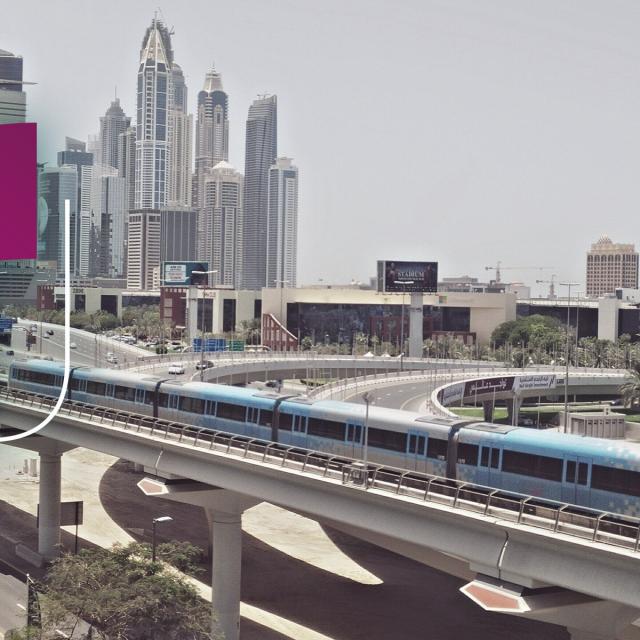
Sustainability, Resilience and Efficiency are fundamental considerations for city managers in managing urban infrastructures. Today, more than 3.9 billion people, making up more than 54% of the global population, live in cities. Urbanization is expected to continue in the coming years, raising the urban population to 6.0 billion by 2045. This dramatic increase in urban populations will inevitably increase the demand for energy, mobility (transportation), water, and other urban services in every city around the world. Without functional governance and management structures that ensure efficient, resilient and sustainable performance in cities, the current urbanization growth might become a catastrophic risk threatening the quality of life of the humanity.

Oct 12th 2026
5-12 Weeks
Public Health Perspectives on Sustainable Diets (Coursera) Coursera
Johns Hopkins University

Public Health Perspectives on Sustainable Diets (Coursera)

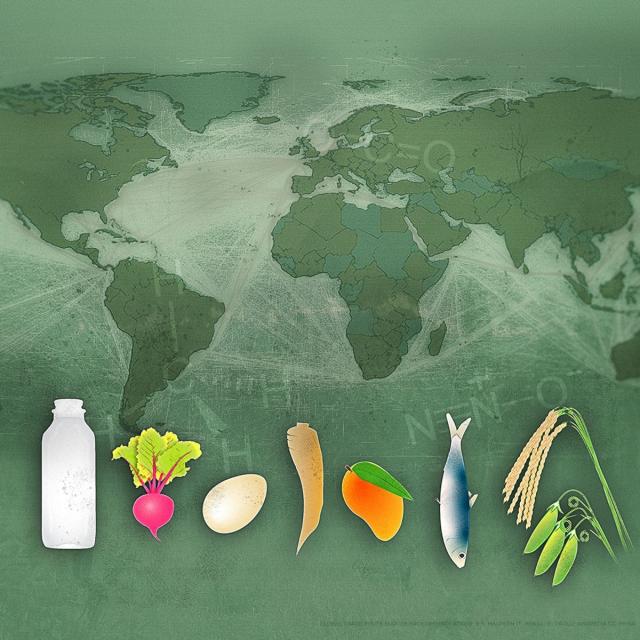
What we eat and how we produce that food have significant effects on human health and the sustainability of our planet. But what is a ‘sustainable’ diet? A sustainable diet, as defined by the FAO, promotes health and well-being and provides food security for the present population while sustaining human and natural resources for future generations. This short course looks at the urgent need to address the sustainability of our food systems, including better understanding the complex relationship between diet and climate change. We’ll explore current research on dietary shifts needed in high, middle, and low-income countries to achieve both sustainability and food security goals and discuss evidence-based strategies to promote sustainable diets.

Oct 5th 2026
3 Weeks