Reproducible Templates for Analysis and Dissemination (Coursera)

Offered by Emory University,
Reproducible Templates for Analysis and Dissemination (Coursera)

This course will assist you with recreating work that a previous coworker completed, revisiting a project you abandoned some time ago, or simply reproducing a document with a consistent format and workflow. Incomplete information about how the work was done, where the files are, and which is the most recent version can give rise to many complications.

Class Deals by MOOC List - Click here and see Coursera's Active Discounts, Deals, and Promo Codes.

This course focuses on the proper documentation creation process, allowing you and your colleagues to easily reproduce the components of your workflow. Throughout this course, you'll receive helpful demonstrations of RStudio and the R Markdown language and engage in active learning opportunities to help you build a professional online portfolio.

Syllabus

WEEK 1
Introduction to Reproducible Research and Dynamic Documentation
This module provides an introduction to the concepts surrounding reproducibility and the Open Science movement, RStudio and GitHub, and foundational cases and authors in the field.

WEEK 2
R Markdown: Syntax, Document, and Presentation Formats
This module explores the R Markdown syntax to format and customize the layout of presentations or reports and will also look at inserting and creating objects such as tables, images, or video within documents.

WEEK 3
R Markdown Templates: Processing and Customizing
This module goes further with R Markdown to help turn documents, reports, and presentations into templates for easier automation, reproducibility, and customization.

WEEK 4
Leveraging Custom Templates from Leading Scientific Journals
This module delves into custom templates available for websites, books, and scientific publishers, such as Elsevier and the IEEE, with the chance to create your first R Package.

WEEK 5
Working in Teams and Disseminating Templates and Reports
This module focuses on helpful tips for sharing and using the templates you create, as well as methods for organizing content. We'll also look at a few web-publishing services.

Go to Class
MOOC List is learner-supported. When you buy through links on our site, we may earn an affiliate commission.

Related Courses

Advanced Reproducibility in Cancer Informatics (Coursera) Coursera
Johns Hopkins University

Advanced Reproducibility in Cancer Informatics (Coursera)

This course introduces tools that help enhance reproducibility and replicability in the context of cancer informatics. It uses hands-on exercises to demonstrate in practical terms how to get acquainted with these tools but is by no means meant to be a comprehensive dive into these tools. The course introduces tools and their concepts such as git and GitHub, code review, Docker, and GitHub actions.

Aug 17th 2026
5-12 Weeks
Business Statistics and Analysis Capstone (Coursera) Coursera
Rice University

Business Statistics and Analysis Capstone (Coursera)

The Business Statistics and Analysis Capstone is an opportunity to apply various skills developed across the four courses in the specialization to a real life data. The Capstone, in collaboration with an industry partner uses publicly available ‘Housing Data’ to pose various questions typically a client would pose to a data analyst. Your job is to do the relevant statistical analysis and report your findings in response to the questions in a way that anyone can understand.

Aug 17th 2026
4 Weeks
Interprofessional Healthcare Informatics (Coursera) Coursera
University of Minnesota

Interprofessional Healthcare Informatics (Coursera)

Interprofessional Healthcare Informatics is a graduate-level, hands-on interactive exploration of real informatics tools and techniques offered by the University of Minnesota and the University of Minnesota's National Center for Interprofessional Practice and Education. We will be incorporating technology-enabled educational innovations to bring the subject matter to life. Over the 10 modules, we will create a vital online learning community and a working healthcare informatics network.

Aug 17th 2026
5-12 Weeks
Fundamentos de Excel para Negocios (Coursera) Coursera
Universidad Austral

Fundamentos de Excel para Negocios (Coursera)

Cuando finalices este curso habrás logrado un gran número de habilidades como introducir información, ordenarla, manipularla, realizar cálculos de diversa índole (matemáticos, trigonométricos, estadísticos, financieros, ingenieriles, probabilísticos), extraer conclusiones, trabajar con fechas y horas, construir gráficos, imprimir reportes y muchas más.

Aug 17th 2026
5-12 Weeks
Structural Equation Model and its Applications | 结构方程模型及其应用 (普通话) (Coursera) Coursera
The Chinese University of Hong Kong

Structural Equation Model and its Applications | 结构方程模型及其应用 (普通话) (Coursera)

在社会学、心理学、教育学、经济学、管理学、市场学等研究领域的数据分析中,结构方程建模是当前最前沿的统计方法中应用最广、研究最多的一个。它包含了方差分析、回归分析、路径分析和因子分析,弥补了传统回归分析和因子分析的不足,可以分析多因多果的联系、潜变量的关系,

Aug 17th 2026
5-12 Weeks
Advanced Data Analysis and Collaboration in Qlik Sense (Coursera) Coursera
Coursera Instructor Network

Advanced Data Analysis and Collaboration in Qlik Sense (Coursera)

This course is an advanced level course designed for learners who want to use Qlik Sense to perform sophisticated data analytics, build dashboards, and communicate full reports and stories from their data. These advanced concepts include more than just visualization features such as dynamic filtering and conditional formatting, but more so data functionality such as advanced expressions, drill-downs, leads, lags, and more. This is important as these skills are directly required when creating sophisticated business analyses and dashboards.

Aug 17th 2026
1 Week
An Introduction to Interactive Programming in Python (Part 2) (Coursera) Coursera
Rice University

An Introduction to Interactive Programming in Python (Part 2) (Coursera)

This two-part course is designed to help students with very little or no computing background learn the basics of building simple interactive applications. Our language of choice, Python, is an easy-to learn, high-level computer language that is used in many of the computational courses offered on Coursera. To make learning Python easy, we have developed a new browser-based programming environment that makes developing interactive applications in Python simple.

Aug 10th 2026
4 Weeks
Applied Plotting, Charting & Data Representation in Python (Coursera) Coursera
University of Michigan

Applied Plotting, Charting & Data Representation in Python (Coursera)

This course will introduce the learner to information visualization basics, with a focus on reporting and charting using the matplotlib library. The course will start with a design and information literacy perspective, touching on what makes a good and bad visualization, and what statistical measures translate into in terms of visualizations. The second week will focus on the technology used to make visualizations in python, matplotlib, and introduce users to best practices when creating basic charts and how to realize design decisions in the framework.

Aug 10th 2026
4 Weeks
Principles of fMRI 1 (Coursera) Coursera
Johns Hopkins University

Principles of fMRI 1 (Coursera)

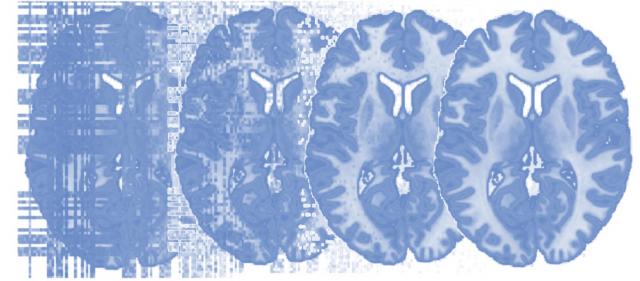
Functional Magnetic Resonance Imaging (fMRI) is the most widely used technique for investigating the living, functioning human brain as people perform tasks and experience mental states. It is a convergence point for multidisciplinary work from many disciplines. Psychologists, statisticians, physicists, computer scientists, neuroscientists, medical researchers, behavioral scientists, engineers, public health researchers, biologists, and others are coming together to advance our understanding of the human mind and brain. This course covers the design, acquisition, and analysis of Functional Magnetic Resonance Imaging (fMRI) data, including psychological inference, MR Physics, K Space, experimental design, pre-processing of fMRI data, as well as Generalized Linear Models (GLM’s).

Aug 17th 2026
4 Weeks
Business Applications of Hypothesis Testing and Confidence Interval Estimation (Coursera) Coursera
Rice University

Business Applications of Hypothesis Testing and Confidence Interval Estimation (Coursera)

Confidence intervals and Hypothesis tests are very important tools in the Business Statistics toolbox. A mastery over these topics will help enhance your business decision making and allow you to understand and measure the extent of ‘risk’ or ‘uncertainty’ in various business processes. This course advances your knowledge about Business Statistics by introducing you to Confidence Intervals and Hypothesis Testing. These are done by easy to understand applications.

Aug 10th 2026
4 Weeks