Pupillometry: The Eye as a Window Into the Mind (FutureLearn)

Offered by University of Oslo,
Pupillometry: The Eye as a Window Into the Mind (FutureLearn)

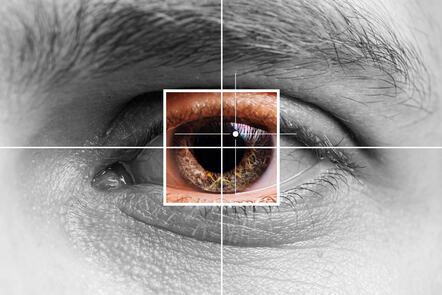
Examine the science of pupillometry and explore the eye as a window into the mind with the University of Oslo. Discover the applications of pupillometry research. Whilst a fairly new research method within the sciences, pupillometry has wide ranging applications within psychology, neuroscience, and beyond. On this six-week course, you’ll explore both pupillometry and eye tracking methods in depth, before investigating some interesting and unusual applications of this far-reaching research method.

Class Deals by MOOC List - Click here and see FutureLearn's Active Discounts, Deals, and Promo Codes.

Explore eye anatomy and physiology
Examining what can be learned from measuring pupil dilations, you’ll reflect on what pupil dilation can tell us about our emotions, our mental efforts, and more.
You’ll then move on to the anatomy and physiology of the eye, delving into eye structure and the neuroscience of pupils.
With this introductory knowledge, you’ll be confident in eye control and reactions, and begin to identify some of the insights that pupillometry can deliver about the human body.

Identify methods of pupillometry and eye tracking
For over a century, eye tracking has been used to measure gaze and monitor behaviour.
You’ll discover how technology has advanced eye tracking and gaze analysis. You’ll then move on to methods in pupillometry, learning how to gather quality data and gaining an overview of baselines and statistics.

Investigate the use of pupillometry in different disciplines
Having explored both eye tracking and pupillometry in isolation, you’ll then examine multidisciplinary pupillometry research approaches and their varied applications.
You’ll discover its use in musicology, developmental psychology, and psycholinguistics, and reflect on the ethical and legal implications of such research.
By the end of this course, you’ll have an overview of pupillometry and eye tracking. You’ll have the skills to plan your own research, considering the technical, ethical, and managerial aspects of gathering pupillometry data.

Syllabus

Week 1: Welcome to the course
Week 2: Biology, anatomy and physiology of the eye
Week 3: The eye-tracking method
Week 4: The pupillometry method
Week 5: Multidisciplinary pupillometry research
Week 6: Data management and ethical aspects

What will you achieve?
By the end of the course, you‘ll be able to...

  • Describe the neural system behind the pupil response to light
  • Reflect on the relevance of using pupillometry in different fields of research
  • Compare stationary versus mobile eye-tracking systems in relation to pupillometry
  • Identify some of the challenges in working with pupillometry
  • Explain possible ethical issues that are related to pupillometry in human participants
  • Design a simple pupillometry experiment related to psychological research
  • Calculate the most relevant measures in different pupillometry applications
  • Contribute with a unique pupillometry study project
  • Explore the way the pupillary response has influenced scientific theories and the arts
  • Explain the meaning of the pupil as an index of mental activity or effort

Who is the course for?
This course is designed for students and researchers who want to further their knowledge of pupillometry.
This course will benefit those working or studying in a number of fields, from psycholinguistics to musicology, where the applications of pupillometry are currently being investigated.


Go to Class
MOOC List is learner-supported. When you buy through links on our site, we may earn an affiliate commission.

Related Courses

How We See the World: Visual Function and Eye Health (edX) EdX
The Hong Kong Polytechnic University,HKPolyUx

How We See the World: Visual Function and Eye Health (edX)

Develop your understanding of vision and discover how visual functions relate to your daily life. Learn and apply techniques to help you take better care of your eyes. How do we see the world? How do we see details at different viewing distances? How do we see in three dimensions? How do we see colour? How can we avoid getting cataracts or prevent short-sightedness? This course will help you develop your understanding of vision, how visual functions relate to your daily life, and how you can better take care of your eyes.

Jan 1st 2024
5-12 Weeks
MedTech: AI and Medical Robots (FutureLearn) FutureLearn
University of Leeds

MedTech: AI and Medical Robots (FutureLearn)

Explore human robot interaction and enter the fascinating world of robotics and artificial intelligence in healthcare. Learn how medical robots in healthcare are designed, regulated and used. On this course, you will learn what robots are and explore human robot interaction (HRI) in healthcare. You will identify the challenges of designing robots for healthcare and look at what MedTech scientists are doing to solve them.

Sep 23rd 2024
2 Weeks
The Neuromarketing Toolbox (Coursera) Coursera
Copenhagen Business School

The Neuromarketing Toolbox (Coursera)

Doing marketing research by asking people has been a common method and does still have advantages. On the other hand, if you want insights into the non-conscious interpretations of a consumer’s decision, then you need other research tools in your research toolbox. Neuromarketing makes use of such an extended toolbox, containing both technical equipment and ways of doing experimental research.

Jun 8th 2026
5-12 Weeks
Food Safety and Nutrition: A Global Approach to Public Health (FutureLearn) FutureLearn
University of Leeds

Food Safety and Nutrition: A Global Approach to Public Health (FutureLearn)

Understand global food security issues and learn about research designed to tackle food safety and nutrition challenges. Enhance your knowledge of global food safety and nutrition issues. Food security is reliable access to a sufficient quantity of affordable, safe, and nutritious food.

Sep 23rd 2024
3 Weeks
Effective Livestock Production with Low Use of Antibiotics (FutureLearn) FutureLearn
Swedish University of Agricultural Sciences

Effective Livestock Production with Low Use of Antibiotics (FutureLearn)

Learn what antibiotic resistance is and how to prevent it while increasing productivity among your livestock. Understand disease prevention and antibiotic use in livestock production. Antimicrobial resistance (AMR) is an increasing problem worldwide and is a threat to the health of animals and humans. But there is still a need for a efficient livestock production, which requires healthy animals.

Aug 26th 2024
4 Weeks
MedTech: Orthopaedic Implants and Regenerative Medicine (FutureLearn) FutureLearn
University of Leeds

MedTech: Orthopaedic Implants and Regenerative Medicine (FutureLearn)

Explore regenerative medicine and learn how MedTech is revolutionising orthopaedics. Explore the future of orthopaedics and developments in regenerative medicine. On this course, you will learn about the MedTech currently used in orthopaedics, and explore how the benefits of regenerative medicine will affect the future of this technology.

Sep 23rd 2024
2 Weeks
Social Model of Disability (FutureLearn) FutureLearn
University of Leeds

Social Model of Disability (FutureLearn)

Explore the social model of disability and learn how to create a more equitable society with the University of Leeds. Gain an introduction to the social model of disability. The social model of disability is a way of viewing the world, developed by disabled people. On this two-week course, you’ll learn what disability is and learn to identify the barriers that disabled people face around the world.

Feb 16th 2026
2 Weeks
Bioinformatics for Biologists: Analysing and Interpreting Genomics Datasets (FutureLearn) FutureLearn
Wellcome Connecting Science

Bioinformatics for Biologists: Analysing and Interpreting Genomics Datasets (FutureLearn)

Boost your career by gaining the skills to install and modify the elements of a bioinformatics workflow to suit your needs. Gain practical data science skills. Bioinformatics is crucial in helping to understand large and complex sets of biological data. On this three-week course, you’ll develop your knowledge of bioinformatics and gain practical experience in scaling up analysis and working with large and complex datasets effectively.

Apr 6th 2026
3 Weeks
Cancer Survivorship for Primary Care Practitioners (FutureLearn) FutureLearn
University of Melbourne,Victorian Comprehensive Cancer Centre

Cancer Survivorship for Primary Care Practitioners (FutureLearn)

Many people are now living with and beyond cancer. This course will show you how to provide effective survivorship care. Understand the physical, psychosocial, financial effects of cancer. Cancer is a major burden of disease across the globe. Every year, millions of people are diagnosed with the illness. This course will explore the importance of cancer survivorship, and show you how to develop an effective care plan for your patients.

Oct 7th 2024
4 Weeks
Food and Mood: Improving Mental Health Through Diet and Nutrition (FutureLearn) FutureLearn
Deakin University,Food & Mood Centre

Food and Mood: Improving Mental Health Through Diet and Nutrition (FutureLearn)

Explore the relationship between nutrition and brain health, why it matters, and how to work towards positive food changes. Learn how healthy dietary choices can improve your mental and brain health. Poor diet and poor mental health are the leading causes of mortality and morbidity worldwide. We now know that diet quality is a modifiable factor that is linked to mental and brain health across all stages of our lives. We will explore how our daily diets may affect our mental and brain health, including the role of our immune system and gut microbiome.

Jan 12th 2026
3 Weeks