EdX

Product Design for Entrepreneurship (edX)

Product Design for Entrepreneurship (edX)

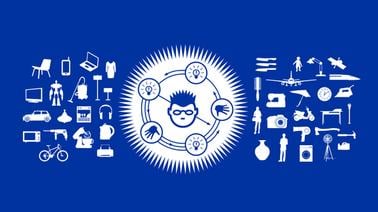
Create your own design-driven brand, integrating knowledge of product design with entrepreneurship. This course introduces the concept of a designer working for themselves and creating their own design-driven brand. It requires learners to apply ideas to a real-life setting.

Class Deals by MOOC List - Click here and see EdX's Active Discounts, Deals, and Promo Codes.

By the end of this course, learners will be able to demonstrate an understanding of the elements of design strategy and branding, experience design, lifestyle design and professional communication, including online communication. Learners achieve this by identifying an area for innovation and product-service development.
The course aims to nurture designers’ business thinking and develop their social responsibility and vision in the new economic paradigm, as well as motivate them to become pioneers and prime movers of social and cultural businesses. Learners will engage in tackling real-world issues using design-led approaches and methods.
This course is the first of its kind to integrate the knowledge of product design with entrepreneurship. Not only is it unique, but it also occupies a market niche. Since entrepreneurship is a hot topic worldwide, the proposed course has the potential to attract large numbers of global learners with basic knowledge and hands-on skills in the product design process, quality management and management of related resources.

What you'll learn
By the end of this course you'll be able to:
● Design in a product design process
Offer basic knowledge of using design in a product design process with the purpose of entrepreneurship.
● Main design methods
Develop an understanding of the main design methods in a product development process of start-up.
● Integrate design into product development
Build the capability of managing and integrating design in the whole process.
● Seek business opportunity
Facilitate the open-mind of business opportunity through user journey and stakeholder.
● Plan product cost and profit
Know the method and stage to consider product cost and profit management in the process
● Intelligent Property management
Know the basic strategy and practical operations of protecting the IP of concept and design

Syllabus

Week 1: Introduction (Sylvia)
Why is product design important to entrepreneurship? Design, business & management, and technology are well accepted as core knowledge for all the start-up teams. However, in practice, business & management and technology are applied as hardcore in a start-up business, and design is only employed at the final stage to prepare for launching the product. In most cases, it is advertisement design, packaging design and multimedia design applied.

Week 2: Journey map (Scott)
This module will introduce the tools and process of gathering customer insights for identifying and developing new product opportunities. Through this hands-on, workshop-type exercise, the participant will discover and learn how to use customer journey mapping to understand and optimize customer behaviors, mindsets, and emotional motivations across interactions with the product or services.

Week 3: Stakeholder analysis (Sylvia)
In this mode, the basic concepts of stakeholder will be introduced. Based on it, the process of searching, defining and analyzing stakeholders will be taught as a basic guideline. Finally, the value flow model is introduced to define the types of value and relationship between the stakeholders. As the result, the value proposition of new business could be confirmed based on identified value gaps and opportunities.

Week 4: Design process (Yi-Teng)
The meaning of value and the process of value creation is swiftly changing from a company-centric perspective to a personalized consumer experience. This is a very complex and unpredictable form of the consumer market. It is not easy to predict market trends as usual. For the factory, what is their strategy to solve this problem? How do they face complicated consumer patterns and a more competitive market environment? Therefore, this course will introduce designer-led approaches to bring a unique experience for consumers.

Week 5: Financial Management for product design (Kevin)
When designing and preparing to deliver a product to market, it is essential to understand finance principles. There are many finance principles; some apply to product design, and some do not. We will focus on the Five Principles of Finance that are generally applicable. When you design and deliver a product, the goal is to sell it for more than it costs to produce. If you sell something for less than the cost to make, you will not have a profit to show.
The five:
Cash Flow Time
Value of Money
Risk and Return
Market Price
Conflicts of Interest

Week 6: Intellectual Property (Kevin)
As a designer, you create intellectual property any time you make something new and original. IP exists in various forms, including inventions, product logos, books, photographs, new designs or artistic creations. IP is a precious asset, and different types of IP protect different kinds of outcomes.
The four types of IP designers use most often are:
Patents
Design rights
Trademarks
Copyright
Topics covered:
Consider IP early. Understand the relationship between copyright and design rights. Identify who owns the IP. If your product has a short lifespan, alternative strategies do not include registering your IP. Learn how different IP rights can work together to protect your work. Plan in advance what steps you will take if you find someone copying your design or using it without your permission. When you register your IP, it will be published online. IP rights do not give you protection outside of single countries. Design rights and patents need to be a secret until you apply.

Go to Class
MOOC List is learner-supported. When you buy through links on our site, we may earn an affiliate commission.

Related Courses

Introduction à l'expérience utilisateur (edX) EdX
HECMontrealX,HEC Montréal

Introduction à l'expérience utilisateur (edX)

Ce MOOC passe en revue les éléments fondamentaux de la pratique UX (ex. : Projet UX, concepts clés, activités, rôles, livrables). L’expérience utilisateur se définit comme étant le résultat des états internes (ex. attentes, prédispositions) d’un utilisateur, des caractéristiques d’un système (ex. complexité, utilisabilité) et du contexte d’utilisation de l’interaction entre l'utilisateur et le système (ex. en organisation, en privé).

Self Paced
Self-Paced
Designing Electronics for Recycling in a Circular Economy (edX) EdX
Delft University of Technology,DelftX

Designing Electronics for Recycling in a Circular Economy (edX)

Discover the latest developments in Design for Recycling (DfR) of electrical and electronic equipment (EEE) and the application of recycled plastics into new products. Electronic products bring countless benefits to society, but their production and waste treatment also lead to numerous negative environmental and economic impacts. Since E-waste is the world’s fastest growing waste stream, governments are setting ambitious targets to help this industry transition towards a circular economy.

Self Paced
4 Weeks
Digital Strategy and Action (edX) EdX
Babson College

Digital Strategy and Action (edX)

Learn how elite leaders conceive and execute strategies that drive the world’s fastest growing digital companies. What do business luminaries like Amazon, Facebook, Google, and Netflix have in common? They’re digital businesses – meaning that they blur the digital and physical worlds – and their CEOs have built companies from idea to over $10 billion in revenues and kept them growing at an annual rate of at least 20%.

Self Paced
Self-Paced
Human-Computer Interaction I: Fundamentals & Design Principles (edX) EdX
Georgia Institute of Technology,GTx

Human-Computer Interaction I: Fundamentals & Design Principles (edX)

Learn the principles of Human-Computer Interaction to create intuitive, usable interfaces, with established design principles like feedback cycles, direct manipulation, affordances, signifiers, and more. This course takes you through the first eight lessons of CS6750: Human-Computer Interaction as taught in the Georgia Tech Online Master of Science in Computer Science program.

Self Paced
Self-Paced
Human-Computer Interaction III: Ethics, Needfinding & Prototyping (edX) EdX
Georgia Institute of Technology,GTx

Human-Computer Interaction III: Ethics, Needfinding & Prototyping (edX)

Build on your knowledge of HCI’s core principles by learning to design interfaces in the real world. Begin with the ethics of human subjects research, then learn critical methods for requirements gathering and brainstorming design alternatives. In this course, you’ll begin by learning the design life cycle. This is the process by which we investigate user needs, brainstorm potential designs, create prototypes, and evaluate those prototypes. This life cycle provides the structure for the third and fourth courses in this professional certificate.

Self Paced
Self-Paced
Lean Product Portfolios: Beyond Value Stream Mapping (edX) EdX
University of Maryland, College Park,University System of Maryland - USM,USMx,UMD

Lean Product Portfolios: Beyond Value Stream Mapping (edX)

The approach to creating a product portfolio delivering exponential value must transcend the obvious by incorporating a deep understanding of customer behavior, shaping the trajectory of the business and understanding emerging trends in technology, marketplace and the competitive landscape in local and global context.

Self Paced
Self-Paced
Human-Computer Interaction IV: Evaluation, Agile Methods & Beyond (edX) EdX
Georgia Institute of Technology,GTx

Human-Computer Interaction IV: Evaluation, Agile Methods & Beyond (edX)

Complete your understand of the design life cycle by learning to take interface ideas, prototype them quickly, and evaluate them with real users. Finally, tie principles and methods together and learn the next steps you could take in HCI. This course takes you through the last nine lessons of CS6750: Human-Computer Interaction as taught in the Georgia Tech Online Master of Science in Computer Science program.

Self Paced
Self-Paced
Liderazgo en la empresa familiar (edX) EdX
Tecnológico de Monterrey,TecdeMonterreyX

Liderazgo en la empresa familiar (edX)

Aprende las dinámicas de las empresas familiares, con el fin de aplicar las habilidades, herramientas e instrumentos que implican liderar y orquestar la empresa familiar de forma exitosa. Para lograr que la familia trascienda y la empresa se sostenga en el tiempo, en este curso de emprendimiento y administración de empresas, tendrás la oportunidad de comprender la complejidad de las dinámicas de familia y empresa, reflexionar sobre los roles y formas de pensar del dirigente familiar y hacer un diagnóstico del emprendimiento empresarial.

Self Paced
Self-Paced
Introducción al diseño de hardware con Verilog (edX) EdX
Galileo University,GalileoX

Introducción al diseño de hardware con Verilog (edX)

Aprende el lenguaje de descripción de hardware Verilog, utilizado en la industria en el diseño de hardware digital y microprocesadores a la medida. En la actualidad, el hardware de soporte en sistemas digitales se suele diseñar en un solo circuito integrado FPGA (Field Programmable Gate Array), en parte debido al abundante espacio físico que ocuparía una implementación con varios circuitos integrados dedicados para este fin.

Self Paced
Self-Paced
Budgeting and Finance for Public Libraries (edX) EdX
University of Michigan,MichiganX

Budgeting and Finance for Public Libraries (edX)

Understand financial concepts as well as well as effective practices in budgeting and auditing for library managers at all levels. Money isn’t generally the first topic that comes to mind when thinking about libraries, however it is a critical resource that touches every aspect of the organization. Whether you are an aspiring manager or a library director, it is important that your organization’s finances are aligned with your service goals and priorities.

Self Paced
Self-Paced