Plastic electronics (Coursera)

Offered by École Polytechnique,
Plastic electronics (Coursera)

Plastic electronics is a concept that emerged forty years ago, with the discovery of electrically conductive polymers. Ten years later, the first electronic devices using organic solids in place of the ubiquitous inorganic semiconductors were realised. The best achievement of plastic electronics is constituted by Organic Light-Emitting Diodes (OLEDs) that equip the display of many smartphones, and even TV sets.

Class Deals by MOOC List - Click here and see Coursera's Active Discounts, Deals, and Promo Codes.

The objective of this course is to provide a comprehensive overview of the physics of plastic electronic devices. After taking this course, the student should be able to demonstrate theoretical knowledge on the following subjects:

  • Concept of organic semiconductors;
  • Charge carrier transport in polymeric and organic semiconductors;
  • Optical properties of organic semiconductors;
  • Charge injection from metals to organic solids;

Operating mode of the main plastic electronic devices: Organic light-emitting diodes (OLEDs), organic photovoltaic cells (OPVs) and organic field-effect transistors (OFETs).

Syllabus

WEEK 1
Introduction to plastic electronics
This first module is an introduction to the concept of semiconductor, which is the primary consituent of all electronic decives. We also show how some organic compounds can behave as semiconductors.

WEEK 2
Charge carrier transport in organic semiconductors
Electronic devives work through an electrical current generated by applying an electrical voltage. The process is controlled by charge carrier transport, descibed in this module.

WEEK 3
Optical properties of organic semiconductors
Beside electrical properties, electronic devices also involve optical aspects, for example in light-emitting diodes and photovoltaic cells. This modulel describes the interactions of light with organic semiconductors.

WEEK 4
Interfaces in plastic electronic devices

WEEK 5
Plastic electronic devices
Go to Class
MOOC List is learner-supported. When you buy through links on our site, we may earn an affiliate commission.

Related Courses

Introduction to Semiconductor Process 2 (Coursera) Coursera
Korea Advanced Institute of Science and Technology - KAIST

Introduction to Semiconductor Process 2 (Coursera)

This course aims to provide a general understanding of semiconductor process. This course explores the principles and basic theory of semiconductor device and process. Furthermore, the students will learn the overall semiconductor process such as oxidation, diffusion, ion implantation, lithography, etching, thin film deposition, plasma, metallization, and packaging.

Jun 1st 2026
5-12 Weeks
Cómo entrenar a tus electrones 2: Diodos y Transistores (Coursera) Coursera
Pontificia Universidad Católica de Chile

Cómo entrenar a tus electrones 2: Diodos y Transistores (Coursera)

La electrónica ha respaldado el desarrollo científico y tecnológico de la humanidad, ostentando un rol clave en los últimos 50 años. Nos admiramos de la capacidad del ser humano de diseñar circuitos integrados que contienen millones de transistores y que nos permiten procesar con gran precisión las señales más débiles provenientes de las antenas de telefonía celular, de las neuronas del cerebro, de una cámara digital, o de la carga depositada por partículas subatómicas que colisionan en el Gran Colisionador de Hadrones en Suiza.

Jun 1st 2026
4 Weeks
Introduction to Semiconductors, PN Junctions and Bipolar Junction Transistors (edX) EdX
The Hong Kong University of Science and Technology - HKUST,HKUSTx

Introduction to Semiconductors, PN Junctions and Bipolar Junction Transistors (edX)

An intuitive approach to operational principles of semiconductor devices. The course covers PN junction diodes, optical sensors, solar cells, LEDs, and Bipolar Junction Transistors. As a topic of study, semiconductor devices offer a unique challenge due to the complex mathematics involved. In this course, we take a more intuitive approach to explore the underlying concepts. Eschewing mathematics, we use engaging animations to help you visualize the working principles of many common semiconductor devices.

Self Paced
Self-Paced
Introducción al Internet de las Cosas (edX) EdX
Galileo University,GalileoX

Introducción al Internet de las Cosas (edX)

Prácticamente cualquier objeto puede conectarse al Internet. Desde lavadoras hasta componentes sofisticados de aviones y aún cultivos inteligentes. La habilidad de conectar cosas y capturar información útil está transformando a las organizaciones en cada sector de la industria y está abriendo nuevas especializaciones de carrera. Descubre esto y más en este curso de introducción al internet de las cosas.

Self Paced
Self-Paced
Your first Arduino project: Design and Build a Colorful Musical Toy. (Skillshare) Skillshare
Skillshare

Your first Arduino project: Design and Build a Colorful Musical Toy. (Skillshare)

Arduino’s are a family of inexpensive single-board computers that allow you to create just about anything you can dream of with minimal technical skills. This class will teach you to build your first Arduino project, a fun device that plays a tune and flashes colored LED lights. You can design it to play your national anthem while flashing your country's colors or get creative and make a unique tribute to your favorite sports team!

Self Paced
Self-Paced
Teaching Physical Computing with Raspberry Pi and Python (FutureLearn) FutureLearn
Raspberry Pi Foundation

Teaching Physical Computing with Raspberry Pi and Python (FutureLearn)

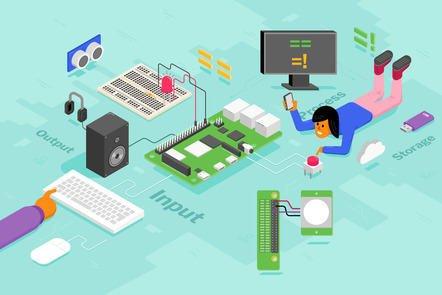
Explore the exciting world of physical computing and create electronic circuits that you can control with code. Learn the benefits of using physical computing with your students. On this course from the Raspberry Pi Foundation, you will be introduced to the world of physical computing. You will use input devices to capture data, process that data with the Python programming language, and then use output devices to get information back out from your computer.

Mar 6th 2023
3 Weeks
Teaching Physical Computing to 5-11 year olds (FutureLearn) FutureLearn
Raspberry Pi Foundation,National Centre for Computing Education

Teaching Physical Computing to 5-11 year olds (FutureLearn)

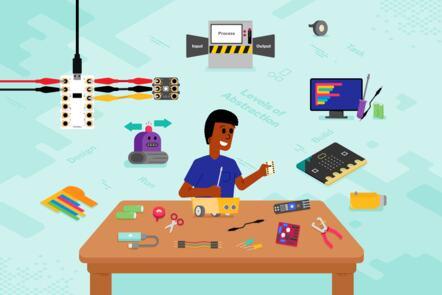
Teach your young learners how to create electronic circuits, then learn to control them using block-based programming languages. Learn how to create physical computing projects using a Crumble or micro:bit. Physical computing is the process of designing, building, and programming systems that use physical components such as buttons, lights, and motors.

Mar 6th 2023
3 Weeks
Aplicaciones musicales con Arduino (Coursera) Coursera
Universidad Nacional Autónoma de México

Aplicaciones musicales con Arduino (Coursera)

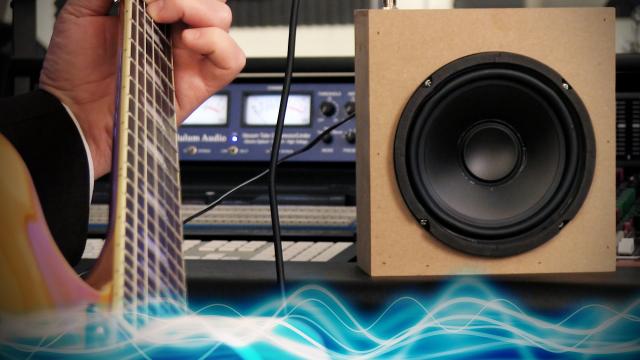
En este curso nos adentraremos en el terreno del hardware. Concretamente, aprenderemos a utilizar la placa de desarrollo de hardware de código abierto, llamada Arduino, enfocándonos en las aplicaciones que esta ofrece para la experimentación musical. De manera más específica, aprenderemos en este curso a construir nuestros propios generadores de sonido, y a partir de ello haremos instalaciones sonoras que nos permitirán expandir nuestra creatividad hacia el terreno de las cosas materiales, y ya no solo de los datos informáticos.

May 25th 2026
4 Weeks