EdX

Nanotechnology: Fundamentals of Nanotransistors (edX)

Offered by Purdue University,
Nanotechnology: Fundamentals of Nanotransistors (edX)

Explore nantechnology and gain an understanding of the essential physics and technology of nanotransistors. The transistor has been called the greatest invention of the 20th century – it enables the electronics systems that have shaped the world we live in. Today’s nanotransistors are a high volume, high impact success of the nanotechnology revolution. If you are interested in understanding how this scientifically interesting and technologically important nano-device operates, this course is for you!

Class Deals by MOOC List - Click here and see EdX's Active Discounts, Deals, and Promo Codes.

This nanotechnology course provides a simple, conceptual framework for understanding the essential physics of nanoscale transistors. It assumes only a basic background in semiconductor physics and provides an opportunity to learn how some of the fascinating new discoveries about the flow of electrons at the nanoscale plays out in the context of a practical device.

The course is divided into four units:

  • Transistors fundamentals
  • Transistor electrostatics
  • Ballistic MOSFETs
  • Transmission theory of the MOSFET

The first two units provide an introduction for students with no background in transistors or a quick review for those familiar with transistors. The third unit treats the ballistic transistor in which electrons move without resistance (in the traditional sense). The last unit uses that Landauer Approach to electron transport, which was developed to understand some striking experiments in nanophysics, to develop an understanding of how electrons flow in modern nanotransistors. This short course describes a way of understanding MOSFETs that is much more suitable than traditional approaches when the channel lengths are of nanoscale dimensions. Surprisingly, the final result looks much like the traditional, textbook, MOSFET model, but the parameters in the equations have simple, clear interpretations at the nanoscale.
My objective for this course is to provide students with an understanding of the essential physics of nanoscale transistors as well as some of the practical technological considerations and fundamental limits. The goal is to do this in a way that is broadly accessible to students with only a very basic knowledge of semiconductor physics and electronic circuits. The course is designed for anyone seeking a sound, physical, but simple understanding of how nanoscale transistors operate. The course should be useful for advanced undergraduates, beginning graduate students, as well as researchers and practicing engineers and scientists.
This course is the latest in a series offered by the nanoHUB-U project which is jointly funded by Purdue and NSF with the goal of transcending disciplines through short courses accessible to students in any branch of science or engineering. These courses focus on cutting-edge topics distilled into short lectures with quizzes and practice exams.

What you'll learn:

  • Transistor fundamentals (IV characteristics and device metrics)
  • MOS electrostatics (in one and two dimensions)
  • The Landauer Approach to electron transport
  • The transmission theory of the MOSFET and its relation to traditional and Virtual Source transistor models

Syllabus

Weeks 1 & 2: Transistor Fundamentals
Weeks 3 & 4: MOS Electrostatistics
Weeks 5 & 6: The Ballistic Nanotransistor
Weeks 7 & 8: The Transmission Theory of the MOSFET

Go to Class
MOOC List is learner-supported. When you buy through links on our site, we may earn an affiliate commission.

Related Courses

Electronique I (edX) EdX
École Polytechnique Fédérale de Lausanne,EPFLx

Electronique I (edX)

Introduction à l’électronique analogique- première partie. Fonctions de base réalisées à l’aide des amplificateurs opérationnels. Ce cours est un cours d’introduction à la réalisation des fonctions linéaires et non-linéaires de base à l’aide de l’amplificateur opérationnel.


Self Paced
Self-Paced
Introduction to Water and Climate (edX) EdX
Delft University of Technology,DelftX

Introduction to Water and Climate (edX)

Water is a crucial element in climate and for society. Find out about the latest engineering interventions for water management in rivers, coasts and the urban environment. Water is essential for life on Earth and of crucial importance for society. Water also plays a major role in affecting climate. Its natural cycle, from ocean to atmosphere by evaporation, then by precipitation back to land returning via rivers and aquifers to the oceans, has a decisive impact on regional and global climate patterns.

Self Paced
Self-Paced
Design of mound breakwaters for feasibility studies. Cubipod® Manual 2016 (edX) EdX
Universitat Politècnica de València,UPValenciaX

Design of mound breakwaters for feasibility studies. Cubipod® Manual 2016 (edX)

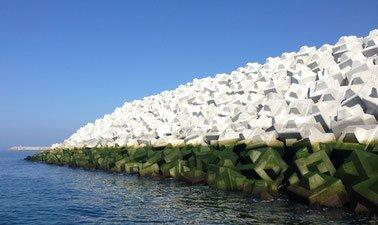
The goal of this course is to provide the tools to create feasible designs of mound breakwaters protected with Cubipod® armors fulfiling the prescribed economic, functional and safety requirements. This course is intended for professionals of coastal and port engineering who work in the preliminary design and feasibility studies of breakwaters.

Self Paced
Self-Paced
Forensic Engineering: Learning from Failures (edX) EdX
Delft University of Technology,DelftX

Forensic Engineering: Learning from Failures (edX)

Don’t let good failures go to waste! Identify the causes of failure and use this knowledge to enhance safety and improve performance. What do collapsed buildings, infected hospital patients, and crashed airplanes have in common? If you know the causes of these events and conditions, they can all be prevented. In this course, you will learn how to use the TU Delft mind-set to investigate the causes of such events so you can prevent them in the future.

Self Paced
Self-Paced
Viscoelasticidad y comportamiento mecánico-dinámico de materiales poliméricos. Modelización (edX) EdX
Universitat Politècnica de València,UPValenciaX

Viscoelasticidad y comportamiento mecánico-dinámico de materiales poliméricos. Modelización (edX)

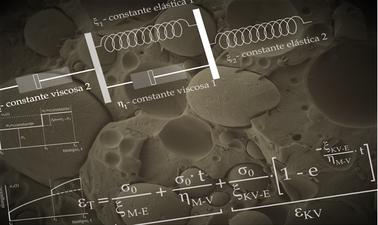
Aprende sobre el comportamiento viscoelástico de polímeros para el diseño de componentes con materiales poliméricos. Los materiales poliméricos se caracterizan por tener un comportamiento viscoelástico lo cual implica que sus propiedades mecánicas surgen de la combinación de unas propiedades elásticas y viscosas.

Self Paced
Self-Paced
水力学 | Hydraulics (edX) EdX
Tsinghua University,TsinghuaX

水力学 | Hydraulics (edX)

This Hydraulics course explores the science of hydraulics and focuses on hydrodynamic laws and their applications, which are indispensable and a critical factor in the development and utilization of water resources. 水,是人类生活不可或缺的资源。水力学是人类开发利用水资源的有力工具。本课教你认识和掌握水流静止和运动的力学规律,了解在相关领域的工程应用。

Self Paced
Self-Paced
Railway Engineering: An Integral Approach (edX) EdX
Delft University of Technology,DelftX

Railway Engineering: An Integral Approach (edX)

Discover the science and complexity behind the exciting world of metro, tram and railway systems. Have you ever wondered what it takes to get your train on the right platform at the scheduled time every day? Understanding the complexity behind today’s sophisticated railway systems will give you a better insight into how this safe and reliable transportation system works. We will show you the many factors which are involved and how multiple people, behind the scenes, have a daily task that enables you to get from home to work. Journey with us into the world of rail - a complex system that connects people, cities and countries.

Oct 14th 2026
5-12 Weeks
A System View of Communications: From Signals to Packets (Part 1) (edX) EdX
The Hong Kong University of Science and Technology - HKUST,HKUSTx

A System View of Communications: From Signals to Packets (Part 1) (edX)

Explore the tradeoffs in designing communication systems like mobile phones, and the engineering tools to handle them. Have you ever wondered how information is transmitted using your mobile phone or a WiFi hotspot? This introductory course seeks to enable you to understand the basic engineering tools used and tradeoffs encountered in the design of these systems.

Self Paced
Self-Paced
Modeling and Simulation of Multibody Systems - Part II (edX) EdX
LouvainX,Université Catholique de Louvain - UCL

Modeling and Simulation of Multibody Systems - Part II (edX)

90% of daily life multibody systems contain loops of bodies, e.g. vehicle or bike suspensions, parallel manipulators or robots, and musculoskeletal systems. They can also include joint constraints. In this second course about multibody systems, learn how to model them and how to deal with more advanced numerical analyses.

Self Paced
Self-Paced