EdX

Electronique I (edX)

Electronique I (edX)

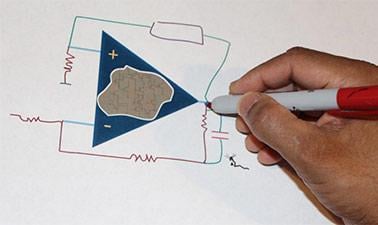
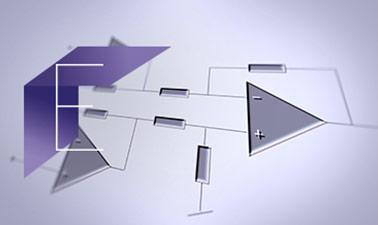
Introduction à l’électronique analogique- première partie. Fonctions de base réalisées à l’aide des amplificateurs opérationnels. Ce cours est un cours d’introduction à la réalisation des fonctions linéaires et non-linéaires de base à l’aide de l’amplificateur opérationnel.


Class Deals by MOOC List - Click here and see EdX's Active Discounts, Deals, and Promo Codes.

Les étudiants appliquent la théorie des circuits, la réaction négative et positive aux amplificateurs opérationnels pour réaliser les fonctions électroniques élémentaires (amplification, filtrage, transposition, addition, soustraction, génération des fonctions périodiques, etc.). Les explications sont illustrées par des exercices au laboratoires avec des démonstrations qui peuvent être reproduite par les élèves par simulation.

What you'll learn

  • Classer les fonctions électroniques linéaires et non linéaires
  • Analyser les circuits électroniques à base d'amplificateurs opérationnels
  • Dimensionner les composants de circuits à base d'amplificateurs opérationnels
  • Composer des systèmes électroniques à l'aide d'un ensemble de fonctions de base
  • Synthétiser des circuits électroniques simples
  • Manipuler des résultats de mesure de circuits électroniques
Go to Class
MOOC List is learner-supported. When you buy through links on our site, we may earn an affiliate commission.
Related Courses

Recent Advances in Freeform Electronics (Coursera) Coursera
Yonsei University

Recent Advances in Freeform Electronics (Coursera)

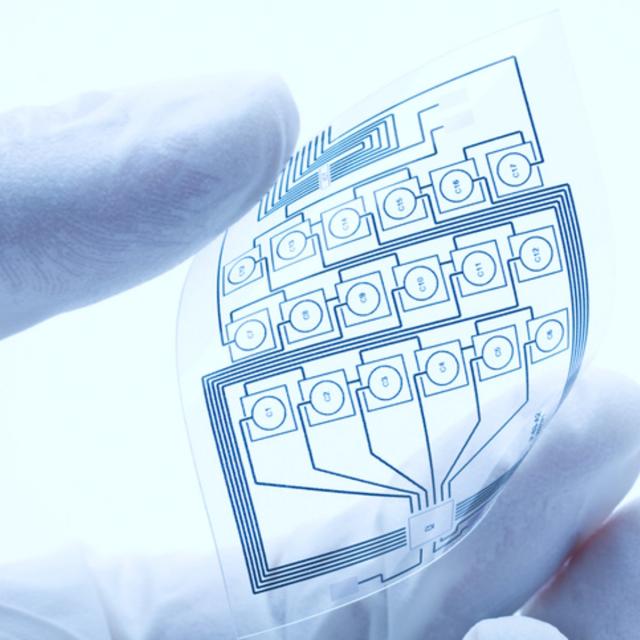
In this course, the learners will understand fundamental basic backgrounds of p-n junctions, diodes and MOSFETs (Metal Oxide Semiconductor Field Effect Transistors). Also, recent approaches on flexible / stretchable electronics, transparent optoelectronics, and printed electronics using one dimensional or two dimensional nanomaterials will be introduced.

Aug 10th 2026
5-12 Weeks
Introduction to Power Electronics (Coursera) Coursera
University of Colorado Boulder

Introduction to Power Electronics (Coursera)

This course introduces the basic concepts of switched-mode converter circuits for controlling and converting electrical power with high efficiency. Principles of converter circuit analysis are introduced, and are developed for finding the steady state voltages, current, and efficiency of power converters. Assignments include simulation of a dc-dc converter, analysis of an inverting dc-dc converter, and modeling and efficiency analysis of an electric vehicle system and of a USB power regulator.

Jul 27th 2026
3 Weeks
Nanomaterials for Civil and Environmental Applications (edX) EdX
Purdue University,PurdueX

Nanomaterials for Civil and Environmental Applications (edX)

Learn about the field of nanotechnology with a special emphasis on nanomaterials synthesis, characterizations and their applications in civil and environmental engineering. This course will introduce students to the field of nanotechnology with a special emphasis on nanomaterials synthesis, characterizations and their applications in civil and environmental engineering.

Sep 27th 2021
5-12 Weeks
Introducción al Internet de las Cosas (edX) EdX
Galileo University,GalileoX

Introducción al Internet de las Cosas (edX)

Prácticamente cualquier objeto puede conectarse al Internet. Desde lavadoras hasta componentes sofisticados de aviones y aún cultivos inteligentes. La habilidad de conectar cosas y capturar información útil está transformando a las organizaciones en cada sector de la industria y está abriendo nuevas especializaciones de carrera. Descubre esto y más en este curso de introducción al internet de las cosas.

Self Paced
Self-Paced
Teaching Physical Computing with Raspberry Pi and Python (FutureLearn) FutureLearn
Raspberry Pi Foundation

Teaching Physical Computing with Raspberry Pi and Python (FutureLearn)

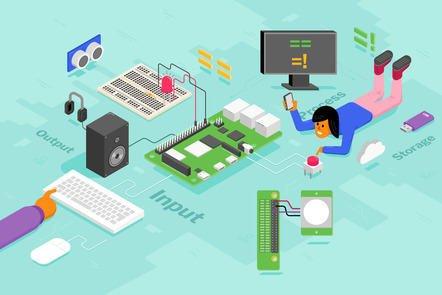
Explore the exciting world of physical computing and create electronic circuits that you can control with code. Learn the benefits of using physical computing with your students. On this course from the Raspberry Pi Foundation, you will be introduced to the world of physical computing. You will use input devices to capture data, process that data with the Python programming language, and then use output devices to get information back out from your computer.

Mar 6th 2023
3 Weeks
Teaching Physical Computing to 5-11 year olds (FutureLearn) FutureLearn
Raspberry Pi Foundation,National Centre for Computing Education

Teaching Physical Computing to 5-11 year olds (FutureLearn)

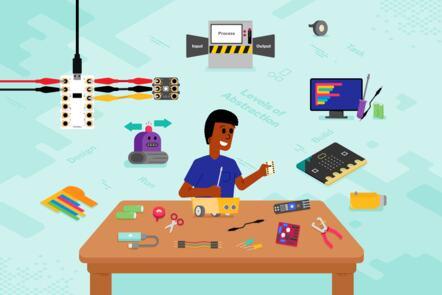
Teach your young learners how to create electronic circuits, then learn to control them using block-based programming languages. Learn how to create physical computing projects using a Crumble or micro:bit. Physical computing is the process of designing, building, and programming systems that use physical components such as buttons, lights, and motors.

Mar 6th 2023
3 Weeks
Powering the Drive: Unveiling EV Electronics (Coursera) Coursera
Coursera Instructor Network

Powering the Drive: Unveiling EV Electronics (Coursera)

In the rapidly advancing world of electric vehicles (EVs), understanding the application of power electronics is essential for both professionals and enthusiasts. Welcome to our comprehensive video course on the "Electric Vehicle Power Electronics " This course explores the pivotal role and significance of power electronics in the EV ecosystem. As EVs become a prominent part of the transportation landscape, understanding the intricacies of power electronics is crucial. This course equips you with the knowledge and skills to comprehend, utilize, and optimize power electronics for efficient and sustainable electric vehicle operation.

Jul 27th 2026
1 Week
Electrónica Digital Bit a Bit: Aprendiendo fundamentos (Coursera) Coursera
Pontificia Universidad Católica de Chile

Electrónica Digital Bit a Bit: Aprendiendo fundamentos (Coursera)

Es desafiante y hasta atemorizante entender un circuito digital cuando observamos la cantidad de transistores que puede contener, y aún más difícil diseñarlo eficientemente para su implementación en un circuito integrado o una FPGA. Sin embargo, saber diseñar circuitos digitales simples nos abre las puertas para diseñar sistemas digitales más complejos a partir de estos.

Jun 22nd 2026
5-12 Weeks
Graphene Science and Technology (edX) EdX
Chalmers University of Technology,ChalmersX

Graphene Science and Technology (edX)

Graphene: its practical applications and how it offers new insights into quantum physics. Graphene is the world’s first 2-dimensional material and is the thinnest, strongest, and most flexible material known to exist. Graphene, a special form of carbon,,can conduct electricity and heat better than anything else.

No sessions available
5-12 Weeks
Introducción al Internet de las Cosas (IoT) (edX) EdX
Universitat Politècnica de València,UPValenciaX

Introducción al Internet de las Cosas (IoT) (edX)

Este es un curso en línea preliminar en el que tratamos los conceptos básicos de electronica y programación utilizando placas Arduino y ESP. El internet de las cosas (Internet of things o IoT) es el presente y el futuro de la tecnología. Tanto si tienes algo de experiencia con la electrónica y deseas desarrollar proyectos como si no tienes ninguna, este curso online te dara los conocimientos iniciales necesarios para comenzar a crear dispositivos increibles capaces de medir y controlar señales físicas.

Self Paced
Self-Paced
Designing Hardware for Raspberry Pi Projects (Coursera) Coursera
Johns Hopkins University

Designing Hardware for Raspberry Pi Projects (Coursera)

This is course 4 of this specialization (although it can be taken out of order) and focuses on applying experience and knowledge gained in the first three courses to build physical electronics hardware. Specifically, this course focuses on four areas: circuit simulation, schematic entry, PCB layout, and 3D CAD modeling. There are many excellent commercial applications available in these areas, however to give everyone access we'll be using all free and open-source software.

Aug 3rd 2026
4 Weeks
Electrónica Digital Bit a Bit: Diseñando circuitos complejos (Coursera) Coursera
Pontificia Universidad Católica de Chile

Electrónica Digital Bit a Bit: Diseñando circuitos complejos (Coursera)

Los circuitos digitales más complejos como memorias y procesadores, que contienen millones de transistores gracias a su reducido tamaño, pueden ser divididos en circuitos más simples ya conocidos para facilitar su diseño e implementación. Lo mismo podemos realizar utilizando Verilog para diseñar circuitos digitales complejos que realizan muchas funciones o cuentan con un gran número de entradas y salidas.

Jun 22nd 2026
5-12 Weeks