Teaching Physical Computing with Raspberry Pi and Python (FutureLearn)

Teaching Physical Computing with Raspberry Pi and Python (FutureLearn)

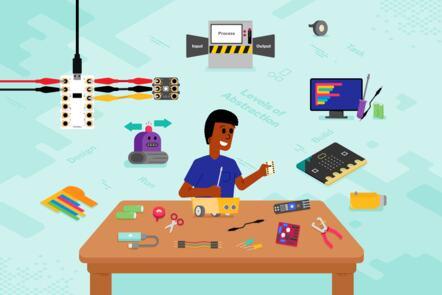
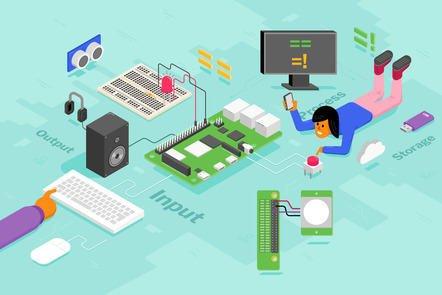
Explore the exciting world of physical computing and create electronic circuits that you can control with code. Learn the benefits of using physical computing with your students. On this course from the Raspberry Pi Foundation, you will be introduced to the world of physical computing. You will use input devices to capture data, process that data with the Python programming language, and then use output devices to get information back out from your computer.

Class Deals by MOOC List - Click here and see FutureLearn's Active Discounts, Deals, and Promo Codes.

Along the way, you will learn how to use the principles of sequence, selection, and iteration in your physical computing programs. You will also learn some foundational electronics to help you create the circuits that you will use.
In the final week, you will create a physical computing project of your own.

Syllabus

Week 1: Physical computing and outputs
Week 2: Inputs
Week 3: Physical computing projects

What will you achieve?
By the end of the course, you'll be able to...

  • Develop understanding of how the Raspberry Pi can be used as a tool for physical computing.
  • Apply knowledge of programming concepts to control digital inputs and outputs.
  • Explore practical applications of inputs and outputs to make a project.
  • Reflect on your learning and create ideas for your classroom practice.
  • Identify ways of engaging learners in physical computing in your learning context.

Go to Class
MOOC List is learner-supported. When you buy through links on our site, we may earn an affiliate commission.

Related Courses

Computer Programming for Everyone (FutureLearn) FutureLearn
University of Leeds,Institute of Coding

Computer Programming for Everyone (FutureLearn)

Discover the art of computer programming and learn what code can do with the Institute of Coding and the University of Leeds. Explore computer programming and complete block-language programming exercises. What are computers good at and how can you get the best out of them? On this course, you’ll find out how and why people program computers.

Self Paced
2 Weeks
Statistical Shape Modelling: Computing the Human Anatomy (FutureLearn) FutureLearn
University of Basel

Statistical Shape Modelling: Computing the Human Anatomy (FutureLearn)

Learn the technology of modelling, as used in computational face recognition or in surgeries, with this free online course. Statistical shape models are one of the most important technologies in computer vision and medical image analysis. With this technology, the computer learns the characteristic shape variations of an object or organ. The model resulting from this analysis may then be used in implant design, image analysis, surgery planning and many other fields.

Feb 21st 2022
5-12 Weeks
Advanced Data Mining with Weka (FutureLearn) FutureLearn
University of Waikato

Advanced Data Mining with Weka (FutureLearn)

Learn how to use popular packages that extend Weka's functionality and areas of application. Use them to mine your own data! This course will bring you to the wizard level of skill in data mining, following on from Data Mining with Weka and More Data Mining with Weka, by showing how to use popular packages that extend Weka’s functionality.

Available now
5-12 Weeks
Programming Applications with Python: Libraries and Web Scraping (FutureLearn) FutureLearn
FutureLearn

Programming Applications with Python: Libraries and Web Scraping (FutureLearn)

Consider applications for APIs and Python, and explore the purpose of web scraping. Examine Python libraries for web development. This course will introduce you to the popular Requests library in Python. You’ll study how to install the Requests library and get to know how it works. Learning via videos, interactive exercises, and quizzes, you’ll also explore what HTTP requests are and what each of the status codes in HTTP mean.

May 23rd 2022
4 Weeks
Programming Essentials with Python: Cloud Technology and SaaS (FutureLearn) FutureLearn
FutureLearn

Programming Essentials with Python: Cloud Technology and SaaS (FutureLearn)

Launch your career in programming with this course on the fundamentals of Python and other programming languages. Develop your knowledge of cloud infrastructure and cloud technologies. What’s powering the architecture of cloud computing, and how does it rely on Python programming? Take a deep dive into the cloud and look at different types of cloud architecture and learn to articulate the benefits, challenges, and opportunities they offer.

May 23rd 2022
4 Weeks
Programming 103: Saving and Structuring Data (FutureLearn) FutureLearn
Raspberry Pi Foundation,National Centre for Computing Education

Programming 103: Saving and Structuring Data (FutureLearn)

Learn how to save and structure data in external files, and import files back into your Python programs. Supported by Google. Discover how to save data to use it across multiple runs of your program. On this course, you will learn how to save text and binary files, and how to structure data so that programs can interpret it correctly.

Jan 2nd 2023
3 Weeks
Software Development: Understanding Python (FutureLearn) FutureLearn
FutureLearn

Software Development: Understanding Python (FutureLearn)

Get an introduction to software development and learn the basics of Python. If you want to start a career in software development, it’s important to build your programming skills. This course focuses on one of the most popular programming languages – Python – which is widely used in scientific and numeric computing.

Self Paced
4 Weeks
Improving Computing Classroom Practice Through Action Research (FutureLearn) FutureLearn
Raspberry Pi Foundation,National Centre for Computing Education

Improving Computing Classroom Practice Through Action Research (FutureLearn)

Learn how to run your own action research project to improve the computing pedagogy and practices in your classroom. Apply action research to your teaching and become a more reflective practitioner. Through this course, you will become familiar with the process of classroom action research, and plan your own classroom-based investigation.

Feb 7th 2022
2 Weeks
Data Visualisation with Python: Bokeh and Advanced Layouts (FutureLearn) FutureLearn
FutureLearn

Data Visualisation with Python: Bokeh and Advanced Layouts (FutureLearn)

Elevate your data visualisation skills and better communicate your data insights with the data visualisation package, Bokeh. Learn how to use Bokeh in Python. On the first week of the course, you’ll explore the key functions of Bokeh and how it can be used to create interactive visualisations and dashboards.

May 30th 2022
4 Weeks
Teaching Computing (FutureLearn) FutureLearn
University of East Anglia,National STEM Learning Centre

Teaching Computing (FutureLearn)

A free online course for primary and secondary school teachers who are tackling the Computing curriculum in England. This free online course aims to help teachers in primary and secondary schools, especially those who previously taught other subjects including ICT. It was originally created by UEA with sponsorship from Computing at School (CAS) and BT. CAS have asked the National STEM Learning Centre to host a fourth run of this successful course.

No sessions available
5-12 Weeks
Networking with Python: Socket Programming for Communication (FutureLearn) FutureLearn
Raspberry Pi Foundation,National Centre for Computing Education

Networking with Python: Socket Programming for Communication (FutureLearn)

Discover how you can create networked applications in Python by using sockets. Supported by Google. Build your practical network application skills and understanding. On this course from the Raspberry Pi Foundation, you’ll learn how to create programs that communicate over the internet.

Mar 6th 2023
3 Weeks