Cómo entrenar a tus electrones 3: Aplicaciones interesantes (Coursera)

Cómo entrenar a tus electrones 3: Aplicaciones interesantes (Coursera)

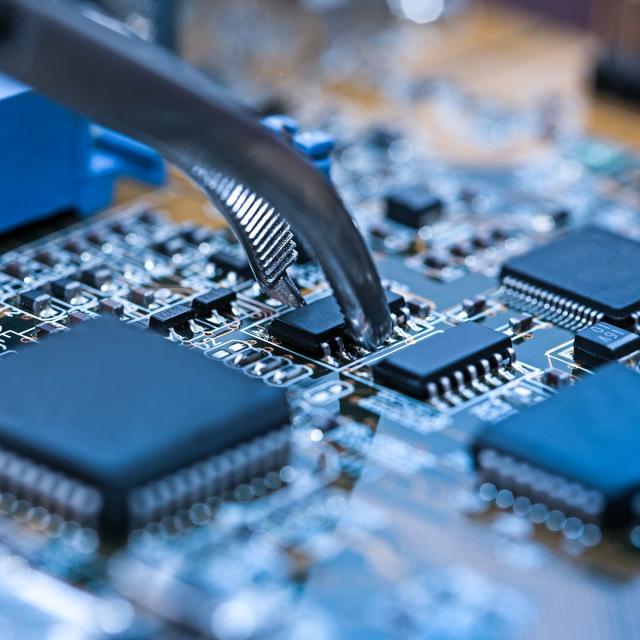
La electrónica ha respaldado el desarrollo científico y tecnológico de la humanidad, ostentando un rol clave en los últimos 50 años. Nos admiramos de la capacidad del ser humano de diseñar circuitos integrados que contienen millones de transistores y que nos permiten procesar con gran precisión las señales más débiles provenientes de las antenas de telefonía celular, de las neuronas del cerebro, de una cámara digital, o de la carga depositada por partículas subatómicas que colisionan en el Gran Colisionador de Hadrones en Suiza.

Class Deals by MOOC List - Click here and see Coursera's Active Discounts, Deals, and Promo Codes.

Es difícil entender un circuito electrónico, y aún más difícil diseñarlo. Pero no es imposible. Los electrones pueden ser muy dóciles si sabemos dominarlos. "Cómo entrenar a tus electrones 3: Aplicaciones interesantes", el último curso de una serie de tres MOOCs, introduce los dispositivos semiconductores discretos más utilizados en la actualidad en aplicaciones analógicas, los transistores bipolares, y finaliza con aplicaciones interesantes tales como los osciladores. Las videolecciones acompañadas de pequeños cuestionarios te ayudarán a reforzar tu aprendizaje en cuanto a la comprensión del funcionamiento de los semiconductores, los circuitos principales para amplificar, y las técnicas de análisis más utilizadas.

Course 3 of 3 in the Electrónica en cápsulas Specialization

Syllabus

WEEK 1
El transistor bipolar: Estructura y funcionamiento
En este módulo aprenderás acerca de la estructura física de los BJTs, sus regiones de operación y sus modelos matemáticos.

WEEK 2
El transistor bipolar: Circuitos
En este módulo conocerás las principales configuraciones de amplificadores con BJTs, incluyendo amplificadores elementales y amplificadores de varios transistores. Finalmente conocerás las limitaciones de los BJTs reales.

WEEK 3
Otros dispositivos y aplicaciones
En este módulo aprenderás acerca de los osciladores sintonizados y cómo aplicar el criterio de oscilación de Barkhausen para analizar su operación.
Go to Class
MOOC List is learner-supported. When you buy through links on our site, we may earn an affiliate commission.

Related Courses

Adding Electronics to Rapid Prototypes (Coursera) Coursera
Arizona State University

Adding Electronics to Rapid Prototypes (Coursera)

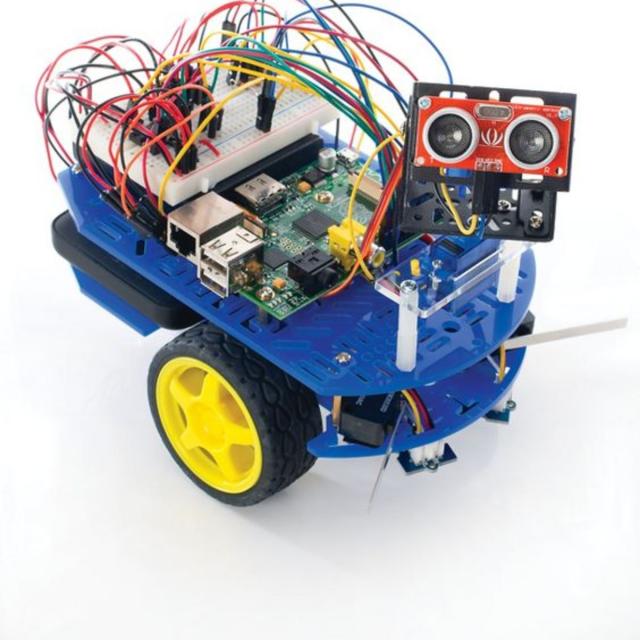
Hello, everyone! Welcome to this course on Adding Electronics to Rapid Prototypes. This is part of the Rapid Prototyping and Tooling specialization. In this course, I’ll cover the basics of electric circuits, breadboards, and multimeters. I’ll then discuss different options for connecting electrical components as well as discuss different types of motors and actuators. Finally, I’ll end this course by discussing microcontrollers and how to use them to make even more sophisticated prototypes.

Jul 20th 2026
5-12 Weeks
Introducción al Internet de las Cosas (IoT) (edX) EdX
Universitat Politècnica de València,UPValenciaX

Introducción al Internet de las Cosas (IoT) (edX)

Este es un curso en línea preliminar en el que tratamos los conceptos básicos de electronica y programación utilizando placas Arduino y ESP. El internet de las cosas (Internet of things o IoT) es el presente y el futuro de la tecnología. Tanto si tienes algo de experiencia con la electrónica y deseas desarrollar proyectos como si no tienes ninguna, este curso online te dara los conocimientos iniciales necesarios para comenzar a crear dispositivos increibles capaces de medir y controlar señales físicas.

Self Paced
Self-Paced
General Chemistry: Concept Development and Application (Coursera) Coursera
Rice University

General Chemistry: Concept Development and Application (Coursera)

This course will cover the topics of a full year, two semester General Chemistry course. We will use a free on-line textbook, Concept Development Studies in Chemistry, available via Rice’s Connexions project. The fundamental concepts in the course will be introduced via the Concept Development Approach developed at Rice University. In this approach, we will develop the concepts you need to know from experimental observations and scientific reasoning rather than simply telling you the concepts and then asking you to simply memorize or apply them.

Jul 27th 2026
5-12 Weeks
Teaching Physical Computing with Raspberry Pi and Python (FutureLearn) FutureLearn
Raspberry Pi Foundation

Teaching Physical Computing with Raspberry Pi and Python (FutureLearn)

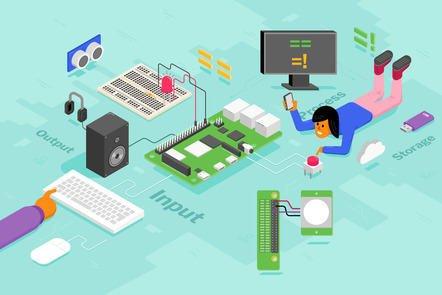
Explore the exciting world of physical computing and create electronic circuits that you can control with code. Learn the benefits of using physical computing with your students. On this course from the Raspberry Pi Foundation, you will be introduced to the world of physical computing. You will use input devices to capture data, process that data with the Python programming language, and then use output devices to get information back out from your computer.

Mar 6th 2023
3 Weeks
Introduction to Quantum Transport (edX) EdX
Purdue University,PurdueX

Introduction to Quantum Transport (edX)

This course introduces the non-equilibrium Green’s function (NEGF) method widely used to describe quantum effects in nanoscale devices, along with its applications to spintronic devices. This course introduces the Schrödinger equation, using the tight-binding method to discuss the concept of bandstructure and E(k) relations, followed by an introduction to the NEGF method with simple illustrative examples. Concept of spinors is introduced along with the application of the NEGF method to spintronic devices.

Feb 12th 2024
5-12 Weeks
Electrónica Digital Bit a Bit: Aprendiendo fundamentos (Coursera) Coursera
Pontificia Universidad Católica de Chile

Electrónica Digital Bit a Bit: Aprendiendo fundamentos (Coursera)

Es desafiante y hasta atemorizante entender un circuito digital cuando observamos la cantidad de transistores que puede contener, y aún más difícil diseñarlo eficientemente para su implementación en un circuito integrado o una FPGA. Sin embargo, saber diseñar circuitos digitales simples nos abre las puertas para diseñar sistemas digitales más complejos a partir de estos.

Jun 22nd 2026
5-12 Weeks
Electronique I (edX) EdX
École Polytechnique Fédérale de Lausanne,EPFLx

Electronique I (edX)

Introduction à l’électronique analogique- première partie. Fonctions de base réalisées à l’aide des amplificateurs opérationnels. Ce cours est un cours d’introduction à la réalisation des fonctions linéaires et non-linéaires de base à l’aide de l’amplificateur opérationnel.


Self Paced
Self-Paced
Physics 102 - Electric Potential and DC Circuits (Coursera) Coursera
Rice University

Physics 102 - Electric Potential and DC Circuits (Coursera)

This course serves as an introduction to the physics of electricity and magnetism. Upon completion, learners will have an understanding of how the forces between electric charges are described by fields, and how these fields are related to electrical circuits. They will gain experience in solving physics problems with tools such as graphical analysis, algebra, vector analysis, and calculus.

Jul 20th 2026
3 Weeks
Introduction to Semiconductor Process 2 (Coursera) Coursera
Korea Advanced Institute of Science and Technology - KAIST

Introduction to Semiconductor Process 2 (Coursera)

This course aims to provide a general understanding of semiconductor process. This course explores the principles and basic theory of semiconductor device and process. Furthermore, the students will learn the overall semiconductor process such as oxidation, diffusion, ion implantation, lithography, etching, thin film deposition, plasma, metallization, and packaging.

Jul 27th 2026
5-12 Weeks
Fundamentals of Audio and Music Engineering: Part 1 Musical Sound & Electronics (Coursera) Coursera
University of Rochester

Fundamentals of Audio and Music Engineering: Part 1 Musical Sound & Electronics (Coursera)

In this course students learn the basic concepts of acoustics and electronics and how they can applied to understand musical sound and make music with electronic instruments. Topics include: sound waves, musical sound, basic electronics, and applications of these basic principles in amplifiers and speaker design.

Aug 3rd 2026
5-12 Weeks
Cómo entrenar a tus electrones 2: Diodos y Transistores (Coursera) Coursera
Pontificia Universidad Católica de Chile

Cómo entrenar a tus electrones 2: Diodos y Transistores (Coursera)

La electrónica ha respaldado el desarrollo científico y tecnológico de la humanidad, ostentando un rol clave en los últimos 50 años. Nos admiramos de la capacidad del ser humano de diseñar circuitos integrados que contienen millones de transistores y que nos permiten procesar con gran precisión las señales más débiles provenientes de las antenas de telefonía celular, de las neuronas del cerebro, de una cámara digital, o de la carga depositada por partículas subatómicas que colisionan en el Gran Colisionador de Hadrones en Suiza.

Jul 27th 2026
4 Weeks