Electrónica Digital Bit a Bit: Diseñando circuitos complejos (Coursera)

Electrónica Digital Bit a Bit: Diseñando circuitos complejos (Coursera)

Los circuitos digitales más complejos como memorias y procesadores, que contienen millones de transistores gracias a su reducido tamaño, pueden ser divididos en circuitos más simples ya conocidos para facilitar su diseño e implementación. Lo mismo podemos realizar utilizando Verilog para diseñar circuitos digitales complejos que realizan muchas funciones o cuentan con un gran número de entradas y salidas.

Class Deals by MOOC List - Click here and see Coursera's Active Discounts, Deals, and Promo Codes.

El curso “Electrónica digital bit a bit: Diseñando circuitos complejos” nos presenta los circuitos combinacionales y secuenciales síncronos que son fundamentales para el diseño de máquinas de estado y sistemas digitales más complejos, como por ejemplo memorias y procesadores. También nos introduce a los circuitos secuenciales asíncronos con las debidas precauciones que se deben tener para diseñarlos e implementarlos. El curso termina presentando varios ejemplos de sistemas digitales, tales como una memoria SRAM y un procesador simple.
La metodología a utilizar trabaja con videolecciones acompañadas de cortos cuestionarios te ayudarán a reforzar tu aprendizaje en cuanto a la comprensión y distinción de los circuitos combinacionales y secuenciales, el análisis de circuitos basados en máquinas de estado y el diseño de estos a partir de Verilog.

Syllabus

WEEK 1
Bloques de circuitos combinacionales
Las láminas y figuras presentadas en este módulo han sido elaboradas basándose en el libro "Fundamentals of Digital Logic with Verilog Design" de los autores Stephen Brown y Zvonko Vranesic.
WEEK 2
Flip-flops, registros y contadores
Las láminas y figuras presentadas en este módulo han sido elaboradas basándose en el libro "Fundamentals of Digital Logic with Verilog Design" de los autores Stephen Brown y Zvonko Vranesic.

WEEK 3
Circuitos secuenciales síncronos
Las láminas y figuras presentadas en este módulo han sido elaboradas basándose en el libro "Fundamentals of Digital Logic with Verilog Design" de los autores Stephen Brown y Zvonko Vranesic.
WEEK 4
Circuitos secuenciales asíncronos
Las láminas y figuras presentadas en este módulo han sido elaboradas basándose en el libro "Fundamentals of Digital Logic with Verilog Design" de los autores Stephen Brown y Zvonko Vranesic.
WEEK 5
Diseño de sistemas digitales
Las láminas y figuras presentadas en este módulo han sido elaboradas basándose en el libro "Fundamentals of Digital Logic with Verilog Design" de los autores Stephen Brown y Zvonko Vranesic.
Go to Class
MOOC List is learner-supported. When you buy through links on our site, we may earn an affiliate commission.

Related Courses

Adding Electronics to Rapid Prototypes (Coursera) Coursera
Arizona State University

Adding Electronics to Rapid Prototypes (Coursera)

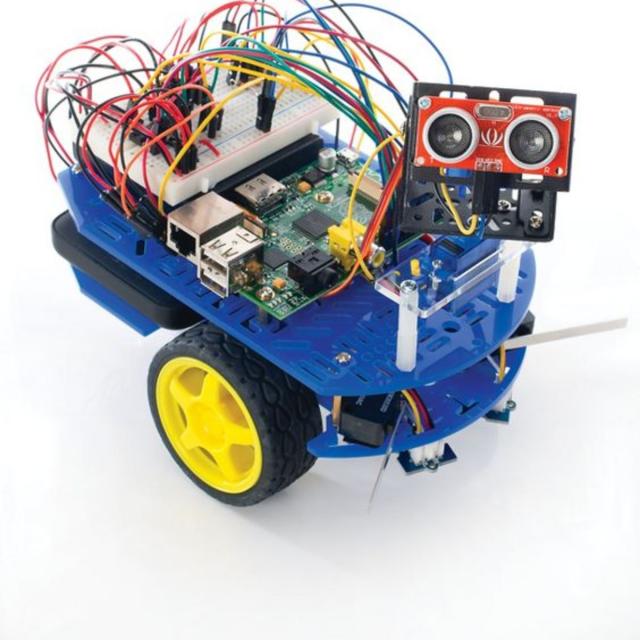
Hello, everyone! Welcome to this course on Adding Electronics to Rapid Prototypes. This is part of the Rapid Prototyping and Tooling specialization. In this course, I’ll cover the basics of electric circuits, breadboards, and multimeters. I’ll then discuss different options for connecting electrical components as well as discuss different types of motors and actuators. Finally, I’ll end this course by discussing microcontrollers and how to use them to make even more sophisticated prototypes.

Aug 3rd 2026
5-12 Weeks
Introduction to Semiconductors, PN Junctions and Bipolar Junction Transistors (edX) EdX
The Hong Kong University of Science and Technology - HKUST,HKUSTx

Introduction to Semiconductors, PN Junctions and Bipolar Junction Transistors (edX)

An intuitive approach to operational principles of semiconductor devices. The course covers PN junction diodes, optical sensors, solar cells, LEDs, and Bipolar Junction Transistors. As a topic of study, semiconductor devices offer a unique challenge due to the complex mathematics involved. In this course, we take a more intuitive approach to explore the underlying concepts. Eschewing mathematics, we use engaging animations to help you visualize the working principles of many common semiconductor devices.

Self Paced
Self-Paced
Electronique I (edX) EdX
École Polytechnique Fédérale de Lausanne,EPFLx

Electronique I (edX)

Introduction à l’électronique analogique- première partie. Fonctions de base réalisées à l’aide des amplificateurs opérationnels. Ce cours est un cours d’introduction à la réalisation des fonctions linéaires et non-linéaires de base à l’aide de l’amplificateur opérationnel.


Self Paced
Self-Paced
Electrones en Acción: Electrónica y Arduinos para tus propios Inventos (Coursera) Coursera
Pontificia Universidad Católica de Chile

Electrones en Acción: Electrónica y Arduinos para tus propios Inventos (Coursera)

Este curso introduce al alumno a la electrónica y los Arduinos, comenzando desde lo más básico de un circuito eléctrico y finalizando con el diseño de circuitos de baja complejidad empleando dispositivos electrónicos programables. Durante el curso los alumnos aprenderán los fundamentos básicos de la electricidad y de la electrónica, conocerán los diferentes bloques empleados en el diseño de un circuito electrónico, aprenderán las bases del diseño de circuitos analógicos y digitales, y serán introducidos a la programación de estos últimos empleando la plataforma Arduino.

Jul 27th 2026
4 Weeks
Requirement Specifications for Autonomous Systems (Coursera) Coursera
University of Colorado Boulder

Requirement Specifications for Autonomous Systems (Coursera)

This course will discuss different ways of formally modeling requirements of interest for autonomous systems. Examples of such requirements include stability, invariance, reachability, regular languages, omega-regular languages, and linear temporal logic properties. In addition, it will introduce non-deterministic finite and büchi automata for recognizing, respectively, regular languages and omega-regular languages.

Jul 27th 2026
5-12 Weeks
Building Arduino robots and devices (Coursera) Coursera
Moscow Institute of Physics and Technology

Building Arduino robots and devices (Coursera)

For many years now, people have been improving their tools, studying the forces of nature and bringing them under control, using the energy of the nature to operate their machines. Last century is noted for the creation of machines which can operate other machines. Nowadays the creation of devices that interact with the physical world is available to anyone. Our course consists of a series of practical problems on making things that work independently: they make their own decisions, act, move, communicate with each other and people around, and control other devices. We will demonstrate how to assemble such devices and programme them using the Arduino platform as a basis.

May 9th 2022
5-12 Weeks
Converter Control (Coursera) Coursera
University of Colorado Boulder

Converter Control (Coursera)

This course teaches how to design a feedback system to control a switching converter. The equivalent circuit models derived in the previous courses are extended to model small-signal ac variations. These models are then solved, to find the important transfer functions of the converter and its regulator system. Finally, the feedback loop is modeled, analyzed, and designed to meet requirements such as output regulation, bandwidth and transient response, and rejection of disturbances.

Aug 17th 2026
4 Weeks
Recent Advances in Freeform Electronics (Coursera) Coursera
Yonsei University

Recent Advances in Freeform Electronics (Coursera)

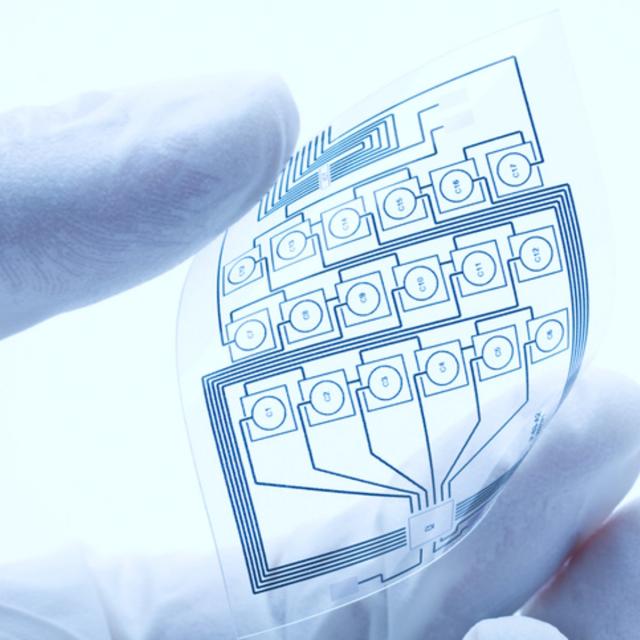
In this course, the learners will understand fundamental basic backgrounds of p-n junctions, diodes and MOSFETs (Metal Oxide Semiconductor Field Effect Transistors). Also, recent approaches on flexible / stretchable electronics, transparent optoelectronics, and printed electronics using one dimensional or two dimensional nanomaterials will be introduced.

Aug 10th 2026
5-12 Weeks
Computer Science: Algorithms, Theory, and Machines (Coursera) Coursera
Princeton University

Computer Science: Algorithms, Theory, and Machines (Coursera)

This course introduces the broader discipline of computer science to people having basic familiarity with Java programming. It covers the second half of our book Computer Science: An Interdisciplinary Approach (the first half is covered in our Coursera course Computer Science: Programming with a Purpose, to be released in the fall of 2018). Our intent is to demystify computation and to build awareness about the substantial intellectual underpinnings and rich history of the field of computer science.

Aug 10th 2026
5-12 Weeks
Designing Hardware for Raspberry Pi Projects (Coursera) Coursera
Johns Hopkins University

Designing Hardware for Raspberry Pi Projects (Coursera)

This is course 4 of this specialization (although it can be taken out of order) and focuses on applying experience and knowledge gained in the first three courses to build physical electronics hardware. Specifically, this course focuses on four areas: circuit simulation, schematic entry, PCB layout, and 3D CAD modeling. There are many excellent commercial applications available in these areas, however to give everyone access we'll be using all free and open-source software.

Aug 3rd 2026
4 Weeks