Electrical Engineering: Sensing, Powering and Controlling (FutureLearn)

Electrical Engineering: Sensing, Powering and Controlling (FutureLearn)

Get a taste of an electrical engineering degree. Build your confidence in communicating ideas and using technical vocabulary. This online course provides an introduction to electronic, electrical and systems engineering.

Class Deals by MOOC List - Click here and see FutureLearn's Active Discounts, Deals, and Promo Codes.

You’ll examine everyday electrical circuits, such as pick-ups for musical instruments, and out of this world circuits, such as devices used in space.
You’ll develop skills in analysing and designing digital and analogue circuits and systems, and get familiar with using English technical vocabulary. You’ll understand how electric engineering systems are used in specific contexts, and gain confidence in communicating engineering ideas.
The course is provided in English with Mandarin transcripts.

What topics will you cover?

  • Overview of Electrical, Electronic and Systems Engineering
  • Introduction to systems and systems terminology
  • Transducers and their purpose
  • Electronic systems in context
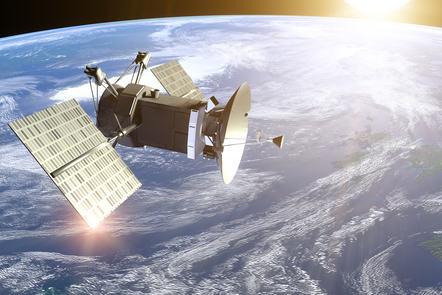
  • Issues relating to solar power / batteries in space
  • Introduction to the Space Weather research group
  • Electrical circuits
  • The differences between analogue and digital Electrical Engineering
  • Introduction to digital electronics
  • Overview of control systems for rail platform shield walls

What will you achieve?
By the end of the course, you'll be able to...

  • Investigate what is meant by Electronic, Electrical and Systems Engineering.
  • Develop your skills in analysing and designing circuits and systems.
  • Improve your confidence in communicating Engineering ideas using English technical vocabulary.
  • Assess how different Electronic and Electrical Engineering systems are used in specific contexts.
Go to Class
MOOC List is learner-supported. When you buy through links on our site, we may earn an affiliate commission.

Related Courses

Applying Systems Engineering to the Design Process (Coursera) Coursera
University of Colorado Boulder

Applying Systems Engineering to the Design Process (Coursera)

In this course, you will learn what a systems engineer does. Following the conceptual foundations from The Need for Systems Engineering, you will perform requirements analysis and functional analysis on engineering programs. You will learn how to perform a trade study using a methodical, quantitative approach that is universal in application. This course also covers preparing design reviews, focusing on coordinating the inputs of multiple engineering disciplines into a cohesive description of the design approach.

Nov 2nd 2026
5-12 Weeks
Real-Time Mission-Critical Systems Design (Coursera) Coursera
University of Colorado Boulder

Real-Time Mission-Critical Systems Design (Coursera)

Upon completion of this course the learner will know the difference between systems you can bet your life on (mission critical) and those which provide predictable response and quality of service (reliable). This will be achieved not only by study of design methods and patterns for mission critical systems, but also through implementation of soft real-time systems and comparison to hard real-time. Methods of verification to determine ability to meet mission critical as well as soft real-time requirements will be learned so that the learner can properly assess risk, reliability and impact of failure in real-time systems.

Nov 2nd 2026
4 Weeks
Design of High-Performance Optical Systems (Coursera) Coursera
University of Colorado Boulder

Design of High-Performance Optical Systems (Coursera)

This course can also be taken for academic credit as ECEA 5602, part of CU Boulder’s Master of Science in Electrical Engineering degree.Optical instruments are how we see the world, from corrective eyewear to medical endoscopes to cell phone cameras to orbiting telescopes. This course extends what you have learned about first-order, paraxial system design and optical resolution and efficiency with the introduction to real lenses and their imperfections.

Nov 9th 2026
5-12 Weeks
Physics 102 - Electric Charges and Fields (Coursera) Coursera
Rice University

Physics 102 - Electric Charges and Fields (Coursera)

This course serves as an introduction to the physics of electricity and magnetism. Upon completion, learners will have an understanding of how the forces between electric charges are described by fields, and how these fields are related to electrical circuits. They will gain experience in solving physics problems with tools such as graphical analysis, algebra, vector analysis, and calculus. The course follows the typical progression of topics of a first-semester university physics course: charges, electric forces, electric fields potential, magnetic fields, currents, magnetic moments, electromagnetic induction, and circuits.

Nov 9th 2026
4 Weeks
Outsmarting intermittency (Coursera) Coursera
École Polytechnique

Outsmarting intermittency (Coursera)

Solar and wind offer clean and renewable ways to produce large amounts of electricity. They have boomed over the last few years, evolving from an eco-daydream to a major market and showing unprecedented growth rates. Yet, installing solar panels and wind turbines is by no means the end of the story. The electrical grid, which connects production means to the end-users’ sockets, is not a simple electron pipe. It is the beating heart of our electricity system and ensures its stability. Solar and wind raise specific challenges for the grid, and these challenges will have to be tackled if we want to deploy larger amounts of renewable sources.

Nov 23rd 2026
4 Weeks
Physics 102 - AC Circuits and Maxwell's Equations (Coursera) Coursera
Rice University

Physics 102 - AC Circuits and Maxwell's Equations (Coursera)

This course serves as an introduction to the physics of electricity and magnetism. Upon completion, learners will have an understanding of how the forces between electric charges are described by fields, and how these fields are related to electrical circuits. They will gain experience in solving physics problems with tools such as graphical analysis, algebra, vector analysis, and calculus. The course follows the typical progression of topics of a first-semester university physics course: charges, electric forces, electric fields potential, magnetic fields, currents, magnetic moments, electromagnetic induction, and circuits.

Nov 9th 2026
3 Weeks
Interfacing with the Arduino (Coursera) Coursera
University of California, Irvine

Interfacing with the Arduino (Coursera)

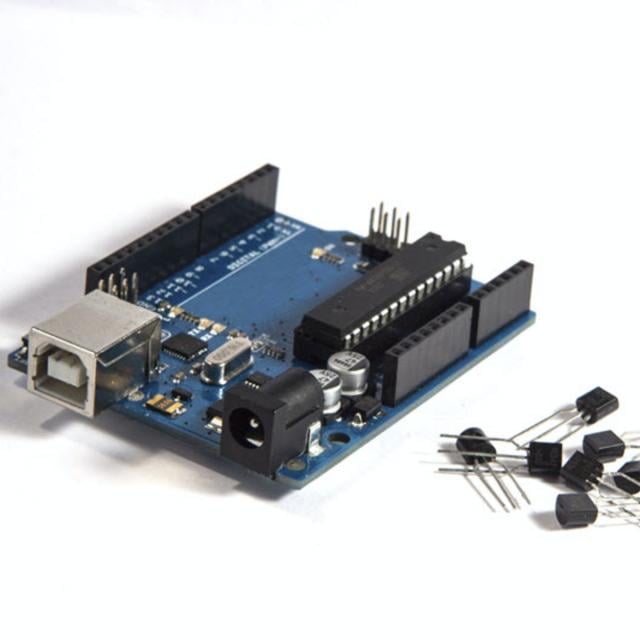
Arduino senses the environment by receiving inputs from add-on devices such as sensors, and can control the world around it by adjusting lights, motors, and other actuators. In this class you will learn how and when to use the different types of sensors and how to connect them to the Arduino. Since the external world uses continuous or analog signals and the hardware is digital you will learn how these signals are converted back-and-forth and how this must be considered as you program your device. You'll also learn about the use of Arduino-specific shields and the shields software libraries to interface with the real world.

Nov 9th 2026
4 Weeks
Digital Systems: From Logic Gates to Processors (Coursera) Coursera
Universitat Autònoma de Barcelona

Digital Systems: From Logic Gates to Processors (Coursera)

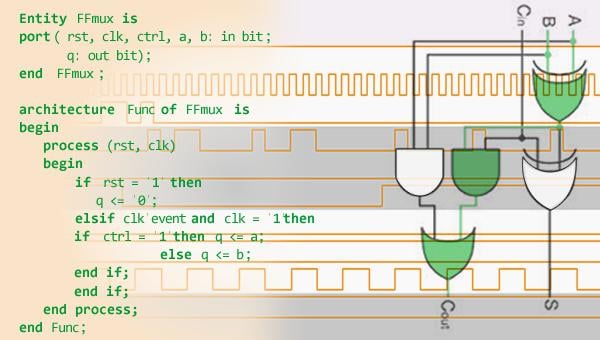
This course gives you a complete insight into the modern design of digital systems fundamentals from an eminently practical point of view. Unlike other more "classic" digital circuits courses, our interest focuses more on the system than on the electronics that support it. This approach will allow us to lay the foundation for the design of complex digital systems.

Nov 23rd 2026
5-12 Weeks
Fundamentals of particle accelerator technology (NPAP MOOC) (Coursera) Coursera
Lund University

Fundamentals of particle accelerator technology (NPAP MOOC) (Coursera)

Did you know that particle accelerators play an important role in many functions of todays society and that there are over 30 000 accelerators in operation worldwide? A few examples are accelerators for radiotherapy which are the largest application of accelerators, altogether with more than 11000 accelerators worldwide. These accelerators range from very compact electron linear accelerators with a length of only about 1 m to large carbon ion synchrotrons with a circumference of more than 50 m and a huge rotating carbon ion gantry with a weight of 600 tons!

Nov 2nd 2026
5-12 Weeks
Equivalent Circuit Cell Model Simulation (Coursera) Coursera
University of Colorado Boulder,University of Colorado System

Equivalent Circuit Cell Model Simulation (Coursera)

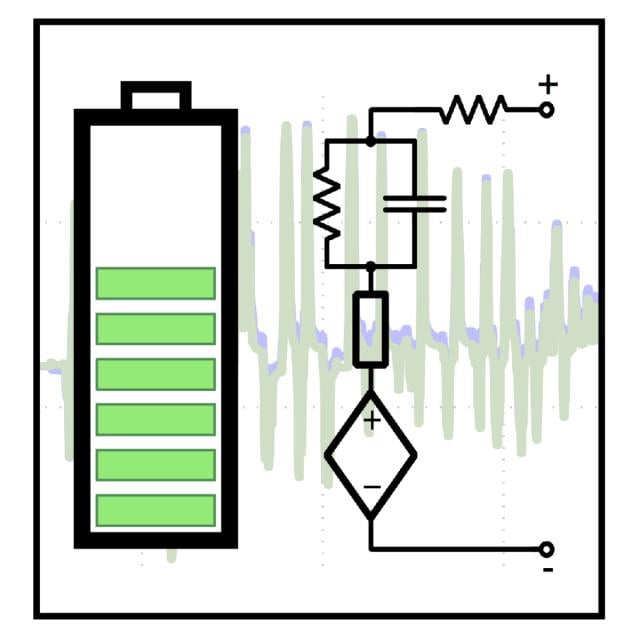
In this course, you will learn the purpose of each component in an equivalent-circuit model of a lithium-ion battery cell, how to determine their parameter values from lab-test data, and how to use them to simulate cell behaviors under different load profiles.

Nov 2nd 2026
5-12 Weeks