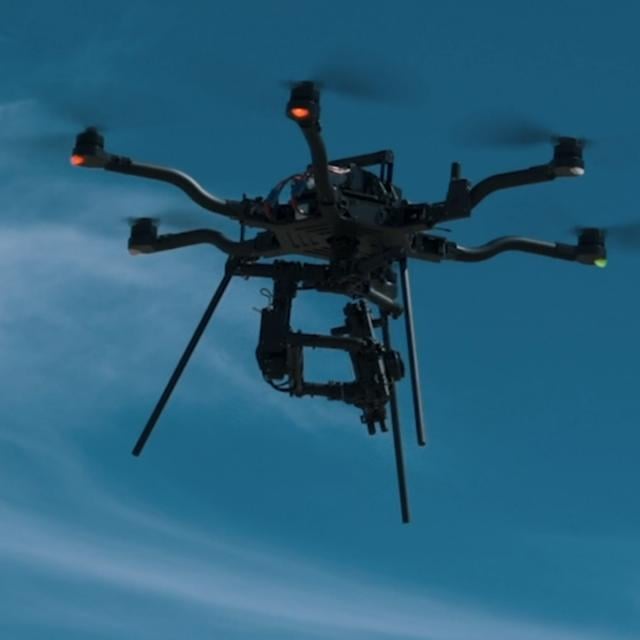
Real-Time Mission-Critical Systems Design (Coursera)

Real-Time Mission-Critical Systems Design (Coursera)

Upon completion of this course the learner will know the difference between systems you can bet your life on (mission critical) and those which provide predictable response and quality of service (reliable). This will be achieved not only by study of design methods and patterns for mission critical systems, but also through implementation of soft real-time systems and comparison to hard real-time. Methods of verification to determine ability to meet mission critical as well as soft real-time requirements will be learned so that the learner can properly assess risk, reliability and impact of failure in real-time systems.

Class Deals by MOOC List - Click here and see Coursera's Active Discounts, Deals, and Promo Codes.

This course can also be taken for academic credit as ECEA 5317, part of CU Boulder’s Master of Science in Electrical Engineering degree.
At the end of this course learners will be able to apply an architectural style (cyclic executive, RTOS, or embedded Linux) to more detailed design of a mission critical system, a soft real-time system, or a mixed hard and soft real-time system, including:

  • Thorough understanding of hardware/software device interfaces and resource view for hardware abstraction layers (HAL, BSP)
  • Design trade-offs with different real-time hardware architectures including single core, multi-core, hybrid-FPGA, GP-GPU, and DSP systems, with emphasis on multi-core
  • Mission critical embedded systems architecture and key design elements
  • Fault tolerant processing, memory, and I/O concepts

Syllabus

WEEK 1
Device I/O interfaces and Drivers for Real-time Systems
This module covers RTES software to hardware interface using device abstraction and driver interfaces as well as system scaling.

WEEK 2
Fault Tolerant Memory and Storage for Mission Critical Systems
This module covers use of key algorithms such as error correct codes, redundant arrays of devices, and use of flash file systems with persistent memory.

WEEK 3
Solving performance and reliability defects in real-time systems
Service software implementation efficiency and optimization methods are covered so that computations can be completed by deadlines. Methods of profiling and tracing applications as well as the whole system are covered.

WEEK 4
Difference between high availability and high reliability for hard and soft real-time systems
This module integrates fault tolerant and recovery methods with overall strategies for system level fault detection, isolation and recovery. Design with consideration of failure modes and effects analysis is covered along with redundancy management for high availability.

Go to Class
MOOC List is learner-supported. When you buy through links on our site, we may earn an affiliate commission.

Related Courses

Introduction to Cybersecurity for Business (Coursera) Coursera
University of Colorado System

Introduction to Cybersecurity for Business (Coursera)

The world runs computers. From small to large businesses, from the CEO down to level 1 support staff, everyone uses computers. This course is designed to give you a practical perspective on computer security. This course approaches computer security in a way that anyone can understand. Ever wonder how your bank website is secure when you connect to it? Wonder how other business owners secure their network? Wonder how large data breaches happen? This is practical computer security. It will help you answer the question – what should I focus on?

Jun 8th 2026
5-12 Weeks
Design of High-Performance Optical Systems (Coursera) Coursera
University of Colorado Boulder

Design of High-Performance Optical Systems (Coursera)

This course can also be taken for academic credit as ECEA 5602, part of CU Boulder’s Master of Science in Electrical Engineering degree.Optical instruments are how we see the world, from corrective eyewear to medical endoscopes to cell phone cameras to orbiting telescopes. This course extends what you have learned about first-order, paraxial system design and optical resolution and efficiency with the introduction to real lenses and their imperfections.

Jun 8th 2026
5-12 Weeks
Introduction to Virtual Reality (Coursera) Coursera
University of London,Goldsmiths, University of London

Introduction to Virtual Reality (Coursera)

This course will introduce you to Virtual Reality (VR). The course will teach you everything from the basics of VR- the hardware and the history of VR- to different applications of VR, the psychology of Virtual Reality, and the challenges of the medium. The course is designed for people who are new to VR as a medium. You may have experienced some virtual reality before, and may have some hardware- but this course is suitable to individuals who have never experienced VR and those who do not have much hardware- we will explain Mobile VR as well as devices such as the Oculus Rift and HTC Vive.

Jun 8th 2026
4 Weeks
System Administration and IT Infrastructure Services (Coursera) Coursera
Google

System Administration and IT Infrastructure Services (Coursera)

This course will transition you from working on a single computer to an entire fleet. Systems administration is the field of IT that’s responsible for maintaining reliable computers systems in a multi-user environment. In this course, you’ll learn about the infrastructure services that keep all organizations, big and small, up and running. We’ll deep dive on cloud so that you’ll understand everything from typical cloud infrastructure setups to how to manage cloud resources. You'll also learn how to manage and configure servers and how to use industry tools to manage computers, user information, and user productivity. Finally, you’ll learn how to recover your organization’s IT infrastructure in the event of a disaster.

Jun 8th 2026
5-12 Weeks
CompTIA Exam Prep (Coursera) Coursera
LearnQuest

CompTIA Exam Prep (Coursera)

This course is geared towards anyone looking to take the CompTIA A+ certification exam. This certification focuses predominately on computer support or helpdesk. This course gives you easy access to the invaluable learning techniques used by many in their preparation of the CompTIA A+ certification exam. We’ll learn about the exam process, expectations, and tip & tricks that can be used in passing the exam. Using these approaches, regardless of your skill levels in the topics and objective areas of the exam.

Jun 8th 2026
3 Weeks
Reviews & Metrics for Software Improvements (Coursera) Coursera
University of Alberta

Reviews & Metrics for Software Improvements (Coursera)

This course covers techniques for monitoring your projects in order to align client needs, project plans, and software production. It focuses on metrics and reviews to track and improve project progress and software quality. What you will learn: apply techniques to measure and visualize project progress, integrate Agile review practices to increase project visibility; reflect on lessons learned in software projects through retrospective exercises; improve project and process quality through ongoing measurement

Jun 8th 2026
4 Weeks
3D Printing Capstone Coursera
University of Illinois at Urbana-Champaign

3D Printing Capstone

The capstone will integrate the learning acquired from the four courses in the 3D Printing Specialization through a hands-on project. This project will enable you to turn an idea into an object using the knowledge and skills acquired through the other courses. Specifically, you will be guided through a step-by-step process in which you imagine, design, make, and share a 3D printed object. Thus, through this capstone, you will be able to put course concepts into action and utilize the skills that you have acquired throughout the Specialization.

Jun 8th 2026
4 Weeks
Aspectos básicos de la asistencia técnica (Coursera) Coursera
Google

Aspectos básicos de la asistencia técnica (Coursera)

Este curso es el primero de una serie que tiene como objetivo prepararte para un rol como especialista de soporte de TI de nivel inicial. En este curso, serás introducido en el mundo de la tecnología de la información, o TI. Aprenderás sobre las diferentes facetas de la tecnología de la información como hardware y software informático, Internet, solución de problemas y servicio al cliente.

Jun 9th 2026
5-12 Weeks
Hardware Security (Coursera) Coursera
University of Maryland, College Park

Hardware Security (Coursera)

In this course, we will study security and trust from the hardware perspective. Upon completing the course, students will understand the vulnerabilities in current digital system design flow and the physical attacks to these systems. They will learn that security starts from hardware design and be familiar with the tools and skills to build secure and trusted hardware.

Jun 8th 2026
5-12 Weeks
Getting Started with Google Kubernetes Engine (Coursera) Coursera
Google Cloud

Getting Started with Google Kubernetes Engine (Coursera)

This one-week, accelerated online class equips students to containerize workloads in Docker containers, deploy them to Kubernetes clusters provided by Google Kubernetes Engine, and scale those workloads to handle increased traffic. Students also learn how to continuously deploy new code in a Kubernetes cluster to provide application updates.

Jun 8th 2026
1 Week