Introduction to the Internet of Things and Embedded Systems (Coursera)

Introduction to the Internet of Things and Embedded Systems (Coursera)

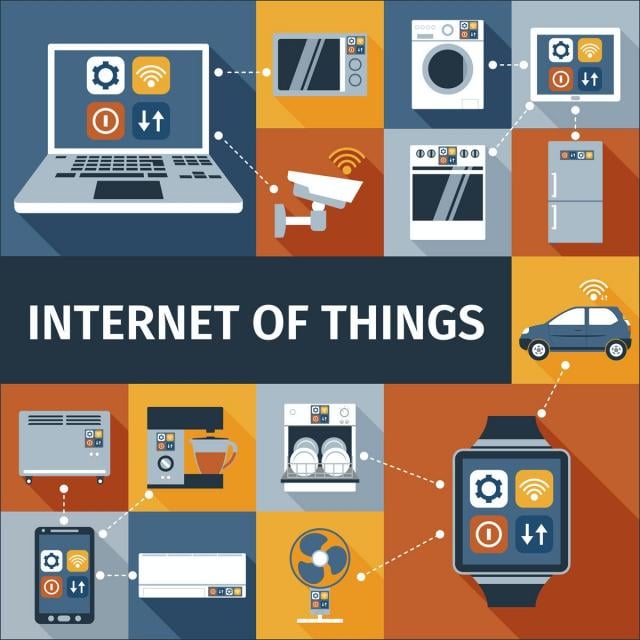
The explosive growth of the “Internet of Things” is changing our world and the rapid drop in price for typical IoT components is allowing people to innovate new designs and products at home. In this first class in the specialization you will learn the importance of IoT in society, the current components of typical IoT devices and trends for the future. IoT design considerations, constraints and interfacing between the physical world and your device will also be covered. You will also learn how to make design trade-offs between hardware and software. We'll also cover key components of networking to ensure that students understand how to connect their device to the Internet.

Class Deals by MOOC List - Click here and see Coursera's Active Discounts, Deals, and Promo Codes.

Upon completing this course, you will be able to:

  1. Define the term “Internet of Things”
  2. State the technological trends which have led to IoT
  3. Describe the impact of IoT on society
  4. Define what an embedded system is in terms of its interface
  5. Enumerate and describe the components of an embedded system
  6. Describe the interactions of embedded systems with the physical world
  7. Name the core hardware components most commonly used in IoT devices
  8. Describe the interaction between software and hardware in an IoT device
  9. Describe the role of an operating system to support software in an IoT device
  10. Explain the use of networking and basic networking hardware
  11. Describe the structure of the Internet
  12. Describe the meaning of a “network protocol”
  13. Explain MANETs and their relation to IoT

Course 1 of 6 in the An Introduction to Programming the Internet of Things (IOT) Specialization.

Syllabus

WEEK 1
What Is the Internet of Things (IoT)?
The Internet of Things (IoT) is a popular buzzword right now, but unlike many fads which have come and gone, the Internet of Things describes an important trend which is having lasting effects on society at large. The term itself, “Internet of Things”, is used to mean a variety of ideas, depending on the motivation and background of the speaker. This course will start by providing a definition of the term. We will talk about how various trends have enabled the Internet of Things, and how it changes the way design is performed. We will also discuss some of the ramifications that IoT is having on society today.

WEEK 2
Embedded Systems
In Module 1, we introduced the concept of the Internet of Things at a high level, defining the term and outlining its implications. In this module we explore some of the details involved in the design and implementation of IoT devices. Unlike traditional computer-based systems, IoT devices are “embedded” within other devices in order to provide enhanced functionality without exposing the user to the complexities of a computer. The users interact with the device in a natural way, similar to their interactions with any other objects in the world. In this way, an embedded system has an interface that conforms to the expectations and needs of the users. Establishing a natural interface requires that the embedded system interface with the physical world directly through sensors, which read the state of the world, and actuators, which change the state of the world. In this module we will discuss the structure of embedded systems and describe these interactions with the physical world.

WEEK 3
Hardware and Software
IoT devices are implemented using both hardware and software components. Dedicated hardware components are used to implement the interface with the physical world, and to perform tasks which are more computationally complex. Microcontrollers are used to execute software that interprets inputs and controls the system. This module discusses the roles of both the hardware and software components in the system. The functions of common hardware components are described and the interface between the software and hardware through the microcontroller is explained. IoT devices often use an operating system to support the interaction between the software and the microcontroller. We will define the role of an operating system in an IoT device and how an IoT operating system differs from a standard one.

WEEK 4
Networking and the Internet
An important aspect of the Internet of Things is that devices are networked in some way, and often connected to the Internet. Networking enables devices to communicate with other IoT devices and larger cloud-based servers. IoT devices can often be thought of as small parts of a much larger collective system which includes large servers based in the cloud. This module will introduce the basics of networking and the Internet protocol in particular. Eventually, most IoT devices are connected to the Internet, so understanding the protocols associated with the Internet is important to the design of IoT devices. We will also introduce the concept of a Mobile Ad Hoc Network, or MANET, which describes small, local networks of IoT devices.


Go to Class
MOOC List is learner-supported. When you buy through links on our site, we may earn an affiliate commission.

Related Courses

Personnel & Third-Party Security (Coursera) Coursera
University of California, Irvine

Personnel & Third-Party Security (Coursera)

In this course, you will learn all about the process of implementing effective education, training, and awareness programs. You will also study the role personnel security plays in protecting an organization’s assets, intellectual property, and physical assets. You will also be introduced to the steps required for effective Vendor Risk Management (VRM), including: due diligence, contracting, monitoring & accessing, and termination. Throughout the course, you will engage with current case studies that illustrate the key concepts in your lessons. You will also have the chance to submit assignments in which you will apply the material in a practical application.

Jun 29th 2026
4 Weeks
System Validation: Automata and behavioural equivalences (Coursera) Coursera
EIT Digital

System Validation: Automata and behavioural equivalences (Coursera)

Have you ever experienced software systems failing? Websites crash, calendar not synchronising, or even a power blackout. Of course you have! But did you know that many of these errors are the result of communication errors either within a system or between systems? Depending on the system, the impact of software failures can be huge, even resulting in massive economic damage or loss of lives. Software, and in particular the communication between software-intensive systems, is very complex and very difficult to get right. However, we _need_ dependability in the systems we use, directly or indirectly, to support us in our everyday lives.

Jun 29th 2026
3 Weeks
Professional Skills for International Business (Coursera) Coursera
University of London

Professional Skills for International Business (Coursera)

This course provides insight into the key professional skills needed by managers at all levels of an organisation. You’ll learn key skills such as how to make a positive first impression; how to become a role model at work; effective time and resource management; and networking. This course forms part of a specialisation from the University of London designed to help you develop and build the essential business, academic, and cultural skills necessary to succeed in international business, or in further study.

Jun 29th 2026
4 Weeks
Technical Support Fundamentals (Coursera) Coursera
Google

Technical Support Fundamentals (Coursera)

This course is the first of a series that aims to prepare you for a role as an entry-level IT Support Specialist. In this course, you’ll be introduced to the world of Information Technology, or IT. You’ll learn about the different facets of Information Technology, like computer hardware, the Internet, computer software, troubleshooting, and customer service. This course covers a wide variety of topics in IT that are designed to give you an overview of what’s to come in this certificate program.

Jun 29th 2026
5-12 Weeks
M2M & IoT Interface Design & Protocols for Embedded Systems (Coursera) Coursera
University of Colorado Boulder

M2M & IoT Interface Design & Protocols for Embedded Systems (Coursera)

This course can also be taken for academic credit as ECEA 5348, part of CU Boulder’s Master of Science in Electrical Engineering degree. M2M and IoT Interface Design and Protocols is the third of three classes in the Embedded Interface Design (EID) specialization, an online version of the on-campus EID class taught in graduate embedded systems design. This course is focused on connecting devices to each other and to the cloud to create prototypes and actual systems that flow data from devices to consumers. The class includes an introduction to M2M (Machine-to-Machine) and IoT (Internet of Things) concepts, using the cloud to develop IoT systems (specifically AWS (Amazon Web Services) and its IoT framework), a review of common communications protocols at every level of connected devices, and other IoT design concerns such as security, message queuing approaches, and the use and design of APIs and microservices .

Jun 29th 2026
4 Weeks
Architecting Smart IoT Devices (Coursera) Coursera
EIT Digital

Architecting Smart IoT Devices (Coursera)

This course will teach you how to develop an embedded systems device. In order to reduce the time to market, many pre-made hardware and software components are available today. You'll discover all the available hardware and software components, such as processor families, operating systems, boards and networks. You'll also learn how to actually use and integrate these components.

Jun 29th 2026
5-12 Weeks
Electrones en Acción: Electrónica y Arduinos para tus propios Inventos (Coursera) Coursera
Pontificia Universidad Católica de Chile

Electrones en Acción: Electrónica y Arduinos para tus propios Inventos (Coursera)

Este curso introduce al alumno a la electrónica y los Arduinos, comenzando desde lo más básico de un circuito eléctrico y finalizando con el diseño de circuitos de baja complejidad empleando dispositivos electrónicos programables. Durante el curso los alumnos aprenderán los fundamentos básicos de la electricidad y de la electrónica, conocerán los diferentes bloques empleados en el diseño de un circuito electrónico, aprenderán las bases del diseño de circuitos analógicos y digitales, y serán introducidos a la programación de estos últimos empleando la plataforma Arduino.

Jun 29th 2026
4 Weeks
Cybersecurity Policy for Aviation and Internet Infrastructures (Coursera) Coursera
University of Colorado System

Cybersecurity Policy for Aviation and Internet Infrastructures (Coursera)

In this course we will examine the aviation and Internet infrastructures, and various policies that have been developed to help guide and strengthen their cybersecurity programs. The aviation and Internet infrastructures are also considered "lifeline infrastructure" as part of the transportation and communications sectors. Both subsectors are overseen by the Department of Homeland Security National Protection and Programs Directorate which manages the DHS National Infrastructure Protection Program.

Jun 29th 2026
4 Weeks
Programming with Cloud IoT Platforms (Coursera) Coursera
Pohang University of Science and Technology - POSTECH

Programming with Cloud IoT Platforms (Coursera)

Internet of Things (IoT) is an emerging area of information and communications technology (ICT) involving many disciplines of computer science and engineering including sensors/actuators, communications networking, server platforms, data analytics and smart applications. IoT is considered to be an essential part of the 4th Industrial Revolution along with AI and Big Data.

Jun 29th 2026
5-12 Weeks
IoT Devices (Coursera) Coursera
University of Illinois at Urbana-Champaign

IoT Devices (Coursera)

The Internet of Things (IoT) stands to be the next revolution in computing. Billions of data-spouting devices connected to the Internet are already fundamentally changing the way we live and work. This course teaches a deep understanding of IoT technologies from the ground up. Students will learn IoT device programming (Arduino and Raspberry Pi), sensing and actuating technologies, IoT protocol stacks (Zigbee, 5G, NFC, MQTT, etc), networking backhaul design and security enforcement, data science for IoT, and cloud-based IoT platforms such as AWS IoT.

Jun 29th 2026
4 Weeks