Arduino y algunas aplicaciones (Coursera)

Arduino y algunas aplicaciones (Coursera)

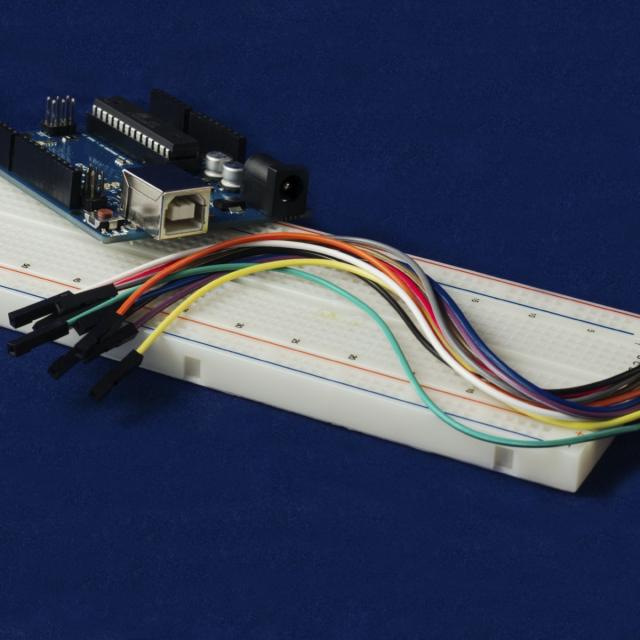
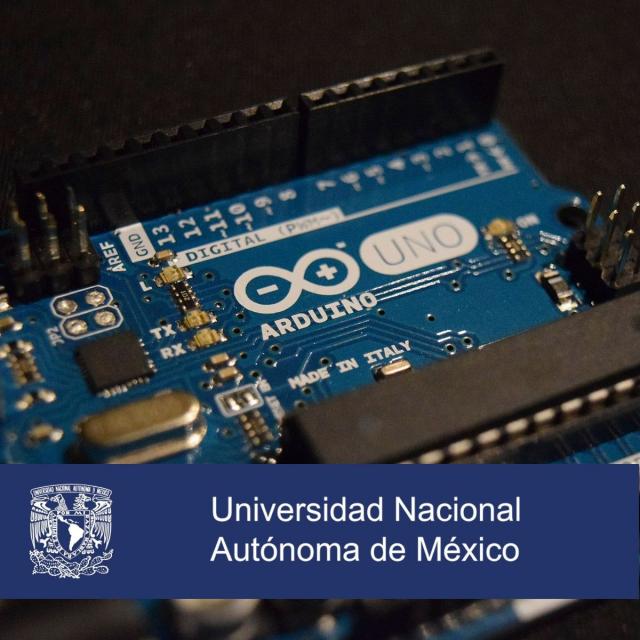
Arduino es una iniciativa empleada para simplificar el uso de los microcontroladores, que surgió en 2005 como resultado de un proyecto de estudiantes en el Instituto IVREA. Nació con el objetivo de disminuir el costo de los microcontroladores, que entonces los estudiantes empleaban para sus proyectos y que resultaban demasiado costosos.

Class Deals by MOOC List - Click here and see Coursera's Active Discounts, Deals, and Promo Codes.

Actualmente tiene diferentes usos, como la aplicación de desarrolladores de diseños artísticos e interactivos; de igual forma, muchas personas utilizan Arduino para incursionar en aplicaciones tecnológicas, como la automatización y la robótica.
Su aplicación, aunque pudiera parecer limitada a áreas de la ciencia muy especializadas, es en realidad común, al encontrarla en un cajero automático, un calentador de agua, la pluma de un estacionamiento o las puertas de una plaza o supermercado, y es que este tipo de herramientas, que facilitan nuestra vida diaria, están basadas en un pequeño microcontrolador, cuya tarea está dictada por un programa.
Programar es algo que hacemos día con día al planear nuestras actividades, pero si nos detenemos a organizar aquello que hacemos de manera inconsciente, obtendremos una serie ordenada de pasos que nos llevarán a un objetivo; si tenemos esto claro seremos capaces de planear actividades más complejas.
En este curso utilizaremos Arduino UNO para realizar dos prototipos que muestran el funcionamiento de dispositivos, como un chaleco para ciclista y un pastillero. No es requisito tener conocimientos de programación; sin embargo, conforme avances en el estudio de este curso probablemente necesites reforzar e investigar sobre algunos de los aspectos que aquí se expliquen.
A través de las actividades y material didáctico de este curso aprenderás a aplicar la tarjeta Arduino y podrás adquirir y reforzar nociones básicas de programación, utilizando una herramienta de fácil acceso, que te permitirá además elaborar posteriores proyectos de tu interés.

Syllabus

WEEK 1
¿Cómo trabajaremos en este curso?
Antes de iniciar el estudio de este curso revisa la forma en que está estructurado.
Arduino, ¿qué es y para qué sirve?
En este módulo conoceremos sobre el desarrollo de los microcontroladores a través de la historia y realizaremos la instalación del programa o IDE de la tarjeta Arduino UNO.

WEEK 2
Prototipo de chaleco para ciclistas
En este módulo identificaremos las zonas del entorno de desarrollo integrado (IDE), para posteriormente empezar a realizar códigos de programación, empleando las entradas y salidas digitales de la tarjeta Arduino; con ello podremos desarrollar un prototipo de señalización para ciclista.

WEEK 3
Fabricación de un pastillero inteligente
En este módulo aprenderemos a controlar un motor de CD, un buzzer, un interruptor de lámina y una pantalla de cristal líquido (LCD), que junto con bibliotecas e interrupciones de programación nos permitirán desarrollar un prototipo de pastillero inteligente.


Go to Class
MOOC List is learner-supported. When you buy through links on our site, we may earn an affiliate commission.

Related Courses

Building Modern Node.js Applications on AWS (Coursera) Coursera
AWS

Building Modern Node.js Applications on AWS (Coursera)

In modern cloud native application development, it’s oftentimes the goal to build out serverless architectures that are scalable, are highly available, and are fully managed. This means less operational overhead for you and your business, and more focusing on the applications and business specific projects that differentiate you in your marketplace. In this course, we will be covering how to build a modern, greenfield serverless backend on AWS.

Jun 3rd 2024
5-12 Weeks
Game Theory II: Advanced Applications (Coursera) Coursera
Stanford University,The University of British Columbia

Game Theory II: Advanced Applications (Coursera)

Popularized by movies such as "A Beautiful Mind", game theory is the mathematical modeling of strategic interaction among rational (and irrational) agents. Over four weeks of lectures, this advanced course considers how to design interactions between agents in order to achieve good social outcomes. Three main topics are covered: social choice theory (i.e., collective decision making and voting systems), mechanism design, and auctions.

May 18th 2026
5-12 Weeks
iPads - Changing the Way We Do Education (OpenLearning) OpenLearning
OpenLearning

iPads - Changing the Way We Do Education (OpenLearning)

The iPad technology has extraordinary implications for education and its design, functionality and capabilities enhances the possibility of a technology-based classroom. This is a beginner's course for anyone who has a minimal knowledge as to how to use an iPad. The course will cover lesson and curriculum content, but will also provide instruction on how to use the Settings section and hidden uses of the iPad.

Self Paced
Self-Paced
Data Analysis: Statistical Modeling and Computation in Applications (edX) EdX
MIT,MITx

Data Analysis: Statistical Modeling and Computation in Applications (edX)

A hands-on introduction to the interplay between statistics and computation for the analysis of real data. -- Part of the MITx MicroMasters program in Statistics and Data Science. Data science requires multi-disciplinary skills ranging from mathematics, statistics, machine learning, problem solving to programming, visualization, and communication skills. In this course, learners will combine these foundational and practical skills with domain knowledge to ask and answer questions using real data.

May 13th 2024
13-24 Weeks
How to Succeed at: Writing Applications (FutureLearn) FutureLearn
The University of Sheffield

How to Succeed at: Writing Applications (FutureLearn)

This free three week course will help you produce a perfect CV, application and online profile when applying for a job or course. Experts from The Careers Service here at The University of Sheffield share their top tips to help you write exceptional applications, CVs (or résumés), covering letters and personal statements.

Nov 11th 2024
3 Weeks
Next Steps in SAP HANA Cloud Platform (openSAP) OpenSAP
SAP

Next Steps in SAP HANA Cloud Platform (openSAP)

Congratulations, you have already taken your first steps with SAP HANA Cloud Platform, and know how to use the various services that the platform provides. This course will bring you to the next level on how to use SAP HANA Cloud Platform. You'll learn how you can use the platform to develop and manage SAP HANA native apps and HTML5 apps, as well as how to apply advanced security features, develop widgets in SAP HANA Cloud Portal, and much more.

Self Paced
Self-Paced
Introduction to Mobile Solution Development (openSAP) OpenSAP
SAP

Introduction to Mobile Solution Development (openSAP)

Mobile technology has become an integral component in our lives and is driving the expectations of how we interact with our business systems. Like SAP, top businesses today recognize the value of enabling their employees to work anytime, anywhere through the use of mobile technologies. However, providing this ability in an enterprise context can become quite tricky.

Self Paced
Self-Paced
Programmer un objet avec Arduino (FUN) FUN
Institut Mines-Telecom

Programmer un objet avec Arduino (FUN)

Ce MOOC est le deuxième volet du parcours La Fabrication Numérique. Apprenez à programmer un objet en utilisant l’électronique et le développement Arduino issu des FabLabs ! Grâce à ce MOOC, vous pourrez rapidement programmer et construire un objet interactif après avoir acquis les connaissances de base en électronique et en développement informatique. Vous serez capable de programmer un Arduino, un petit ordinateur utilisé dans les FabLabs pour rendre les objets intelligents.

Nov 16th 2021
5-12 Weeks
Introduction to the Internet of Things and Embedded Systems (Coursera) Coursera
University of California, Irvine

Introduction to the Internet of Things and Embedded Systems (Coursera)

The explosive growth of the “Internet of Things” is changing our world and the rapid drop in price for typical IoT components is allowing people to innovate new designs and products at home. In this first class in the specialization you will learn the importance of IoT in society, the current components of typical IoT devices and trends for the future. IoT design considerations, constraints and interfacing between the physical world and your device will also be covered. You will also learn how to make design trade-offs between hardware and software. We'll also cover key components of networking to ensure that students understand how to connect their device to the Internet.

Jun 8th 2026
4 Weeks
Writing Java Application Code (Coursera) Coursera
LearnQuest

Writing Java Application Code (Coursera)

This is the third course in a Specialization titled Java as a Second Language. This course presents instruction to IT professionals for developing Java applications. The material targets professional that are familiar with application programming, but do not have strong Java skills. The type of Java applications focus on: Console based Java applications, Java windows applications, and Java web and mobile applications. This course presents material on developing real applications, and includes hands-on application development labs. Learners will gain strong Java application development skills.

Jun 8th 2026
4 Weeks
Developing AR/VR/MR/XR Apps with WebXR, Unity & Unreal (Coursera) Coursera
University of Michigan

Developing AR/VR/MR/XR Apps with WebXR, Unity & Unreal (Coursera)

This third course in the XR for Everybody specialization is geared toward the technical development of XR experiences. The course provides learners with a more technical mental model of XR technologies and the tools to approach XR development with confidence. It walks through the stages of development for both VR and AR projects, introducing the main XR development platforms as well as the key methods and tools. This third course also helps learners infer advanced XR requirements from physical/digital prototypes and teaches them how to differentiate major technical concerns, estimate development costs, and plan research necessary to advance XR.

Jun 8th 2026
4 Weeks
How Computers Work (Coursera) Coursera
University of London,Goldsmiths, University of London

How Computers Work (Coursera)

Computers are everywhere, they aren't just the desktops and laptops we use for work but the phones in our pockets and even the watches on our wrists are also computers. You probably use a computer every day and in fact you are reading this on a computer! Just because we use computers all the time, doesn't mean that we understand them, or find them easy to use. Computer Science is the science of computers, it is the field of knowledge that experts use to understand computer systems. Knowing a little computer science will help you understand the computers all around you.

Jun 1st 2026
4 Weeks