Writing Java Application Code (Coursera)

Offered by LearnQuest,
Writing Java Application Code (Coursera)

This is the third course in a Specialization titled Java as a Second Language. This course presents instruction to IT professionals for developing Java applications. The material targets professional that are familiar with application programming, but do not have strong Java skills. The type of Java applications focus on: Console based Java applications, Java windows applications, and Java web and mobile applications. This course presents material on developing real applications, and includes hands-on application development labs. Learners will gain strong Java application development skills.

Class Deals by MOOC List - Click here and see Coursera's Active Discounts, Deals, and Promo Codes.

The courses in this specialization are cumulative, so you should take courses 1 and 2 prior to this one. This course contains Coursera labs so students can practice their new Java skills. The instructor also provides offline instructions in case you prefer to use your own local Java environment.
It is recommended that you take the courses in this Specialization in order because the knowledge is cumulative.
Course 3 of 3 in the Java as a Second Language Specialization

Syllabus

WEEK 1
Java Console Applications
In this module, we will learn about writing Java console based applications

WEEK 2
Java Windows Applications
In this module, we will learn to write Java GUI applications for windows programming.

WEEK 3
More Java Windows Applications
In this module, we will continue learning to write Java GUI applications for windows programming.

WEEK 4
Java Web and Mobile applications
In this module, we will learn about Java web and mobile applications
Go to Class
MOOC List is learner-supported. When you buy through links on our site, we may earn an affiliate commission.

Related Courses

Programming Languages, Part A (Coursera) Coursera
University of Washington

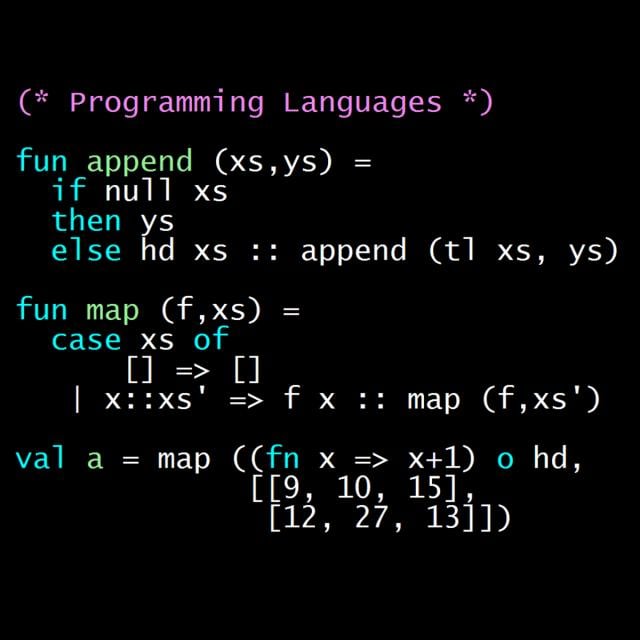
Programming Languages, Part A (Coursera)

This course is an introduction to the basic concepts of programming languages, with a strong emphasis on functional programming. The course uses the languages ML, Racket, and Ruby as vehicles for teaching the concepts, but the real intent is to teach enough about how any language “fits together” to make you more effective programming in any language -- and in learning new ones.

Oct 5th 2026
5-12 Weeks
Principles of Computing (Part 2) (Coursera) Coursera
Rice University

Principles of Computing (Part 2) (Coursera)

This two-part course introduces the basic mathematical and programming principles that underlie much of Computer Science. Understanding these principles is crucial to the process of creating efficient and well-structured solutions for computational problems. To get hands-on experience working with these concepts, we will use the Python programming language. The main focus of the class will be weekly mini-projects that build upon the mathematical and programming principles that are taught in the class.

Oct 5th 2026
4 Weeks
Computer Science: Algorithms, Theory, and Machines (Coursera) Coursera
Princeton University

Computer Science: Algorithms, Theory, and Machines (Coursera)

This course introduces the broader discipline of computer science to people having basic familiarity with Java programming. It covers the second half of our book Computer Science: An Interdisciplinary Approach (the first half is covered in our Coursera course Computer Science: Programming with a Purpose, to be released in the fall of 2018). Our intent is to demystify computation and to build awareness about the substantial intellectual underpinnings and rich history of the field of computer science.

Oct 5th 2026
5-12 Weeks
Foundations of Data Science: K-Means Clustering in Python (Coursera) Coursera
University of London,Goldsmiths, University of London

Foundations of Data Science: K-Means Clustering in Python (Coursera)

This MOOC, designed by an academic team from Goldsmiths, University of London, will quickly introduce you to the core concepts of Data Science to prepare you for intermediate and advanced Data Science courses. It focuses on the basic mathematics, statistics and programming skills that are necessary for typical data analysis tasks.

Oct 5th 2026
5-12 Weeks
An Introduction to Interactive Programming in Python (Part 2) (Coursera) Coursera
Rice University

An Introduction to Interactive Programming in Python (Part 2) (Coursera)

This two-part course is designed to help students with very little or no computing background learn the basics of building simple interactive applications. Our language of choice, Python, is an easy-to learn, high-level computer language that is used in many of the computational courses offered on Coursera. To make learning Python easy, we have developed a new browser-based programming environment that makes developing interactive applications in Python simple.

Oct 5th 2026
4 Weeks
Introdução ao Teste de Software (Coursera) Coursera
Universidade de São Paulo, Brasil

Introdução ao Teste de Software (Coursera)

A necessidade das empresas em produzir software com qualidade tem aumentado a demanda por profissionais com conhecimentos e habilidades em Teste de Software. Entretanto, existe uma escassez de mão-de-obra especializada nesta área. Considerando essa lacuna, o curso de Introdução ao Teste de Software foi planejado para servir como um guia para pessoas que necessitam de uma fonte de consulta e/ou aprendizado na área.

Oct 5th 2026
5-12 Weeks
Programming Reactive Systems (Scala 2 version) (Coursera) Coursera
École Polytechnique Fédérale de Lausanne

Programming Reactive Systems (Scala 2 version) (Coursera)

Reactive programming is a set of techniques for implementing scalable, resilient and responsive systems as per the Reactive Manifesto. Such systems are based on asynchronous message-passing, and their basic building-blocks are event handlers. This course teaches how to implement reactive systems in Scala and Akka by using high-level abstractions, such as actors, asynchronous computations, and reactive streams.

Oct 5th 2026
5-12 Weeks
Parallel programming (Scala 2 version) (Coursera) Coursera
École Polytechnique Fédérale de Lausanne

Parallel programming (Scala 2 version) (Coursera)

With every smartphone and computer now boasting multiple processors, the use of functional ideas to facilitate parallel programming is becoming increasingly widespread. In this course, you'll learn the fundamentals of parallel programming, from task parallelism to data parallelism. In particular, you'll see how many familiar ideas from functional programming map perfectly to to the data parallel paradigm. We'll start the nuts and bolts how to effectively parallelize familiar collections operations, and we'll build up to parallel collections, a production-ready data parallel collections library available in the Scala standard library.

Oct 5th 2026
4 Weeks
Functional Program Design in Scala (Scala 2 version) (Coursera) Coursera
École Polytechnique Fédérale de Lausanne

Functional Program Design in Scala (Scala 2 version) (Coursera)

In this course you will learn how to apply the functional programming style in the design of larger Scala applications. You'll get to know important new functional programming concepts, from lazy evaluation to structuring your libraries using monads. We'll work on larger and more involved examples, from state space exploration to random testing to discrete circuit simulators. You’ll also learn some best practices on how to write good Scala code in the real world. Finally, you will learn how to leverage the ability of the compiler to infer values from types.

Oct 5th 2026
5-12 Weeks
Computer Science: Programming with a Purpose (Coursera) Coursera
Princeton University

Computer Science: Programming with a Purpose (Coursera)

The basis for education in the last millennium was “reading, writing, and arithmetic;” now it is reading, writing, and computing. Learning to program is an essential part of the education of every student, not just in the sciences and engineering, but in the arts, social sciences, and humanities, as well. Beyond direct applications, it is the first step in understanding the nature of computer science’s undeniable impact on the modern world.

Oct 5th 2026
5-12 Weeks