Design of High-Performance Optical Systems (Coursera)

Design of High-Performance Optical Systems (Coursera)

This course can also be taken for academic credit as ECEA 5602, part of CU Boulder’s Master of Science in Electrical Engineering degree.Optical instruments are how we see the world, from corrective eyewear to medical endoscopes to cell phone cameras to orbiting telescopes. This course extends what you have learned about first-order, paraxial system design and optical resolution and efficiency with the introduction to real lenses and their imperfections.

Class Deals by MOOC List - Click here and see Coursera's Active Discounts, Deals, and Promo Codes.

We begin with a description of how different wavelengths propagate through systems, then move on to aberrations that appear with high angle, non-paraxial systems and how to correct for those problems. The course wraps up with a discussion of optical components beyond lenses and an excellent example of a high-performance optical system – the human eye. The mathematical tools required for analysis of high-performance systems are complicated enough that this course will rely more heavily on OpticStudio by Zemax. This will allow students to analyze systems that are too complicated for the simple analysis thus far introduced in this set of courses.
Course 3 of 3 in the Optical Engineering Specialization.

Syllabus

WEEK 1
Chromatic Aberrations
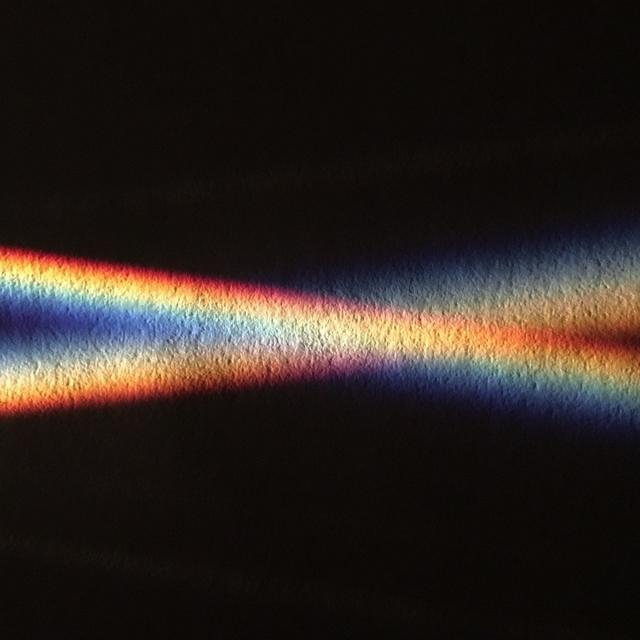
We now move away from the first order approximations and into real lenses and imperfect optical systems. We begin with a description of how different wavelengths propagate through systems.

WEEK 2
Ray Aberrations
This module introduces the many types and causes of monochromatic imperfections in optical systems. We begin with the mathematical background of the causes of aberrations, then introduce a number of common aberrations so that you may recognize them in your own systems.

WEEK 3
Field Curvature and Distortion
This module continues to discuss monochromatic imperfections in optical systems. We introduce field curvature and distortion so that you may recognize them in your own systems and then summarize the causes and effects of 3rd order aberrations along with the mathematical tools to describe them.

WEEK 4
Techniques for Reduction of Aberrations
The previous three modules have discussed the various types of aberrations you will find in your optical systems. We now move to how to design a system that limits those aberrations.

WEEK 5
Optical Components
In this last module before the capstone, we change gears from aberrations, and discuss a number of other optical elements that are usual in systems other than lenses. We cover light shaping with prisms, GRIN lenses, diffractive optics such as diffraction gratings and Fresnel lenses. Then we finish with an important optical element to all of us - the human eye. This module covers a lot of material and may take you a bit longer than the others.
Go to Class
MOOC List is learner-supported. When you buy through links on our site, we may earn an affiliate commission.

Related Courses

Building Arduino robots and devices (Coursera) Coursera
Moscow Institute of Physics and Technology

Building Arduino robots and devices (Coursera)

For many years now, people have been improving their tools, studying the forces of nature and bringing them under control, using the energy of the nature to operate their machines. Last century is noted for the creation of machines which can operate other machines. Nowadays the creation of devices that interact with the physical world is available to anyone. Our course consists of a series of practical problems on making things that work independently: they make their own decisions, act, move, communicate with each other and people around, and control other devices. We will demonstrate how to assemble such devices and programme them using the Arduino platform as a basis.

May 9th 2022
5-12 Weeks
Haptics: Introduction to Haptics (Stanford Online) Lagunita Stanford Online
Stanford University

Haptics: Introduction to Haptics (Stanford Online)

Participants in this class will learn how to build, program, and control haptic devices, which are mechatronic devices that allow users to feel virtual or remote environments. In the process, participants will gain an appreciation for the capabilities and limitations of human touch, develop an intuitive connection between equations that describe physical interactions and how they feel, and gain practical interdisciplinary engineering skills related to robotics, mechanical engineering, electrical engineering, bioengineering, and computer science.

Self Paced
Self-Paced
Signals and Systems, Part 1 (edX) EdX
IIT Bombay,IITBombayX

Signals and Systems, Part 1 (edX)

This course provides the basic toolkit for any signal processing application - the abstraction of signals and systems, from the point of view of analysis and characterization. We encounter signals and systems extensively in our day-to-day lives, from making a phone call, listening to a song, editing photos, manipulating audio files, using speech recognition softwares like Siri and Google now, to taking EEGs, ECGs and X-Ray images.

No sessions available
5-12 Weeks
Physics 102 - Electric Charges and Fields (Coursera) Coursera
Rice University

Physics 102 - Electric Charges and Fields (Coursera)

This course serves as an introduction to the physics of electricity and magnetism. Upon completion, learners will have an understanding of how the forces between electric charges are described by fields, and how these fields are related to electrical circuits. They will gain experience in solving physics problems with tools such as graphical analysis, algebra, vector analysis, and calculus. The course follows the typical progression of topics of a first-semester university physics course: charges, electric forces, electric fields potential, magnetic fields, currents, magnetic moments, electromagnetic induction, and circuits.

Jul 20th 2026
4 Weeks
Linux System Programming and Introduction to Buildroot (Coursera) Coursera
University of Colorado Boulder

Linux System Programming and Introduction to Buildroot (Coursera)

This course provides an overview of System Programming for the Linux operating system, or software which is interfacing directly with the Linux Kernel and C library. The basic components of a Linux Embedded System, including kernel and root filesystem details are discussed. The Buildroot build system is introduced, which students use to build their own custom Embedded Linux system through programming assignments.

Jul 27th 2026
4 Weeks
Introduction to Satellite Communications (Coursera) Coursera
Institut Mines-Telecom

Introduction to Satellite Communications (Coursera)

How is a satellite built? How do they fly? How do they communicate and how does the network operate? You will get all the answers in this course from teachers and researchers from three schools associated with Institut Mines-Télécom. The course is made of : teaching videos, equipment demonstrations and simulation programs. They will guide you through the discovery of satellite communications. Professionals in the space field will share there vocation for this scientific and technical sector.

No sessions available
5-12 Weeks
Fundamentals of Audio and Music Engineering: Part 1 Musical Sound & Electronics (Coursera) Coursera
University of Rochester

Fundamentals of Audio and Music Engineering: Part 1 Musical Sound & Electronics (Coursera)

In this course students learn the basic concepts of acoustics and electronics and how they can applied to understand musical sound and make music with electronic instruments. Topics include: sound waves, musical sound, basic electronics, and applications of these basic principles in amplifiers and speaker design.

Aug 3rd 2026
5-12 Weeks