Physics 102 - AC Circuits and Maxwell's Equations (Coursera)

Offered by Rice University,
Physics 102 - AC Circuits and Maxwell's Equations (Coursera)

This course serves as an introduction to the physics of electricity and magnetism. Upon completion, learners will have an understanding of how the forces between electric charges are described by fields, and how these fields are related to electrical circuits. They will gain experience in solving physics problems with tools such as graphical analysis, algebra, vector analysis, and calculus. The course follows the typical progression of topics of a first-semester university physics course: charges, electric forces, electric fields potential, magnetic fields, currents, magnetic moments, electromagnetic induction, and circuits.

Class Deals by MOOC List - Click here and see Coursera's Active Discounts, Deals, and Promo Codes.

Each module contains reading links to a free textbook, complete video lectures, conceptual quizzes, and a set of homework problems. Once the modules are completed, the course ends with an exam. This comprehensive course series is similar in detail and rigor to what is taught on-campus. It will thoroughly prepare learners for their upcoming introductory physics courses, or more advanced courses in physics.

Course 4 of 4 in the Introduction to Electricity and Magnetism Specialization.

Syllabus

WEEK 1: AC Circuits
WEEK 2: Maxwell and Matter
WEEK 3: Exam
Go to Class
MOOC List is learner-supported. When you buy through links on our site, we may earn an affiliate commission.

Related Courses

Fundamentals of particle accelerator technology (NPAP MOOC) (Coursera) Coursera
Lund University

Fundamentals of particle accelerator technology (NPAP MOOC) (Coursera)

Did you know that particle accelerators play an important role in many functions of todays society and that there are over 30 000 accelerators in operation worldwide? A few examples are accelerators for radiotherapy which are the largest application of accelerators, altogether with more than 11000 accelerators worldwide. These accelerators range from very compact electron linear accelerators with a length of only about 1 m to large carbon ion synchrotrons with a circumference of more than 50 m and a huge rotating carbon ion gantry with a weight of 600 tons!

Oct 5th 2026
5-12 Weeks
Electrodynamics: In-depth Solutions for Maxwell’s Equations (Coursera) Coursera
Korea Advanced Institute of Science and Technology - KAIST

Electrodynamics: In-depth Solutions for Maxwell’s Equations (Coursera)

This course is the fourth course in the Electrodynamics series, and is directly proceeded by Electrodynamics: Electric and Magnetic Fields. Previously, we have learned about visualization of fields and solutions which were not time dependent. Here, we will return to Maxwell's Equations and use them to produce wave equations which can be used to analyze complex systems, such as oscillating dipoles. We will also introduce AC circuits, and how they can be simplified, solved, and applied.

Oct 12th 2026
5-12 Weeks
Interfacing with the Arduino (Coursera) Coursera
University of California, Irvine

Interfacing with the Arduino (Coursera)

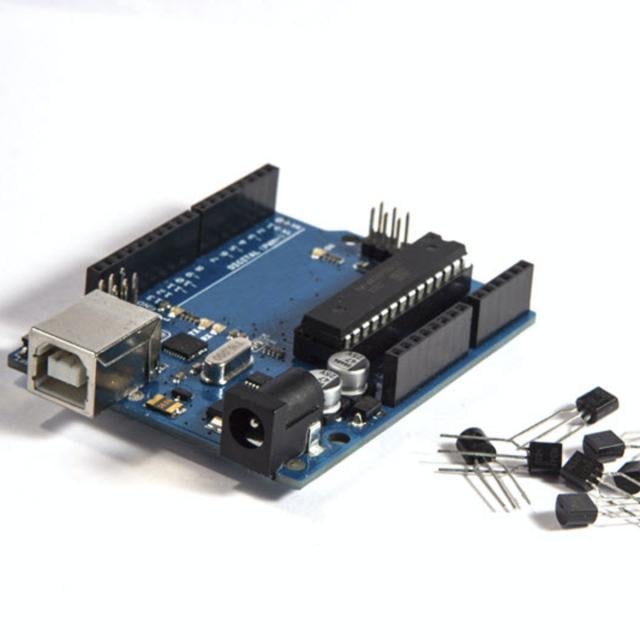
Arduino senses the environment by receiving inputs from add-on devices such as sensors, and can control the world around it by adjusting lights, motors, and other actuators. In this class you will learn how and when to use the different types of sensors and how to connect them to the Arduino. Since the external world uses continuous or analog signals and the hardware is digital you will learn how these signals are converted back-and-forth and how this must be considered as you program your device. You'll also learn about the use of Arduino-specific shields and the shields software libraries to interface with the real world.

Sep 28th 2026
4 Weeks
Digital Systems: From Logic Gates to Processors (Coursera) Coursera
Universitat Autònoma de Barcelona

Digital Systems: From Logic Gates to Processors (Coursera)

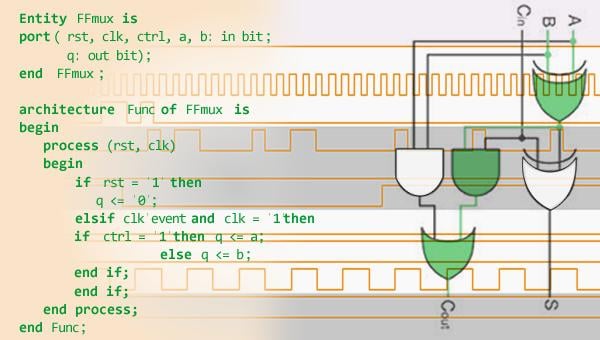
This course gives you a complete insight into the modern design of digital systems fundamentals from an eminently practical point of view. Unlike other more "classic" digital circuits courses, our interest focuses more on the system than on the electronics that support it. This approach will allow us to lay the foundation for the design of complex digital systems.

Sep 28th 2026
5-12 Weeks
Kinetics: Studying Spacecraft Motion (Coursera) Coursera
University of Colorado Boulder

Kinetics: Studying Spacecraft Motion (Coursera)

As they tumble through space, objects like spacecraft move in dynamical ways. Understanding and predicting the equations that represent that motion is critical to the safety and efficacy of spacecraft mission development. Kinetics: Modeling the Motions of Spacecraft trains your skills in topics like rigid body angular momentum and kinetic energy expression shown in a coordinate frame agnostic manner, single and dual rigid body systems tumbling without the forces of external torque, how differential gravity across a rigid body is approximated to the first order to study disturbances in both the attitude and orbital motion, and how these systems change when general momentum exchange devices are introduced.

Sep 28th 2026
4 Weeks
Foundation of Structural Dynamics (Coursera) Coursera
ISAE-SUPAERO

Foundation of Structural Dynamics (Coursera)

A course with variable geometry where everyone, we hope, will find personal benefits. The parts can be studied sequentially or independently; and inside each part, elementary learning items can be picked up. Globally, this course proposes a deep knowledge of fundamental dynamics, with possible explicit and implicit applications in structural dynamics, but also in physics and control of any dynamic system (automatics, …).

Oct 5th 2026
5-12 Weeks
Astro 101: Black Holes (Coursera) Coursera
University of Alberta

Astro 101: Black Holes (Coursera)

What is a black hole? Do they really exist? How do they form? How are they related to stars? What would happen if you fell into one? How do you see a black hole if they emit no light? What’s the difference between a black hole and a really dark star? Could a particle accelerator create a black hole? Can a black hole also be a worm hole or a time machine? In Astro 101: Black Holes, you will explore the concepts behind black holes. Using the theme of black holes, you will learn the basic ideas of astronomy, relativity, and quantum physics.

Oct 12th 2026
5-12 Weeks
Control of Nonlinear Spacecraft Attitude Motion (Coursera) Coursera
University of Colorado Boulder

Control of Nonlinear Spacecraft Attitude Motion (Coursera)

This course trains you in the skills needed to program specific orientation and achieve precise aiming goals for spacecraft moving through three dimensional space. First, we cover stability definitions of nonlinear dynamical systems, covering the difference between local and global stability. We then analyze and apply Lyapunov's Direct Method to prove these stability properties, and develop a nonlinear 3-axis attitude pointing control law using Lyapunov theory. Finally, we look at alternate feedback control laws and closed loop dynamics.

Sep 28th 2026
4 Weeks
Analyzing the Universe (Coursera) Coursera
Rutgers University

Analyzing the Universe (Coursera)

Using publicly available data from NASA of actual satellite observations of astronomical x-ray sources, we explore some of the mysteries of the cosmos, including neutron stars, black holes, quasars and supernovae. We will analyze energy spectra and time series data to understand how these incredible objects work. We utilize an imaging tool called DS9 to explore the amazing diversity of astronomical observations that have made x-ray astronomy one of the most active and exciting fields of scientific investigation in the past 50 years.

Sep 28th 2026
5-12 Weeks
Electrodynamics: Electric and Magnetic Fields (Coursera) Coursera
Korea Advanced Institute of Science and Technology - KAIST

Electrodynamics: Electric and Magnetic Fields (Coursera)

This course is a continuation of Electrodynamics: An Introduction and Electrodynamics: Analysis of Electric Fields. Here, we will introduce magnetostatics and relate it to the material we learned previously. In addition, we will cover the basics of the electromotive force and how it can be used to build different devices.

Oct 5th 2026
5-12 Weeks