Microwave engineering and antennas (Coursera)

Microwave engineering and antennas (Coursera)

This unique Master-level course provides you with in-depth know-how of microwave engineering and antennas. The course combines both passive and active microwave circuits as well as antenna systems. Future applications, like millimeter-wave 5G/beyond-5G wireless communications or automotive radar, require experts that can co-design highly integrated antenna systems that include both antennas and microwave electronics. We will provide you with the required theoretical foundation as well as hands-on experience using state-of-the-art design tools. The web lectures are supported by many on-line quizzes in which you can practice the background theory.

Class Deals by MOOC List - Click here and see Coursera's Active Discounts, Deals, and Promo Codes.

Next to this, we will provide you hands-on experience in a design-challenge in which you will learn how to design microwave circuits and antennas. Throughout the course you will work on the design challenge in which you will design a complete active phased array system, including antennas, beamformers and amplifiers. The course is supported by a book written by the team of lecturers, which will be made available to the students. After finalizing the course a certificate can be obtained (5 ECTS), which can be used when you start a full MSc program at Eindhoven University of Technology.
The lecturers all have an academic and industrial background and are embedded in the Center for Wireless Technology Eindhoven (CWT/e) of Eindhoven University of Technology, The Netherlands.
What You Will Learn

  • Module 1: Introduction of the course, including an overview of applications and trends.
  • Module 2: Passive microwave circuits, covering transmission-line based circuits including impedance - matching, power combiners, filters.
  • Module 3: Antenna theory. This provides an introduction into antenna theory, including phased arrays.
  • Module 4: Active microwave circuits. Extension towards amplifiers, including low-noise amplifiers.

Syllabus

WEEK 1
Promo
In this short video the lecturers will introduce themselves and will provide a general overview of the scope of the course. The lecturers all have a solid academic and industrial background and are embedded in the Center for Wireless Technology Eindhoven (CWT/e) of Eindhoven University of Technology, The Netherlands.
Introduction (Module 1) and Passive Microwave Circuits (Module 2, part I)
In week 1 we will provide you with an introduction to the course including an overview of applications (Module 1). In addition, we will start with Passive Microwave Circuits (Module 2) by introducing transmission line theory. We will also introduce the design-challenge in which you will develop your own 4-channel phased array system including beamformer and active microwave electronics. Next to this, we will show you how to use the open-source design tool QUCS. We will use this tool for the design of passive and active microwave circuits.

WEEK 2
Passive Microwave Circuits (Module 2, part II)
In week 2 we will continue with Passive Microwave Circuits (Module 2) by introducing the concept of microwave networks. We will use this concept by analyzing power combiners. In addition, you will start your design challenge by designing a 4-channel beamformer network.

WEEK 3
Passive Microwave Circuits (Module 2, part III)
In week 3 we will finalize our journey into Passive Microwave Circuits (Module 2) by first introducing the Smith chart and by applying it for the design of matching circuits. Next to this, we will show how you can design microwave filters.

WEEK 4
Antenna Theory (Module 3, part I)
In week 4 we will start with Antenna Theory (Module 3) and introduce the concept of antennas by exploring the main characteristics of antennas, including directivity, antenna gain and input impedance. We will show how these parameters can be used to determine the range of wireless system or radar. As a first real antenna concept, we will introduce phased-array antennas. In addition, the design challenge will continue with an antenna design. This includes an introduction into the antenna design CST.

WEEK 5
Antenna Theory (Module 3, part II)
In this week the real hard-core theoretical antenna framework is presented. Starting from Maxwell's equations we will derive the general expression for the radiated fields by any antenna configuration. The framework will be applied to the electric dipole and wire antennas. In addition, your will participate in a workshop that introduces a state-of-the-art antenna design tool.

WEEK 6
Antenna Theory (Module 3, part III)
In this week we will extend our theoretical framework with magnetic sources. In this way, you can use the framework to analyze aperture antennas. We will show this by analyzing horn antennas, reflector antennas and microstrip antennas. We will also show how microstrip antennas can be used to create a phased-array system. We will finalize the week by providing you with some background knowledge in numerical methods. This will help you to understand the underlying principles of numerical electromagnetics used in commercial tools such as ADS and CST.

WEEK 7
Active Microwave Circuits (Module 4, part I)
In this week we will extend the theory on microwave circuits towards active circuits which make use of transistors to realize amplifiers. We will start by introducing the various definitions which are used to describe the gain of an amplifier. As a next step we will present a design methodology for low-noise amplifiers. You will also start with the last part of your design challenge by designing a low-noise amplifier.

WEEK 8
Active Microwave Circuits (Module 4, part II)
In the last week of the course we will dive deeper into the design of microwave amplifiers by exploring by exploring the stability conditions of amplifiers. When stability is secured, the amplifier performance can be further optimized by proper design of the input and output matching circuits. For this purpose the concept of constant-gain circles can be used.
Go to Class
MOOC List is learner-supported. When you buy through links on our site, we may earn an affiliate commission.

Related Courses

Controle de Sistemas no Plano-s (Coursera) Coursera
Instituto Tecnológico de Aeronáutica

Controle de Sistemas no Plano-s (Coursera)

Após esse curso você será capaz de esboçar o Lugar Geométrico das Raízes (LGR - Root Locus) do denominador da Função de Transferência em Malha Fechada a partir dos polos e zeros da Função de Transferência em Malha aberta. Você também será capaz de projetar controladores de avanço de fase para atender simultaneamente requisitos de desempenho de amortecimento e de velocidade da resposta.

Sep 28th 2026
5-12 Weeks
Image and video processing: From Mars to Hollywood with a stop at the hospital (Coursera) Coursera
Duke University

Image and video processing: From Mars to Hollywood with a stop at the hospital (Coursera)

In this course, you will learn the science behind how digital images and video are made, altered, stored, and used. We will look at the vast world of digital imaging, from how computers and digital cameras form images to how digital special effects are used in Hollywood movies to how the Mars Rover was able to send photographs across millions of miles of space.

Oct 5th 2026
5-12 Weeks
Exploring Light: Hands-on Activities and Strategies for Teachers (Coursera) Coursera
Exploratorium

Exploring Light: Hands-on Activities and Strategies for Teachers (Coursera)

This is an Exploratorium teacher professional development course taught by Teacher Institute staff, open to any science teacher (particularly middle or high school level) and science enthusiast. This is a hands-on workshop that explores topics and strategies teachers can use to help their students become active investigators of light.

Oct 4th 2026
4 Weeks
RF and millimeter-Wave Circuit Design (Coursera) Coursera
Eindhoven University of Technology

RF and millimeter-Wave Circuit Design (Coursera)

This unique Master-level course offered by the Center for Wireless Technology Eindhoven (CWT/e) of the Eindhoven University of Technology, The Netherlands, provides students with in-depth knowledge and hands-on experience on RF and mmWave circuit design. The course covers the topics on how to derive the RF wireless systems specifications, and how to design the main building blocks of a transceiver, i.e., low noise amplifier, power amplifier, RF mixers, oscillators, and PLL frequency synthesizers. It is divided into two parts: (1) theoretical lectures will cover the basis of RF and mmWave Circuit Design; and (2) design labs will include simulation and implementation of these circuits.

Oct 5th 2026
5-12 Weeks
5G for Everyone (Coursera) Coursera
Qualcomm Wireless Academy

5G for Everyone (Coursera)

Take the next step in your career by gaining a greater understanding of 5G technology and how it is changing the way we operate both personally and professionally. Learn how 5G is revolutionizing the business world and begin to understand how 5G can benefit your business by helping you meet your ever-evolving needs. You do not need any prior knowledge of 5G or other wireless technology to take this course.

Oct 5th 2026
5-12 Weeks
Major Engineering Projects: Governance, Risk and Scope (Coursera) Coursera
University of Leeds

Major Engineering Projects: Governance, Risk and Scope (Coursera)

Gain confidence when dealing with stakeholders of major projects by learning to identify and manage those that are involved in the project planning and delivery. This course will enable you to explore project governance in theory and practice. Through real life examples you’ll understand how the critical challenges of the governance in major projects are resolved.

Sep 28th 2026
5-12 Weeks
Nanotechnology and Nanosensors, Part 2 (Coursera) Coursera
Technion - Israel Institute of Technology

Nanotechnology and Nanosensors, Part 2 (Coursera)

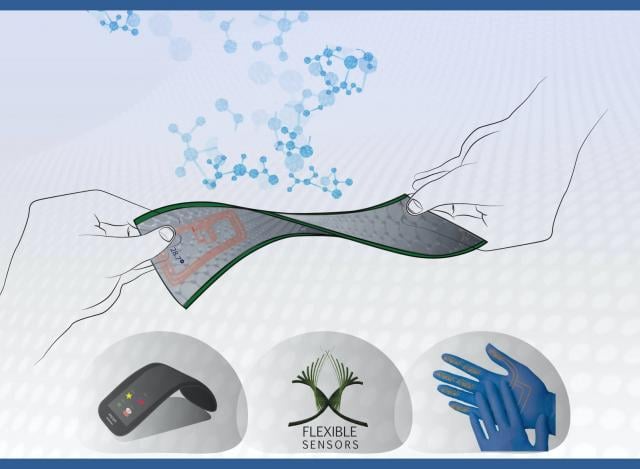
Learn about novel sensing tools that make use of nanotechnology to screen, detect and monitor various events in personal or professional life. Together, we will lay the groundwork for infinite innovative applications, starting from diagnosis and treatments of diseases, continuing with quality control of goods and environmental aspects, and ending with monitoring security issues.

Oct 5th 2026
5-12 Weeks
Silicon Thin Film Solar Cells (Coursera) Coursera
École Polytechnique

Silicon Thin Film Solar Cells (Coursera)

This course consists of a general presentation of solar cells based on silicon thin films. It is the third MOOC of the photovoltaic series of Ecole polytechnique on Coursera. The general aspects of the photovoltaic field are treated in "Photovoltaic Solar Energy". And the detailed description of the crystalline silicon solar cells can be found in "Physics of Silicon Solar Cells".

Oct 5th 2026
3 Weeks
The Finite Element Method for Problems in Physics (Coursera) Coursera
University of Michigan

The Finite Element Method for Problems in Physics (Coursera)

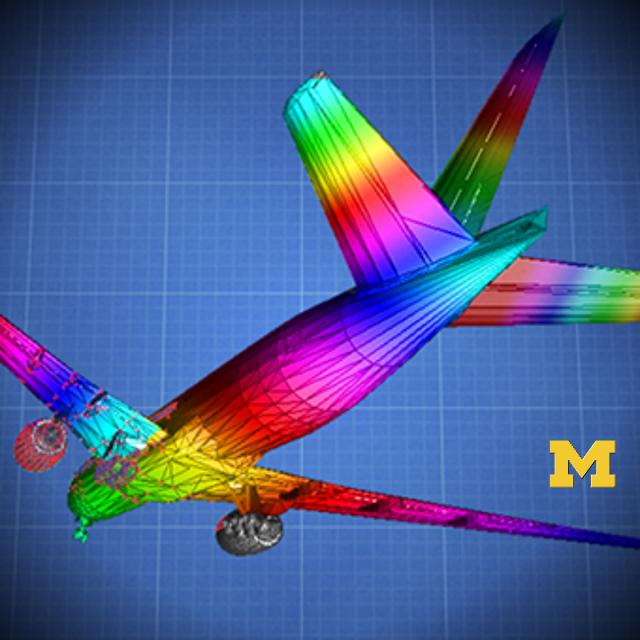
This course is an introduction to the finite element method as applicable to a range of problems in physics and engineering sciences. The treatment is mathematical, but only for the purpose of clarifying the formulation. The emphasis is on coding up the formulations in a modern, open-source environment that can be expanded to other applications, subsequently.

Oct 5th 2026
13-24 Weeks
Engineering Systems in Motion: Dynamics of Particles and Bodies in 2D Motion (Coursera) Coursera
Georgia Institute of Technology

Engineering Systems in Motion: Dynamics of Particles and Bodies in 2D Motion (Coursera)

This course is an introduction to the study of bodies in motion as applied to engineering systems and structures. We will study the dynamics of particle motion and bodies in rigid planar (2D) motion. This will consist of both the kinematics and kinetics of motion. Kinematics deals with the geometrical aspects of motion describing position, velocity, and acceleration, all as a function of time. Kinetics is the study of forces acting on these bodies and how it affects their motion.

Oct 5th 2026
5-12 Weeks
Sistemas Digitales: De las puertas lógicas al procesador (Coursera) Coursera
Universitat Autònoma de Barcelona

Sistemas Digitales: De las puertas lógicas al procesador (Coursera)

En este curso aprenderemos los fundamentos del diseño de los circuitos digitales actuales, siguiendo una orientación eminentemente práctica. A diferencia de otros cursos más "clásicos" de Circuitos Digitales, nuestro interés se centrará más en el Sistema que en la Electrónica que lo sustenta. Este enfoque nos permitirá sentar las bases del diseño de Sistemas Digitales complejos.

Sep 28th 2026
5-12 Weeks
Industrial Biotechnology (Coursera) Coursera
University of Manchester

Industrial Biotechnology (Coursera)

Fossil fuels have been the primary energy source for society since the Industrial Revolution. They provide the raw material for the manufacture of many everyday products that we take for granted, including pharmaceuticals, food and drink, materials, plastics and personal care. As the 21st century progresses we need solutions for the manufacture of chemicals that are smarter, more predictable and more sustainable.

Oct 5th 2026
5-12 Weeks