EdX

Signals and Systems, Part 1 (edX)

Offered by IIT Bombay, IITBombayX,
Signals and Systems, Part 1 (edX)

This course provides the basic toolkit for any signal processing application - the abstraction of signals and systems, from the point of view of analysis and characterization. We encounter signals and systems extensively in our day-to-day lives, from making a phone call, listening to a song, editing photos, manipulating audio files, using speech recognition softwares like Siri and Google now, to taking EEGs, ECGs and X-Ray images.

Class Deals by MOOC List - Click here and see EdX's Active Discounts, Deals, and Promo Codes.

Each of these involves gathering, storing, transmitting and processing information from the physical world. This course will equip you to deal with these tasks efficiently by learning the basic mathematical framework of signals and systems.
This course is divided into two parts. In this part (EE210.1x), we will explore the various properties of signals and systems, characterization of Linear Shift Invariant Systems, convolution and Fourier Transform, while the next part (EE210.2x), will deal with the Sampling theorem, Z-Transform, discrete Fourier transform and Laplace transform. Ideas introduced in this course will be useful in understanding further electrical engineering courses which deal with control systems, communication systems, power systems, digital signal processing, statistical signal analysis and digital message transmission. The concepts taught in this course are also useful to students of other disciplines like mechanical, chemical, aerospace and other branches of engineering and science.

What you'll learn:

  • How to unite abstractions for several kinds of systems, to draw a common system description
  • How to identify properties that this system has or does not have
  • How to deal with an important class of systems namely, linear shift invariant systems
  • How to represent and analyze signals and systems in the Fourier domain

Prerequisites

  • High school mathematics: Sequence and series, algebra of complex numbers, basic trigonometry.
  • Calculus: Differential and Integral calculus (single variable). Knowledge of differential equations is helpful but not required.
  • Corequisites: Basic circuit analysis - ohm's law, KVL, KCL
Go to Class
MOOC List is learner-supported. When you buy through links on our site, we may earn an affiliate commission.

Related Courses

Recommender Systems: Behind the Screen (edX) EdX
Université de Montréal,UMontrealX

Recommender Systems: Behind the Screen (edX)

How are items recommended when you’re browsing for movies, jobs or clothing online? Register here and you’ll discover the fundamental concepts and methods allowing the most relevant item suggestions to users from e-commerce to online advertisement. In this course, you will explore and learn the best methods and practices in recommender systems, which are an essential component of the online ecosystem. This course was developed by IVADO and HEC Montréal as part of a workshop that took place in Montreal.

Self Paced
5-12 Weeks
A Hands-on Introduction to Engineering Simulations (edX) EdX
CornellX,Cornell University

A Hands-on Introduction to Engineering Simulations (edX)

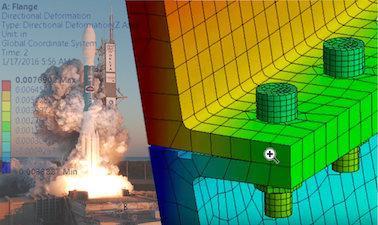
Learn how to analyze real-world engineering problems using ANSYS simulation software and gain important professional skills sought by employers. In this hands-on course, you’ll learn how to perform engineering simulations using a powerful tool from ANSYS, Inc. This is a problem-based course where you’ll learn by doing. The focus will be on understanding what’s under the blackbox so as to move beyond garbage-in, garbage-out. You’ll practice using a common solution approach to problems involving different physics: structural mechanics, fluid dynamics and heat transfer.

Self Paced
Self-Paced
Fundamentos de Mecánica para Ingeniería (edX) EdX
Universitat Politècnica de València,UPValenciaX

Fundamentos de Mecánica para Ingeniería (edX)

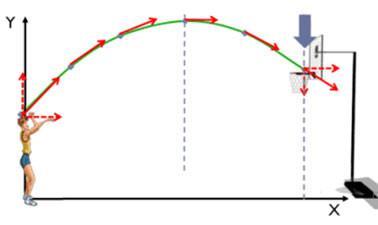
Estudiaremos la cinemática y la dinámica del punto, los conceptos de trabajo y potencia y la energía mecánica. Se aborda el estudio del universo físico analizando objetos en movimiento. Se definen y analizan todas las magnitudes y leyes físicas que permiten describir geométrica y causalmente el movimiento de cuerpos representados por un punto.

Self Paced
Self-Paced
Forensic Engineering: Learning from Failures (edX) EdX
Delft University of Technology,DelftX

Forensic Engineering: Learning from Failures (edX)

Don’t let good failures go to waste! Identify the causes of failure and use this knowledge to enhance safety and improve performance. What do collapsed buildings, infected hospital patients, and crashed airplanes have in common? If you know the causes of these events and conditions, they can all be prevented. In this course, you will learn how to use the TU Delft mind-set to investigate the causes of such events so you can prevent them in the future.

Self Paced
Self-Paced
Diseño de diques rompeolas con cubípodos (edX) EdX
Universitat Politècnica de València,UPValenciaX

Diseño de diques rompeolas con cubípodos (edX)

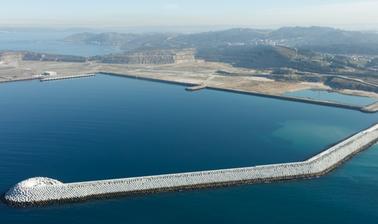
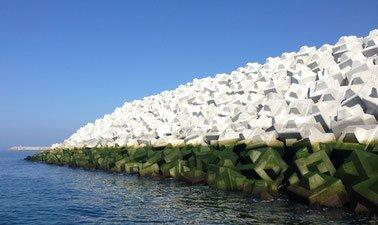
El objetivo del curso esaprender a diseñar diques en talud para los estudios de viabilidad de proyectos que incluyan obras marítimas de abrigo, con especial atención al diseño con mantos de cubípodos. Este es un curso de ingeniería dirigido a profesionales de ingeniería marítima, portuaria y civil. En él se puede aprender a diseñar diques en talud para los estudios de viabilidad de proyectos que incluyan obras marítimas de abrigo, con especial atención al diseño con mantos de cubípodos.

Self Paced
Self-Paced
Nanophotonic Modeling (edX) EdX
Purdue University,PurdueX

Nanophotonic Modeling (edX)

Learn a comprehensive set of simulation techniques to predict the performance of photonic nanostructures. This engineering course is an introduction to photonic materials and devices structured on the wavelength scale. Generally, these systems will be characterized as having critical dimensions at the nanometer scale. These can include nanophotonic, plasmonic, and metamaterial components and systems.

Feb 12th 2024
5-12 Weeks
Modeling and Simulation of Multibody Systems - Part I (edX) EdX
LouvainX,Université Catholique de Louvain - UCL

Modeling and Simulation of Multibody Systems - Part I (edX)

Vehicles, bicycles, cranes, human body and robots are multibody systems. Learn how to model them and compute their kinematic and dynamic characteristics, such as velocities, accelerations and forces. This course aims at acquainting you with the modeling and simulation of complex articulated mechanical systems, denoted as multibody systems, such as vehicles, merry-go-rounds, motorbikes, cranes, human bodies, suspensions, robot manipulators, mechanical transmissions, etc.

Self Paced
Self-Paced
Solar Energy: Photovoltaic (PV) Technologies (edX) EdX
Delft University of Technology,DelftX

Solar Energy: Photovoltaic (PV) Technologies (edX)

Explore the main PV technologies in the current market. Get in-depth knowledge on the design and processing methods of solar cells. The technologies used to produce solar cells and photovoltaic modules are advancing to deliver highly efficient and flexible solar panels. In this course you will explore the main PV technologies in the current market.

Self Paced
5-12 Weeks
The Basics of Transport Phenomena (edX) EdX
Delft University of Technology,DelftX

The Basics of Transport Phenomena (edX)

Learn the basic framework to work on a broad spectrum of engineering problems concerning transfer of heat, mass and momentum. Learn through examples of everyday processes at home, in the lab and in industry. Have you ever wondered why ventilation helps to cool down your hot chocolate? Do you know why a surfing suit keeps you warm? Why iron feels cold, while wood feels warm at room temperature? Or how air is transferred into aqueous liquids in a water treatment plant? How can we sterilize milk with the least amount of energy? How does medicine spread in our tissue? Or how do we design a new cooling tower of a power plant? All these are phenomena that involve heat transfer, mass transfer or fluid flow.

Self Paced
Self-Paced
Design of mound breakwaters for feasibility studies. Cubipod® Manual 2016 (edX) EdX
Universitat Politècnica de València,UPValenciaX

Design of mound breakwaters for feasibility studies. Cubipod® Manual 2016 (edX)

The goal of this course is to provide the tools to create feasible designs of mound breakwaters protected with Cubipod® armors fulfiling the prescribed economic, functional and safety requirements. This course is intended for professionals of coastal and port engineering who work in the preliminary design and feasibility studies of breakwaters.

Self Paced
Self-Paced
A System View of Communications: From Signals to Packets (Part 3) (edX) EdX
The Hong Kong University of Science and Technology - HKUST,HKUSTx

A System View of Communications: From Signals to Packets (Part 3) (edX)

Explore the tradeoffs in designing communication systems like mobile phones, and the engineering tools to handle them. Have you ever wondered how information is transmitted using your mobile phone or a WiFi hotspot? Gain an understanding of the basic engineering tools used and tradeoffs encountered in the design of these communication systems.

Self Paced
Self-Paced