Recent Advances in Freeform Electronics (Coursera)

Offered by Yonsei University,
Recent Advances in Freeform Electronics (Coursera)

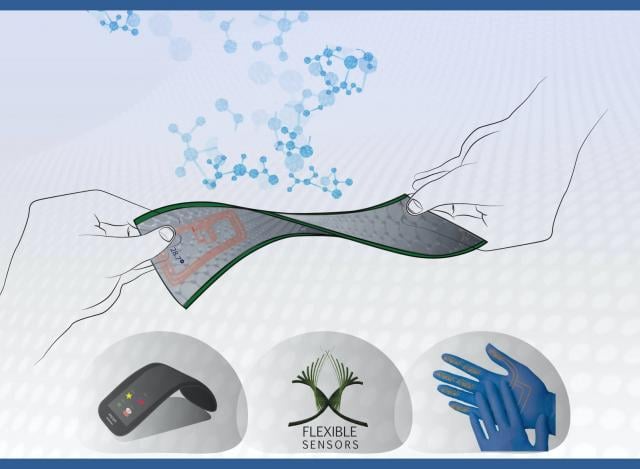
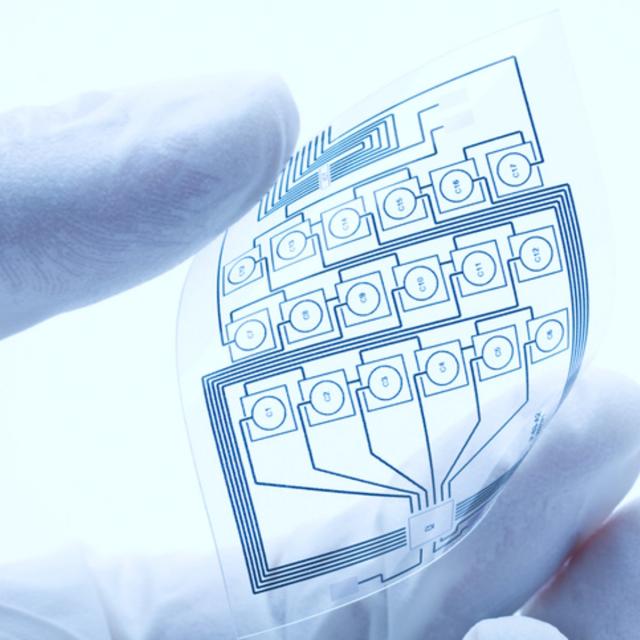
In this course, the learners will understand fundamental basic backgrounds of p-n junctions, diodes and MOSFETs (Metal Oxide Semiconductor Field Effect Transistors). Also, recent approaches on flexible / stretchable electronics, transparent optoelectronics, and printed electronics using one dimensional or two dimensional nanomaterials will be introduced.

Class Deals by MOOC List - Click here and see Coursera's Active Discounts, Deals, and Promo Codes.

Furthermore, the formation of high-performance, transparent thin films or conductors using novel materials such as cellulose nanofibers or metal nanofibers is included for course materials. Examples of device fabrications, including touch screen panels, gas / chemical / bio sensors, smart contact lenses, wireless and transparent antennas, and OLEDs, are also introduced for next generation electronic devices.

Syllabus

WEEK 1
Fundamentals for Electronic Devices
Module 1 is the fundamentals of electronics devices. Solid physics and basic theory of MOSFET are covered.

WEEK 2
Stretchable Electronics
Module 2 is Stretchable Electronics. Various approaches to form stretchable electronic devices are covered.

WEEK 3
Transparent Electrodes
Module 3 is Transparent Electrodes. Conventional materials for transparent electrodes and their alternatives are covered.

WEEK 4
Smart Sensors
Module 4 is the smart sensors. Carbon nanomaterials-based FETs and transparent, wearable electronic devices are covered.

WEEK 5
Printed Electronics
Module 5 is printed electronics. Fundamentals of printing technologies and various electronics using E-jet printing are covered.

WEEK 6
High Reliability for Deformable Electronics
Module 6 is High Reliability for Deformable Electronics. Newly developed materials for better reliability and their properties are covered.
Go to Class
MOOC List is learner-supported. When you buy through links on our site, we may earn an affiliate commission.

Related Courses

Introduction to Semiconductor Devices 1 (Coursera) Coursera
Korea Advanced Institute of Science and Technology - KAIST

Introduction to Semiconductor Devices 1 (Coursera)

This course aims to provide a general understanding of semiconductor devices. This course explores the principles and the operation mechanism of semiconductor, such as charge transfer, p-n junction, junction capacitors, and Metal-Oxide-Semiconductor Field Effect Transistors(MOSFETs).

Sep 21st 2026
5-12 Weeks
Cómo entrenar a tus electrones 3: Aplicaciones interesantes (Coursera) Coursera
Pontificia Universidad Católica de Chile

Cómo entrenar a tus electrones 3: Aplicaciones interesantes (Coursera)

La electrónica ha respaldado el desarrollo científico y tecnológico de la humanidad, ostentando un rol clave en los últimos 50 años. Nos admiramos de la capacidad del ser humano de diseñar circuitos integrados que contienen millones de transistores y que nos permiten procesar con gran precisión las señales más débiles provenientes de las antenas de telefonía celular, de las neuronas del cerebro, de una cámara digital, o de la carga depositada por partículas subatómicas que colisionan en el Gran Colisionador de Hadrones en Suiza.

Sep 21st 2026
3 Weeks
Introduction to Semiconductor Process 2 (Coursera) Coursera
Korea Advanced Institute of Science and Technology - KAIST

Introduction to Semiconductor Process 2 (Coursera)

This course aims to provide a general understanding of semiconductor process. This course explores the principles and basic theory of semiconductor device and process. Furthermore, the students will learn the overall semiconductor process such as oxidation, diffusion, ion implantation, lithography, etching, thin film deposition, plasma, metallization, and packaging.

Sep 21st 2026
5-12 Weeks
Designing Hardware for Raspberry Pi Projects (Coursera) Coursera
Johns Hopkins University

Designing Hardware for Raspberry Pi Projects (Coursera)

This is course 4 of this specialization (although it can be taken out of order) and focuses on applying experience and knowledge gained in the first three courses to build physical electronics hardware. Specifically, this course focuses on four areas: circuit simulation, schematic entry, PCB layout, and 3D CAD modeling. There are many excellent commercial applications available in these areas, however to give everyone access we'll be using all free and open-source software.

Sep 14th 2026
4 Weeks
Nanotechnology and Nanosensors, Part 2 (Coursera) Coursera
Technion - Israel Institute of Technology

Nanotechnology and Nanosensors, Part 2 (Coursera)

Learn about novel sensing tools that make use of nanotechnology to screen, detect and monitor various events in personal or professional life. Together, we will lay the groundwork for infinite innovative applications, starting from diagnosis and treatments of diseases, continuing with quality control of goods and environmental aspects, and ending with monitoring security issues.

Oct 5th 2026
5-12 Weeks
Using Sensors With Your Raspberry Pi (Coursera) Coursera
Johns Hopkins University

Using Sensors With Your Raspberry Pi (Coursera)

This course on integrating sensors with your Raspberry Pi is course 3 of a Coursera Specialization and can be taken separately or as part of the specialization. Although some material and explanations from the prior two courses are used, this course largely assumes no prior experience with sensors or data processing other than ideas about your own projects and an interest in building projects with sensors.

Sep 14th 2026
4 Weeks
Plastic electronics (Coursera) Coursera
École Polytechnique

Plastic electronics (Coursera)

Plastic electronics is a concept that emerged forty years ago, with the discovery of electrically conductive polymers. Ten years later, the first electronic devices using organic solids in place of the ubiquitous inorganic semiconductors were realised. The best achievement of plastic electronics is constituted by Organic Light-Emitting Diodes (OLEDs) that equip the display of many smartphones, and even TV sets.

Sep 28th 2026
5-12 Weeks
Beginning Custom Projects with Raspberry Pi (Coursera) Coursera
Johns Hopkins University

Beginning Custom Projects with Raspberry Pi (Coursera)

In this course you will use a Raspberry Pi 4 to build a complete network-connected project with sensors and motors and access it from your smartphone. We'll explore all the parts which make this work, so you can use this experience as a foundation for your own projects. We'll use the Raspberry Pi as an "embedded system" (as opposed to a desktop computer) so you're ready to build a Raspberry Pi into your projects as the brains that make it all work. Want to build your own Internet of Things (IoT) device? Home automation? Robotics? This is the class to learn how it all works, to get you building on your own.

Sep 14th 2026
4 Weeks
Internet of Things: Sensing and Actuation From Devices (Coursera) Coursera
University of California, San Diego

Internet of Things: Sensing and Actuation From Devices (Coursera)

Have you wondered how information from physical devices in the real world gets communicated to Smartphone processors? Do you want to make informed design decisions about sampling frequencies and bit-width requirements for various kinds of sensors? Do you want to gain expertise to affect the real world with actuators such as stepper motors, LEDs and generate notifications? In this course, you will learn to interface common sensors and actuators to the DragonBoard™ 410c hardware. You will then develop software to acquire sensory data, process the data and actuate stepper motors, LEDs, etc. for use in mobile-enabled products.

Sep 21st 2026
5-12 Weeks
Introduction to Semiconductor Process 1 (Coursera) Coursera
Korea Advanced Institute of Science and Technology - KAIST

Introduction to Semiconductor Process 1 (Coursera)

This course aims to provide a general understanding of semiconductor process. This course explores the principles and basic theory of semiconductor device and process. Furthermore, the students will learn the overall semiconductor process such as oxidation, diffusion, ion implantation, lithography, etching, thin film deposition, plasma, metallization, and packaging.

Oct 5th 2026
5-12 Weeks
Fundamentals of Semiconductor Characterization (Coursera) Coursera
Arizona State University

Fundamentals of Semiconductor Characterization (Coursera)

The goal of this course is to review the fundamentals of semiconductor materials, p-n junction diodes, and MOS capacitors. There are many semiconductor technologies based on different material systems, but the most important is complementary metal-oxide-semiconductor, or CMOS for short. This course will focus on semiconductor materials and devices relevant to CMOS manufacturing, but the concepts can be applied much more broadly.

Sep 14th 2026
4 Weeks
Electrónica Digital Bit a Bit: Aprendiendo fundamentos (Coursera) Coursera
Pontificia Universidad Católica de Chile

Electrónica Digital Bit a Bit: Aprendiendo fundamentos (Coursera)

Es desafiante y hasta atemorizante entender un circuito digital cuando observamos la cantidad de transistores que puede contener, y aún más difícil diseñarlo eficientemente para su implementación en un circuito integrado o una FPGA. Sin embargo, saber diseñar circuitos digitales simples nos abre las puertas para diseñar sistemas digitales más complejos a partir de estos.

Jun 22nd 2026
5-12 Weeks