Beginning Custom Projects with Raspberry Pi (Coursera)

Beginning Custom Projects with Raspberry Pi (Coursera)

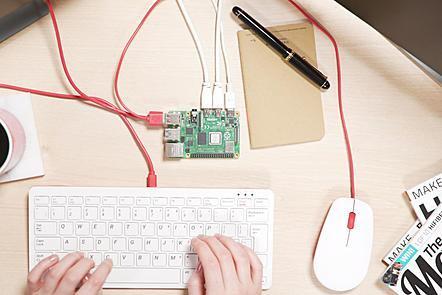
In this course you will use a Raspberry Pi 4 to build a complete network-connected project with sensors and motors and access it from your smartphone. We'll explore all the parts which make this work, so you can use this experience as a foundation for your own projects. We'll use the Raspberry Pi as an "embedded system" (as opposed to a desktop computer) so you're ready to build a Raspberry Pi into your projects as the brains that make it all work. Want to build your own Internet of Things (IoT) device? Home automation? Robotics? This is the class to learn how it all works, to get you building on your own.

Class Deals by MOOC List - Click here and see Coursera's Active Discounts, Deals, and Promo Codes.

No experience in embedded systems, programming, or electronics is assumed, and optional bonus sections are provided for those who want a fast start in Python programming, Linux essentials, and basic electronics. The course is divided into four modules to explore each focus area with demontrations and extras along the way: 1) installing and configuring a Raspberry Pi, 2) accessing the Raspberry Pi over the network, 3) programmatically controlling external sensors and motors, and 4) accessing the embedded device through a web interface. After these four modules you'll get started building your own projects right away, and the three follow-on courses in this Coursera specialization dive into each area to really boost your skills and the complexity of your projects. I hope you enjoy all the courses and I hope you take your builds to the next level.
Course 1 of 4 in the Powering your Home Projects with Raspberry Pi Specialization.

Syllabus

WEEK 1
Installing, Configuring, and Connecting to Your Raspberry Pi Over the Network
In this module, we introduce the Raspberry Pi, and discuss how it is different from an Arduino. We will install and configure the operating system on a Raspberry Pi and connect to it via a network connection. If you’re not familiar with the Linux shell, there is an optional bonus section at the end of this module on Linux command line basics. Soon, we'll be using the pins on the Raspberry Pi to control things in the real world such as an LED.

WEEK 2
Controlling Your Raspberry Pi Over the Network
As we enter this module, your Raspberry Pi is up and running on the network and we’ve done quite a lot on the Linux command line. In this module, we’ll connect to a full graphical desktop session over the network, learn some electronics theory and how we can use the GPIO pins to light an LED, and create a web API endpoint to toggle the LED and demonstrate how embedded devices can use simple web APIs for a control interface. At the end of this module is an optional bonus section on the Python language, which you might find useful if Python is new for you. All of this is groundwork for the next module where we create sensors and spin motors with the Raspberry Pi.

WEEK 3
Using Sensors and Motors
In this module, we’ll build on our Raspberry Pi GPIO skills and use some of the dedicated circuitry for driving special signals, like the pulse width modulation (PWM) circuitry, to vary the brightness of an LED. We’ll also access external hardware to run a motor, and discuss when external hardware is necessary, such as for real-time application or to drive power-hungry devices like motors. This is a fun module, and if you've been wondering how to control hardware with a Raspberry Pi, I think you'll find a lot of answers in this module. In the final module, Module 4, we'll take these individual skills and everything we've learned in Modules 1 and 2, along with some new ideas, and build a project together. By the end of this module, you might be surprised to see what types of complex systems you already know how to design and build.

WEEK 4
Let's Make Our Own IoT Project
In the first three modules we got our Raspberry Pi running over the network, we interfaced to physical world items such as LEDs and motors, and we controlled our Raspberry Pi with a web API. In this module we’ll take a closer look at some security concepts, combine what we know about sensors and electronics to create our own web-enabled home automation project you can access from your phone or computer. We'll keep things simple because the goal is for you to understand how all the parts work and, when it's time for you to create your own project, you can extend these concepts to create even the wildest projects.

Go to Class
MOOC List is learner-supported. When you buy through links on our site, we may earn an affiliate commission.

Related Courses

Intelligent Machining (Coursera) Coursera
University at Buffalo,The State University of New York

Intelligent Machining (Coursera)

Manufacturers are increasingly utilizing machine tools that are self-aware – they perceive their own states and the state of the surrounding environment – and are able to make decisions related to machine activity processes. This is called intelligent machining, and through this course students will receive a primer on its background, tools and related terminology.

Sep 21st 2026
4 Weeks
IoT Devices (Coursera) Coursera
University of Illinois at Urbana-Champaign

IoT Devices (Coursera)

The Internet of Things (IoT) stands to be the next revolution in computing. Billions of data-spouting devices connected to the Internet are already fundamentally changing the way we live and work. This course teaches a deep understanding of IoT technologies from the ground up. Students will learn IoT device programming (Arduino and Raspberry Pi), sensing and actuating technologies, IoT protocol stacks (Zigbee, 5G, NFC, MQTT, etc), networking backhaul design and security enforcement, data science for IoT, and cloud-based IoT platforms such as AWS IoT.

Sep 21st 2026
4 Weeks
Teaching Physical Computing with Raspberry Pi and Python (edX) EdX
Raspberry Pi Foundation

Teaching Physical Computing with Raspberry Pi and Python (edX)

Explore the exciting world of physical computing and create electronic circuits that you can control with code. On this course from the Raspberry Pi Foundation, you will be introduced to the world of physical computing. You will use input devices to capture data, process that data with the Python programming language, and then use output devices to get information back out from your computer.

Self Paced
Self-Paced
The Mechatronics Revolution: Fundamentals and Core Concepts (edX) EdX
Georgia Institute of Technology,GTx

The Mechatronics Revolution: Fundamentals and Core Concepts (edX)

In this course, students will learn to harness the power of microcontrollers, sensors, and actuators to build useful and interesting robotic devices. The Mechatronics Revolution is upon us. Never before has it been easier to build robotic devices and computer-controlled machines. The confluence of low-cost embedded computers, sensors, and actuators has made experimentation and prototyping easier than ever.

Self Paced
Self-Paced
Touch IoT with SAP Leonardo (openSAP) OpenSAP
SAP

Touch IoT with SAP Leonardo (openSAP)

Join this free online course to learn and experience how the Internet of Things (IoT) works. If you’re interested in running an IoT project, learn how sensors and devices with intelligent software can support you to achieve your goals. What does the Internet of Things mean to you? We first asked this question with the course “Imagine IoT”, held in 2016. Since then, IoT has continued to evolve at a rapid pace, with even more IoT projects demonstrating what’s possible in a world of digitally connected and sensing things. And SAP has responded by announcing SAP Leonardo, an innovation portfolio focused on this digital transformation.

Self Paced
Self-Paced
Robotics With Raspberry Pi: Build and Program Your First Robot Buggy (FutureLearn) FutureLearn
Raspberry Pi Foundation,National Centre for Computing Education

Robotics With Raspberry Pi: Build and Program Your First Robot Buggy (FutureLearn)

Build and program your first robot buggy using a Raspberry Pi, learning how to connect motors, add sensors and write algorithms. Learn robotics by building a robot buggy and controlling it with a Raspberry Pi. On this course from the Raspberry Pi Foundation, you’ll build a robot buggy controlled by a Raspberry Pi.

Jan 2nd 2023
3 Weeks
Getting Started with Your Raspberry Pi (FutureLearn) FutureLearn
Raspberry Pi Foundation

Getting Started with Your Raspberry Pi (FutureLearn)

Discover how to set up and control your new Raspberry Pi, as well as how to use it for everyday tasks and to learn how to code. Start your Raspberry Pi journey with this introductory course. The Raspberry Pi is an accessible and versatile mini-computer – let the Raspberry Pi Foundation guide you on how to get started on your journey of exploring its many uses and applications.

Jul 20th 2020
3 Weeks
Embedded Smart Home (openHPI) OpenHPI
Hasso-Plattner-Institut

Embedded Smart Home (openHPI)

Herzlich Willkommen zum interaktiven Kurs „Embedded Smart Home“. Wir freuen uns, Sie in die Welt des Smart Home zu entführen. Während des Kurses bekommen Sie Einblicke in die Umsetzung eines Smart Home Projekts auf Basis eines Raspberry Pi und unter Nutzung von Sensoren, Aktuatoren und Displays. Um für die Programmierung gewappnet zu sein, können Sie Ihr Wissen aus dem zurückliegenden Python Kurs ("Spielend Programmieren lernen") nutzen und vertiefen. Wer diesen Kurs noch nicht besucht hat, kann dies auch jetzt noch im Archivmodus machen.

Self Paced
Self-Paced
Fundamentals of Robotics & Industrial Automation (Coursera) Coursera
L&T EduTech

Fundamentals of Robotics & Industrial Automation (Coursera)

The "Fundamentals of Robotics & Industrial Automation" course is tailored to provide a comprehensive understanding of essential concepts and practical skills necessary for excelling in the field of collaborative robotics. Through three dynamic modules, participants will explore the intricacies of sensors & transducers in machine tools & robots, servo systems, and interfacing and simulation techniques.

Sep 14th 2026
3 Weeks
Recent Advances in Freeform Electronics (Coursera) Coursera
Yonsei University

Recent Advances in Freeform Electronics (Coursera)

In this course, the learners will understand fundamental basic backgrounds of p-n junctions, diodes and MOSFETs (Metal Oxide Semiconductor Field Effect Transistors). Also, recent approaches on flexible / stretchable electronics, transparent optoelectronics, and printed electronics using one dimensional or two dimensional nanomaterials will be introduced.

Oct 5th 2026
5-12 Weeks
Interfacing with the Raspberry Pi (Coursera) Coursera
University of California, Irvine

Interfacing with the Raspberry Pi (Coursera)

The Raspberry Pi uses a variety of input/output devices based on protocols such as HDMI, USB, and Ethernet to communicate with the outside world. In this class you will learn how to use these protocols with other external devices (sensors, motors, GPS, orientation, LCD screens etc.) to get your IoT device to interact with the real world.

Sep 14th 2026
4 Weeks