Getting Started with Your Raspberry Pi (FutureLearn)

Getting Started with Your Raspberry Pi (FutureLearn)

Discover how to set up and control your new Raspberry Pi, as well as how to use it for everyday tasks and to learn how to code. Start your Raspberry Pi journey with this introductory course. The Raspberry Pi is an accessible and versatile mini-computer – let the Raspberry Pi Foundation guide you on how to get started on your journey of exploring its many uses and applications.

Class Deals by MOOC List - Click here and see FutureLearn's Active Discounts, Deals, and Promo Codes.

On this course, you’ll learn how to get your Raspberry Pi ready to use, before exploring what you can do with it. You’ll see how you could use your Raspberry Pi for everyday tasks, to help you to learn to code, and to get started with physical computing.
Ultimately, you’ll learn how to connect to your Raspberry Pi remotely, and how to take control of your Raspberry Pi as a systems administrator. You’ll also discover more resources to continue your Raspberry Pi journey.
Supported by Micron Technology.

What topics will you cover?

  • The Raspberry Pi Operating System
  • The Raspberry Pi Desktop
  • Adding and using software on your Raspberry Pi
  • Everyday computing with your Raspberry Pi
  • Connecting more hardware
  • Getting started with coding
  • The Unix command line
  • Remote access and security

Learning on this course
You can take this self-guided course and learn at your own pace. On every step of the course you can meet other learners, share your ideas and join in with active discussions in the comments.

What will you achieve?
By the end of the course, you‘ll be able to...

  • Perform an installation of the Raspberry Pi operating system using the Raspberry Pi Imager
  • Modify your setup by connecting additional components and installing new software
  • Explain how your Raspberry Pi can be used for learning to program and getting started with physical computing
  • Apply your knowledge of basic system administration to take more control of your Raspberry Pi

Who is the course for?
This course is for beginners who want to learn how to use their new Raspberry Pi, and have no experience with Unix-based systems.

What software or tools do you need?
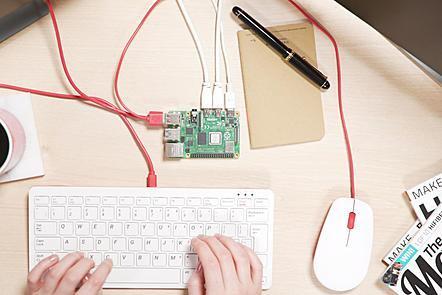
You’ll need a Raspberry Pi (we recommend a Raspberry Pi 4), along with a keyboard, mouse, power supply, micro SD card, and a suitable cable for connecting your Raspberry Pi to your screen. All of these are included in the Raspberry Pi 4 Desktop Kit
Go to Class
MOOC List is learner-supported. When you buy through links on our site, we may earn an affiliate commission.

Related Courses

Code Yourself! An Introduction to Programming (Coursera) Coursera
University of Edinburgh,Universidad ORT Uruguay

Code Yourself! An Introduction to Programming (Coursera)

Have you ever wished you knew how to program, but had no idea where to start from? This course will teach you how to program in Scratch, an easy to use visual programming language. More importantly, it will introduce you to the fundamental principles of computing and it will help you think like a software engineer.

Sep 28th 2026
5-12 Weeks
Improving Computing Classroom Practice Through Action Research (FutureLearn) FutureLearn
Raspberry Pi Foundation,National Centre for Computing Education

Improving Computing Classroom Practice Through Action Research (FutureLearn)

Learn how to run your own action research project to improve the computing pedagogy and practices in your classroom. Apply action research to your teaching and become a more reflective practitioner. Through this course, you will become familiar with the process of classroom action research, and plan your own classroom-based investigation.

Feb 7th 2022
2 Weeks
Prepare to Run a Code Club (FutureLearn) FutureLearn
Raspberry Pi Foundation

Prepare to Run a Code Club (FutureLearn)

Build your confidence and get practical advice on launching and running a Code Club for young people. Code Club is a global network of volunteers and educators who run free coding clubs for 9- to 13-year-olds. This short course will give you the confidence and skills to run a Code Club for young people and inspire the next generation to get excited about computing and digital making.

Feb 1st 2021
3 Weeks
FPGA computing systems: Background knowledge and introductory materials (Coursera) Coursera
Politecnico di Milano

FPGA computing systems: Background knowledge and introductory materials (Coursera)

This course is for anyone passionate in learning how a hardware component can be adapted at runtime to better respond to users/environment needs. This adaptation can be provided by the designers, or it can be an embedded characteristic of the system itself. These runtime adaptable systems will be implemented by using FPGA technologies.

Oct 5th 2026
4 Weeks
Algorithmic Thinking (Part 2) (Coursera) Coursera
Rice University

Algorithmic Thinking (Part 2) (Coursera)

Experienced Computer Scientists analyze and solve computational problems at a level of abstraction that is beyond that of any particular programming language. This two-part class is designed to train students in the mathematical concepts and process of "Algorithmic Thinking", allowing them to build simpler, more efficient solutions to computational problems.

Oct 5th 2026
4 Weeks
Teach Computing in Schools: Creating a Curriculum for Ages 11 to 16 (FutureLearn) FutureLearn
Raspberry Pi Foundation,National Centre for Computing Education

Teach Computing in Schools: Creating a Curriculum for Ages 11 to 16 (FutureLearn)

Create an inspiring and engaging computing curriculum for secondary school students, using freely available resources. Learn how to create a successful computing curriculum tailored for your setting. On this course, teachers can discover how to create a computing curriculum for pupils aged 11 to 16, using freely available online resources to complement your existing materials.

Mar 6th 2023
3 Weeks
Teaching Computing (FutureLearn) FutureLearn
University of East Anglia,National STEM Learning Centre

Teaching Computing (FutureLearn)

A free online course for primary and secondary school teachers who are tackling the Computing curriculum in England. This free online course aims to help teachers in primary and secondary schools, especially those who previously taught other subjects including ICT. It was originally created by UEA with sponsorship from Computing at School (CAS) and BT. CAS have asked the National STEM Learning Centre to host a fourth run of this successful course.

No sessions available
5-12 Weeks
Robotics With Raspberry Pi: Build and Program Your First Robot Buggy (FutureLearn) FutureLearn
Raspberry Pi Foundation,National Centre for Computing Education

Robotics With Raspberry Pi: Build and Program Your First Robot Buggy (FutureLearn)

Build and program your first robot buggy using a Raspberry Pi, learning how to connect motors, add sensors and write algorithms. Learn robotics by building a robot buggy and controlling it with a Raspberry Pi. On this course from the Raspberry Pi Foundation, you’ll build a robot buggy controlled by a Raspberry Pi.

Jan 2nd 2023
3 Weeks
Algorithmic Thinking (Part 1) (Coursera) Coursera
Rice University

Algorithmic Thinking (Part 1) (Coursera)

Experienced Computer Scientists analyze and solve computational problems at a level of abstraction that is beyond that of any particular programming language. This two-part class is designed to train students in the mathematical concepts and process of "Algorithmic Thinking", allowing them to build simpler, more efficient solutions to computational problems.

Oct 5th 2026
4 Weeks
Computer Science: Algorithms, Theory, and Machines (Coursera) Coursera
Princeton University

Computer Science: Algorithms, Theory, and Machines (Coursera)

This course introduces the broader discipline of computer science to people having basic familiarity with Java programming. It covers the second half of our book Computer Science: An Interdisciplinary Approach (the first half is covered in our Coursera course Computer Science: Programming with a Purpose, to be released in the fall of 2018). Our intent is to demystify computation and to build awareness about the substantial intellectual underpinnings and rich history of the field of computer science.

Oct 5th 2026
5-12 Weeks
Functional Programming in Haskell: Supercharge Your Coding (FutureLearn) FutureLearn
University of Glasgow

Functional Programming in Haskell: Supercharge Your Coding (FutureLearn)

Get an introduction to Haskell, the increasingly popular functional programming language, with this University of Glasgow course. Do you want to develop software using the latest programming language paradigm? Haskell is a functional programming language, based on formal mathematical principles. As such, it is easy to reason about and develop, and it executes efficiently on modern multicore machines. From investment banks to social networks, everyone is adopting Haskell.

Self Paced
5-12 Weeks