EdX

Introduction to Semiconductors, PN Junctions and Bipolar Junction Transistors (edX)

Introduction to Semiconductors, PN Junctions and Bipolar Junction Transistors (edX)

An intuitive approach to operational principles of semiconductor devices. The course covers PN junction diodes, optical sensors, solar cells, LEDs, and Bipolar Junction Transistors. As a topic of study, semiconductor devices offer a unique challenge due to the complex mathematics involved. In this course, we take a more intuitive approach to explore the underlying concepts. Eschewing mathematics, we use engaging animations to help you visualize the working principles of many common semiconductor devices.

Class Deals by MOOC List - Click here and see EdX's Active Discounts, Deals, and Promo Codes.

Whether you are completely new to the subject or an experienced engineer, this course will give you a different perspective and a new way to look at the behaviors of semiconductor devices.

Reducing the reliance of equations does not mean the depth of the material is sacrificed. In fact, the course provides even more in-depth explanations of key concepts. We shift the focus from quantitatively evaluating the behavior of semiconductor devices to intuitively visualizing the semiconductor device actions.
In addition, the course offers a wide array of content - from basic PN junctions to modern nano-electronic circuit and systems. Besides covering the existing technologies, the course also explores the development of the industry into the future.
This course is part of the Principle of Semiconductor Devices Professional Certificate.

What you'll learn

  • How to describe the motion of carriers in a semiconductor material
  • Ways to illustrate the operational principles of some common electronic devices including PN Junction Diode, Schottky Diode, Photo Diodes, Solar Cells, LED and Bipolar Junction TransistorHow to identify the most important parameters to adjust for meeting certain design specifications
  • How to construct the circuit models of some common electronic devices
  • Communication in the language of semiconductor

Syllabus

Week 1: Intrinsic semiconductor materials
Introduction to the energy band diagram of a crystal and calculating the carrier concentration in the material.

Week 2: Doping and PN junction formation
The effect of doping and the formation of PN junctions.

Week 3: Current-voltage characteristics of PN junction diodes
Current-voltage characteristics and detailed carrier actions in a PN junction diode.

Week 4: Real PN junction characteristics, its model and design
The characteristics of real PN junction diodes, the charge and capacitance models, and the design strategy.

Week 5: PN junction optical properties and metal-semiconductor contacts
The optical responses of the PN junction; the working principles of optical detection, solar cells and LEDs; and the metal-semiconductor contacts.

Week 6: Basic operation of Bipolar Junction Transistor
Introduction to bipolar junction transistors, I-V characteristic and non-ideal effects.

Week 7: Real Bipolar Junction Transistor structures, switching characteristics and model
Switching characteristics of the Bipolar Junction Transistor, it circuit model and design strategy.

Week 8: Final Exam
Go to Class
MOOC List is learner-supported. When you buy through links on our site, we may earn an affiliate commission.

Related Courses

Introducción al Internet de las Cosas (IoT) (edX) EdX
Universitat Politècnica de València,UPValenciaX

Introducción al Internet de las Cosas (IoT) (edX)

Este es un curso en línea preliminar en el que tratamos los conceptos básicos de electronica y programación utilizando placas Arduino y ESP. El internet de las cosas (Internet of things o IoT) es el presente y el futuro de la tecnología. Tanto si tienes algo de experiencia con la electrónica y deseas desarrollar proyectos como si no tienes ninguna, este curso online te dara los conocimientos iniciales necesarios para comenzar a crear dispositivos increibles capaces de medir y controlar señales físicas.

Self Paced
Self-Paced
Fundamentals of Audio and Music Engineering: Part 1 Musical Sound & Electronics (Coursera) Coursera
University of Rochester

Fundamentals of Audio and Music Engineering: Part 1 Musical Sound & Electronics (Coursera)

In this course students learn the basic concepts of acoustics and electronics and how they can applied to understand musical sound and make music with electronic instruments. Topics include: sound waves, musical sound, basic electronics, and applications of these basic principles in amplifiers and speaker design.

Aug 3rd 2026
5-12 Weeks
Adding Electronics to Rapid Prototypes (Coursera) Coursera
Arizona State University

Adding Electronics to Rapid Prototypes (Coursera)

Hello, everyone! Welcome to this course on Adding Electronics to Rapid Prototypes. This is part of the Rapid Prototyping and Tooling specialization. In this course, I’ll cover the basics of electric circuits, breadboards, and multimeters. I’ll then discuss different options for connecting electrical components as well as discuss different types of motors and actuators. Finally, I’ll end this course by discussing microcontrollers and how to use them to make even more sophisticated prototypes.

Aug 3rd 2026
5-12 Weeks
Graphene Science and Technology (edX) EdX
Chalmers University of Technology,ChalmersX

Graphene Science and Technology (edX)

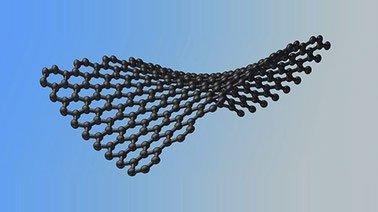
Graphene: its practical applications and how it offers new insights into quantum physics. Graphene is the world’s first 2-dimensional material and is the thinnest, strongest, and most flexible material known to exist. Graphene, a special form of carbon,,can conduct electricity and heat better than anything else.

No sessions available
5-12 Weeks
Solar Energy: Photovoltaic (PV) Energy Conversion (edX) EdX
Delft University of Technology,DelftX

Solar Energy: Photovoltaic (PV) Energy Conversion (edX)

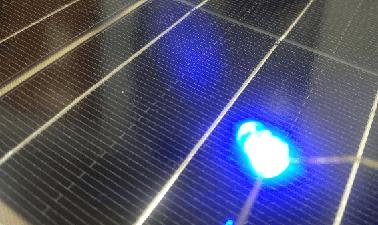
Learn how solar cells generate electricity, and about the semiconductor physics and optics required to design and manufacture solar cells. The key factor in getting more efficient and cheaper solar energy panels is the advance in the development of photovoltaic cells. In this course you will learn how photovoltaic cells convert solar energy into useable electricity. You will also discover how to tackle potential loss mechanisms in solar cells.

Self Paced
5-12 Weeks
Nanomaterials for Civil and Environmental Applications (edX) EdX
Purdue University,PurdueX

Nanomaterials for Civil and Environmental Applications (edX)

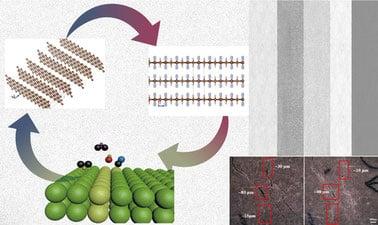
Learn about the field of nanotechnology with a special emphasis on nanomaterials synthesis, characterizations and their applications in civil and environmental engineering. This course will introduce students to the field of nanotechnology with a special emphasis on nanomaterials synthesis, characterizations and their applications in civil and environmental engineering.

Sep 27th 2021
5-12 Weeks
Circuits and Electronics 2: Amplification, Speed, and Delay (edX) EdX
MIT,MITx

Circuits and Electronics 2: Amplification, Speed, and Delay (edX)

Learn how to speed up digital circuits and build amplifiers in the design of microchips used in smartphones, computers, and the Internet. Want to learn how to construct an amplifier for mobile phones? Wondering how energy storage elements like capacitors and inductors work, or how to make microchips run faster? This free circuit course taught by edX CEO and MIT Professor Anant Agarwal and colleagues is for you.

Self Paced
Self-Paced
Materials Science: 10 Things Every Engineer Should Know (Coursera) Coursera
University of California, Davis

Materials Science: 10 Things Every Engineer Should Know (Coursera)

We explore “10 things” that range from the menu of materials available to engineers in their profession to the many mechanical and electrical properties of materials important to their use in various engineering fields. We also discuss the principles behind the manufacturing of those materials. By the end of the course, you will be able to: recognize the important aspects of the materials used in modern engineering applications; explain the underlying principle of materials science: “structure leads to properties,”; identify the role of thermally activated processes in many of these important “things” – as illustrated by the Arrhenius relationship; relate each of these topics to issues that have arisen (or potentially could arise) in your life and work.

Aug 3rd 2026
5-12 Weeks