EdX

Nanomaterials for Civil and Environmental Applications (edX)

Offered by Purdue University, PurdueX,
Nanomaterials for Civil and Environmental Applications (edX)

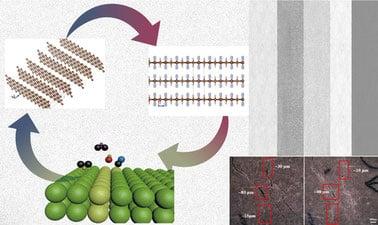
Learn about the field of nanotechnology with a special emphasis on nanomaterials synthesis, characterizations and their applications in civil and environmental engineering. This course will introduce students to the field of nanotechnology with a special emphasis on nanomaterials synthesis, characterizations and their applications in civil and environmental engineering.

Class Deals by MOOC List - Click here and see EdX's Active Discounts, Deals, and Promo Codes.

The specific applications will include, but not limited to, tailoring mechanical property, durability, self-cleaning, self-sealing, self-sensing, energy harvesting and other multi-functionality. It integrates the fields of materials science, civil engineering and electrical engineering. The basic concepts will be discussed including nano-scale effect, process-structure-property relationship, nano- and micro-structure property characterizations, multi-functional materials, nano-device fabrication and their applications for energy harvesting, water infiltrations and environmental sensing. lab will be provided to students enrolled in the course to learn nano and micro-structure characterizations skills.
This course is part of the Materials Engineering for Intelligent Infrastructure MicroMasters.

What you'll learn

  • Basic concepts of nanomaterials and nanostructures
  • Nanomaterials fabrication methods
  • Nanotechnology for materials properties modifications

Prerequisites:
Learners in this course should have successfully completed edX course, Fundamentals of Nanomaterials and Nanotechnology or equivalent.

Syllabus

Week 1:

  • Nanomaterials in Civil Application
  • Concrete Mechanical Property
  • Nanomaterials for Improvement of Microstructure and Mechanical Performance
  • Brittle Strengthening Mechanism

Week 2:

  • Concrete Durability
  • Corrosion, FT and Scaling
  • Sulfate Attack and ASR

Week 3:

  • Nanomaterials for Self-Healing Concrete
  • Nanomaterials for Self-Cleaning Concrete
  • Photocatalysis
  • Thermal Energy Harvesting

Week 4:

  • Introduction to NDT Methods
  • Nanomaterials for Early Age Strength Sensing
  • Nanomaterials for Self-Sensing Concrete
  • Nanomaterials for Internal Curing

Week 5:

  • Nanotechnology for Environmental Applications Overview
  • Water and Wastewater Treatment
  • Air Pollution Control
  • Soil Remediation
Go to Class
MOOC List is learner-supported. When you buy through links on our site, we may earn an affiliate commission.

Related Courses

Renewable Energy: Fundamentals and Job Opportunities (Coursera) Coursera
University at Buffalo

Renewable Energy: Fundamentals and Job Opportunities (Coursera)

This course prepares you to recognize the complexities and nuances of different renewable energy solutions, as well as relevant career opportunities (both technical occupations and roles not typically associated with clean energy). Learners are immersed in discussions about green energy technologies, the impact of sustainability on society, energy consumption in the United States and conservation. Topics include: tenets of green building design and construction, solar energy conversion through photovoltaic cells, wind turbine site selection and design, and nanotechnology applications in clean energy.

Aug 10th 2026
5-12 Weeks
Introduction to Quantum Transport (edX) EdX
Purdue University,PurdueX

Introduction to Quantum Transport (edX)

This course introduces the non-equilibrium Green’s function (NEGF) method widely used to describe quantum effects in nanoscale devices, along with its applications to spintronic devices. This course introduces the Schrödinger equation, using the tight-binding method to discuss the concept of bandstructure and E(k) relations, followed by an introduction to the NEGF method with simple illustrative examples. Concept of spinors is introduced along with the application of the NEGF method to spintronic devices.

Feb 12th 2024
5-12 Weeks
Electromagnetic Compatibility Essentials (edX) EdX
Graz University of Technology,TUGrazX

Electromagnetic Compatibility Essentials (edX)

Advance your career by learning the basics of EMC. Explore all the different aspects and challenges every electronics engineer must be aware of. This course is designed to gain essential know-how in today’s world of very high frequencies. For instance, smartphone CPUs already work with clock frequencies above 3 GHz. But did you know that such fast switching disturbs other devices nearby? Such disturbances are either simply annoying or can become a real problem. As a consequence, international regulations exist which demand for emission and immunity tests before selling an electronic device.

Self Paced
Self-Paced
Fundamentals of Audio and Music Engineering: Part 1 Musical Sound & Electronics (Coursera) Coursera
University of Rochester

Fundamentals of Audio and Music Engineering: Part 1 Musical Sound & Electronics (Coursera)

In this course students learn the basic concepts of acoustics and electronics and how they can applied to understand musical sound and make music with electronic instruments. Topics include: sound waves, musical sound, basic electronics, and applications of these basic principles in amplifiers and speaker design.

Aug 3rd 2026
5-12 Weeks
Introducción a los encofrados y las cimbras en obra civil y edificación (edX) EdX
Universitat Politècnica de València,UPValenciaX

Introducción a los encofrados y las cimbras en obra civil y edificación (edX)

Aprende sobre la construcción de obras civiles y de edificación con encofrados y cimbras. Este es un curso en línea básico de construcción de obras civiles y de edificación con encofrados y cimbras. Es un curso de construcción e ingeniería que no requiere conocimientos especiales y está diseñado para que sea útil a un amplio abanico de profesionales con o sin experiencia, estudiantes de cualquier rama de la construcción, ya sea universitaria o de formación profesional.

Self Paced
Self-Paced
Introduction to Semiconductors, PN Junctions and Bipolar Junction Transistors (edX) EdX
The Hong Kong University of Science and Technology - HKUST,HKUSTx

Introduction to Semiconductors, PN Junctions and Bipolar Junction Transistors (edX)

An intuitive approach to operational principles of semiconductor devices. The course covers PN junction diodes, optical sensors, solar cells, LEDs, and Bipolar Junction Transistors. As a topic of study, semiconductor devices offer a unique challenge due to the complex mathematics involved. In this course, we take a more intuitive approach to explore the underlying concepts. Eschewing mathematics, we use engaging animations to help you visualize the working principles of many common semiconductor devices.

Self Paced
Self-Paced
Recent Advances in Freeform Electronics (Coursera) Coursera
Yonsei University

Recent Advances in Freeform Electronics (Coursera)

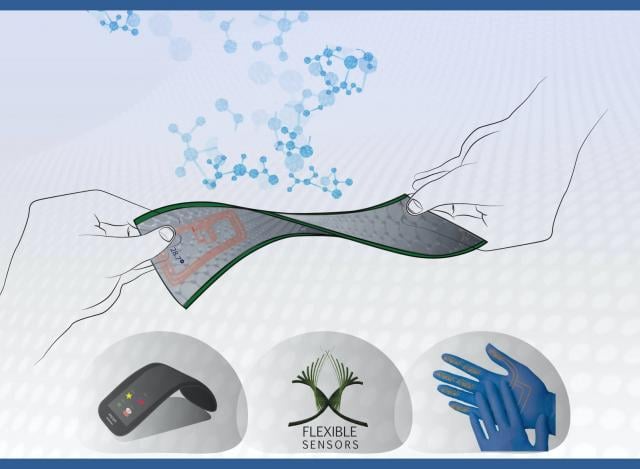
In this course, the learners will understand fundamental basic backgrounds of p-n junctions, diodes and MOSFETs (Metal Oxide Semiconductor Field Effect Transistors). Also, recent approaches on flexible / stretchable electronics, transparent optoelectronics, and printed electronics using one dimensional or two dimensional nanomaterials will be introduced.

Aug 10th 2026
5-12 Weeks
RF Design: Passive and Active Components (edX) EdX
Purdue University,PurdueX

RF Design: Passive and Active Components (edX)

Learn the necessary techniques and tools for designing high-performance passive and active RF components. Following the ‘Primer on RF Design’ course, this class focuses on passive and active components. We use the techniques learnt in the previous course, to design advanced RF devices including couplers, filters and amplifiers. Current research topics are discussed as appropriate.

Nov 1st 2021
5-12 Weeks
Nanotechnology: A Maker’s Course (Coursera) Coursera
Duke University,University of North Carolina,North Carolina State University

Nanotechnology: A Maker’s Course (Coursera)

How can we create nano-structures that are 10,000 times smaller than the diameter of a human hair? How can we “see” at the nano-scale? Through instruction and lab demonstrations, in this course you will obtain a rich understanding of the capabilities of nanotechnology tools, and how to use this equipment for nano-scale fabrication and characterization.

Aug 10th 2026
5-12 Weeks
Introduction to the Internet of Things (edX) EdX
Universitat Politècnica de València,UPValenciaX

Introduction to the Internet of Things (edX)

This is a preliminary course in which we deal with the basics of electronics and programming using Arduino and ESP boards. Internet of Things (IoT) is the present and the future of technology. Either, if you have none, few or some experience with electronics and you want to develop it projects this course will give you the necessary kick start to start creating amazing devices capable of sensing, controlling physical signals.

Self Paced
Self-Paced