FUN

Ouvrez les portes du laboratoire: cellules et cellules souches (FUN)

Offered by Université de Nantes,
Ouvrez les portes du laboratoire: cellules et cellules souches (FUN)

Comment cultiver des cellules humaines ? Comment les reprogrammer en cellules souches ? A la suite des travaux du prix Nobel Shinya Yamanaka, découvrez les principales étapes de la reprogrammation des cellules humaines en cellules souches, et abordons ensemble les connaissances de base de la biologie cellulaire, ses méthodes expérimentales et la publication scientifique.

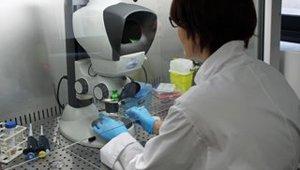
Grâce à ce cours, vous allez pénétrer au cœur d’un laboratoire de recherche en biologie-santé et partir à la découverte de la production de cellules souches.
Alors, ouvrez les portes du laboratoire !

Plan du cours

Semaine 0
Parcours découverte : Présentation du MOOC. Les missions du laboratoire.
Parcours avancé : Déroulé du projet de recherche sur les cellules souches.

Semaine 1
Parcours découverte : Les cellules souches : Introduction, généralités.
Parcours avancé : La démarche expérimentale.

Semaine 2
Parcours découverte : La culture cellulaire. Congélation des cellules.
Parcours avancé : La mesure et l’analyse.

Semaine 3
Parcours découverte : La reprogrammation cellulaire.
Parcours avancé : Quelques exemples de modèles d’étude.

Semaine 4
Parcours découverte : Analyse et validation des cellules souches.
Parcours avancé : Validation du modèle.

Semaine 5
Parcours découverte : La différenciation des cellules souches en cellules d’organe.
Parcours avancé : Exploration cellulaire.

Semaine 6
Parcours découverte : L’analyse fonctionnelle des cellules.
Parcours avancé : Exploration fonctionnelle.

Semaine 7
Parcours avancé : Conclusion et perspectives.

Go to Class
MOOC List is learner-supported. When you buy through links on our site, we may earn an affiliate commission.

Related Courses

Diagnosis and prognosis biomarkers in global health (FUN) FUN
Institut Pasteur

Diagnosis and prognosis biomarkers in global health (FUN)

Biomarkers are the subject of considerable interest by scientists and researchers worldwide: they determine the use of targeted treatments (a major therapeutic advance in medicine), allow to measure the evolution of a disease or to indicate a particular physiological event. The aim of this MOOC is to review the interest of biomarkers for public health, based in particular on the research activities of the thirty-three institutes of the Institut Pasteur international network.

No sessions available
4 Weeks
Bioinformatic Methods II (Coursera) Coursera
University of Toronto

Bioinformatic Methods II (Coursera)

Large-scale biology projects such as the sequencing of the human genome and gene expression surveys using RNA-seq, microarrays and other technologies have created a wealth of data for biologists. However, the challenge facing scientists is analyzing and even accessing these data to extract useful information pertaining to the system being studied. This course focuses on employing existing bioinformatic resources – mainly web-based programs and databases – to access the wealth of data to answer questions relevant to the average biologist, and is highly hands-on.

Nov 23rd 2026
5-12 Weeks
Take the Lead on Healthcare Quality Improvement (Coursera) Coursera
Case Western Reserve University

Take the Lead on Healthcare Quality Improvement (Coursera)

In this course you will learn about the importance of quality in healthcare and how you can contribute by implementing a quality improvement (QI) project to improve processes of care and patient outcomes. You will learn about powerful tools to add to your QI ‘toolbox’ during short lectures and reflective exercises. You will apply these tools to the implementation of a QI project in your own practice setting or an area of personal improvement. At the completion of the course, you will have a storyboard that captures your QI project success to share with others.

Nov 23rd 2026
5-12 Weeks
Eléments de santé au travail pour les ingénieurs et managers (FUN) FUN
le cnam

Eléments de santé au travail pour les ingénieurs et managers (FUN)

Le MOOC éléments de santé au travail pour les ingénieurs et managers, ne vise pas à former des spécialistes de la santé au travail. Son but est de fournir des éléments permettant aux cadres ou futurs cadres d’intégrer cette dimension dans leur pratique professionnelle. Pour cela, le contenu du cours s’articule autour de trois axes.

No sessions available
5-12 Weeks
Major Depression in the Population: A Public Health Approach (Coursera) Coursera
Johns Hopkins University

Major Depression in the Population: A Public Health Approach (Coursera)

Public Mental Health is the application of the principles of medicine and social science to prevent the occurrence of mental and behavioral disorders and to promote mental health of the population. This course illustrates the principles of public health applied to depressive disorder, including principles of epidemiology, transcultural psychiatry, health services research, and prevention. It is predicted that by 2020 depressive disorder will be the most important cause of disease burden in the entire world! Every human being suffers from feeling depressed at some point or other, but only about one fifth of the population will experience an episode of depressive disorder over the course of their lives.

Nov 23rd 2026
5-12 Weeks
Soul Beliefs: Causes and Consequences - Unit 2: Belief Systems (Coursera) Coursera
Rutgers University

Soul Beliefs: Causes and Consequences - Unit 2: Belief Systems (Coursera)

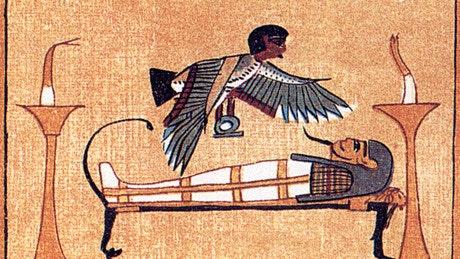
Throughout history, the vast majority of people around the globe have believed they have, however defined, a “soul.” While the question of whether the soul exists cannot be answered by science, what we can study are the causes and consequences of various beliefs about the soul and its prospects of surviving the death of the body. Why are soul and afterlife beliefs so common in human history? Are there adaptive advantages to assuming souls exist?

Nov 23rd 2026
5-12 Weeks
De l'atome à l'humain : à la racine des mots scientifiques (FUN) FUN
Université de Lorraine

De l'atome à l'humain : à la racine des mots scientifiques (FUN)

Ce cours en ligne gratuit porte donc sur l’étymologie du vocabulaire scientifique et médical. Il s’adresse aux lycéens se préparant à la PACES, aux formations paramédicales, aux études scientifiques, aux STAPS... Il s’adresse également aux étudiants de ces différentes filières, ainsi qu’à toute personne intéressée par l’étymologie.

Sep 27th 2021
4 Weeks
Pensamiento Científico (Coursera) Coursera
Universidad Nacional Autónoma de México

Pensamiento Científico (Coursera)

¿El pensamiento científico es sólo para científicos? Su utilidad va mucho más allá, ayudando a las personas a tomar mejores decisiones todos los días. El objetivo de este curso es fomentar en pensamiento científico en los alumnos para ayudarles a tomar mejores decisiones profesionales, personales y sociales.

Nov 23rd 2026
5-12 Weeks
Innate Immunity (FUN) FUN
Institut Pasteur

Innate Immunity (FUN)

More than a century ago, Elie Metchnikoff established the bases of cellular innate immunity when he discovered the mechanism of phagocytosis. However, during most of the XXth century, adaptive immunity (also known as specific immunity) focused most of the interest of the researchers, until Charles Janeway and Polly Matzinger revisited the definition of immunology. What was called “non-specific immunity” was renamed “innate immunity”, and the understanding of the sensing of the exogenous or endogenous dangers signals, and their identification revolutionized our understanding of the early mechanism aimed to defend the integrity of the host against any type of attacks including pathogens.

Jan 14th 2022
5-12 Weeks
The New Nordic Diet - from Gastronomy to Health (Coursera) Coursera
University of Copenhagen

The New Nordic Diet - from Gastronomy to Health (Coursera)

The New Nordic Diet is a new food culture developed in 2009-13 with key emphasis on gastronomy, health, and environment. Major research in its effect on acceptability, behaviour and learning skills, and disease prevention have been conducted by the OPUS centre at the University of Copenhagen and the people behind the award-winning restaurant Noma in Copenhagen. This course will give the participants the opportunity to experience a healthy and palatable new food and eating concept diet “The New Nordic Diet” and an understanding of how food and diets can affect mental and physical health and ensure the foundation for a healthier life style for future generations with a regional based diet and food culture.

Nov 23rd 2026
5-12 Weeks
Tuberculosis (FUN) FUN
Institut Pasteur

Tuberculosis (FUN)

To provide an up-to-date overview of the disease, the Institut Pasteur has created a MOOC dedicated to Tuberculosis. This course will provide a knowledge base that goes from the basics of TB to the current state of knowledge on various aspects of tuberculosis: the clinical picture, epidemiology, pediatric TB, factors affecting susceptibility to the disease, including HIV, diabetes and human genetics, immunology, vaccines, diagnosis, current and future ways to detect drug resistance, and how to treat drug sensitive and multi-drug resistant strains.

Sep 7th 2021
5-12 Weeks