In the Night Sky: Orion (FutureLearn)

Offered by The Open University,
In the Night Sky: Orion (FutureLearn)

Explore the night sky and improve your knowledge of astronomy, all through the constellation of Orion. This online astronomy course will change the way you see the night sky.

Class Deals by MOOC List - Click here and see FutureLearn's Active Discounts, Deals, and Promo Codes.

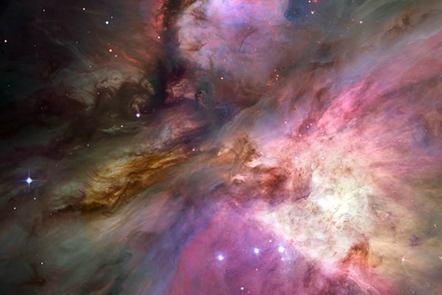
You’ll examine one of the most famous constellations Orion. Starting with its nebula, where new stars and planets are formed, you’ll take a look at the seven brightest stars that make up Orion using high-quality images, including from the Hubble Space Telescope.
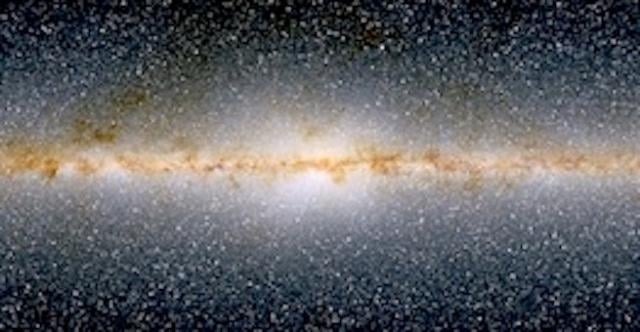
You’ll learn about exoplanets and the secrets to life outside our Solar System. And you’ll think about the Milky Way, considering the history of the universe from the Big Bang to the present.
The course was produced with the kind support of Dangoor Education.

What topics will you cover?

  • Find the constellation of Orion in the night sky
  • Learn all about the legend of Orion
  • Discover how the constellations were used for navigation
  • Discover the amazing process that causes stars to form
  • Find out what happens to different stars over their lifetime
  • Learn what happens when stars run out of fuel
  • Find out what the night sky can reveal about the Big Bang theory
  • Get involved with classifying galaxies into different shapes
  • Take a tour of space through the PIRATE telescope
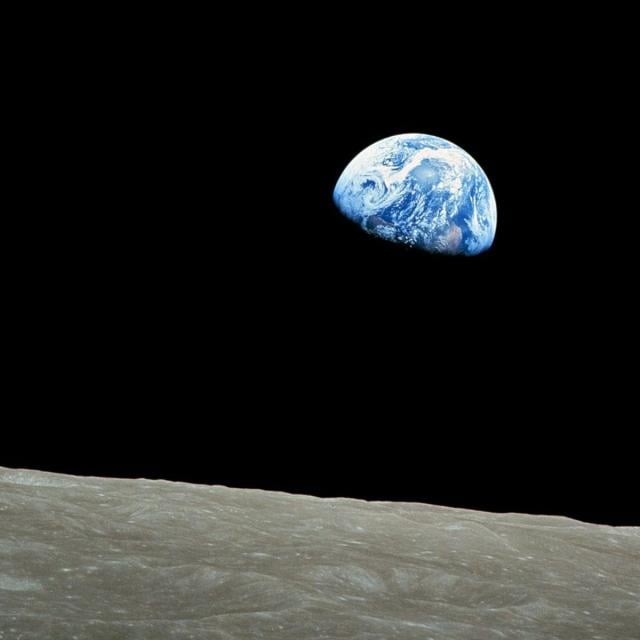
  • Find out what is important about the Earth’s position
  • Discuss whether you think there are other planets just like ours
  • Find out about The Open University’s project to map the stars

What will you achieve?
By the end of the course, you'll be able to...

  • Apply facts, concepts, principles, theories, classification systems and language used in astronomy.
  • Develop the knowledge and understanding of the range of sizes, distances and motions of objects in the night sky.
  • Develop the knowledge and understanding of the structure, evolution and the main processes operating in stars.
  • Develop the knowledge and understanding of the properties of planets in our Solar System and exoplanetary systems.
  • Demonstrate the knowledge and understanding of the history of the Universe.
Go to Class
MOOC List is learner-supported. When you buy through links on our site, we may earn an affiliate commission.

Related Courses

文物精品与文化中国:天文与医药 | Relics of Chinese History - Part 2: Astronomy and Medicine (edX) EdX
Tsinghua University,TsinghuaX

文物精品与文化中国:天文与医药 | Relics of Chinese History - Part 2: Astronomy and Medicine (edX)

Discover how Astronomy and Medicine impacted the history of China as we use artifacts and relics as a guide to Chinese civilization. 本课程以精品文物作引子,将学术界探索中华文明的过程作为线索,介绍古代中国在造船、玉器等诸多领域的杰出成就

Self Paced
Self-Paced
Our Solar System and Beyond: Teaching Primary Science (FutureLearn) FutureLearn
Royal Observatory Greenwich

Our Solar System and Beyond: Teaching Primary Science (FutureLearn)

Improve your knowledge of space science to help you deliver primary science lessons that are out of this world. Understanding the Solar System and how to teach it can be a tricky business. Fortunately astronomers at the Royal Observatory Greenwich are here to help. In this online course, they’ll help you understand space, address some common misconceptions, and introduce you to the science and people behind real-life, cutting-edge discoveries.

Available now
3 Weeks
Analyzing the Universe (Coursera) Coursera
Rutgers University

Analyzing the Universe (Coursera)

Using publicly available data from NASA of actual satellite observations of astronomical x-ray sources, we explore some of the mysteries of the cosmos, including neutron stars, black holes, quasars and supernovae. We will analyze energy spectra and time series data to understand how these incredible objects work. We utilize an imaging tool called DS9 to explore the amazing diversity of astronomical observations that have made x-ray astronomy one of the most active and exciting fields of scientific investigation in the past 50 years.

Aug 3rd 2026
5-12 Weeks
Gravity! The Big Bang, Black Holes and Gravitational Waves (FutureLearn) FutureLearn
Université Paris Diderot

Gravity! The Big Bang, Black Holes and Gravitational Waves (FutureLearn)

Gravity runs the Universe. This free online course explains why, exploring gravitational waves, black holes and the Big Bang. What is gravity? This fundamental force is the common theme between concepts as intriguing as the Big Bang, black holes, dark energy, space-time, gravitational waves and the expansion of the Universe. If these concepts pique your interest, this free online course is for you. It doesn’t require any background in physics or mathematics, just a simple curiosity about the Universe and our place in it.

No sessions available
5-12 Weeks
Kinetics: Studying Spacecraft Motion (Coursera) Coursera
University of Colorado Boulder

Kinetics: Studying Spacecraft Motion (Coursera)

As they tumble through space, objects like spacecraft move in dynamical ways. Understanding and predicting the equations that represent that motion is critical to the safety and efficacy of spacecraft mission development. Kinetics: Modeling the Motions of Spacecraft trains your skills in topics like rigid body angular momentum and kinetic energy expression shown in a coordinate frame agnostic manner, single and dual rigid body systems tumbling without the forces of external torque, how differential gravity across a rigid body is approximated to the first order to study disturbances in both the attitude and orbital motion, and how these systems change when general momentum exchange devices are introduced.

Aug 3rd 2026
4 Weeks
Archaeoastronomy (Coursera) Coursera
Politecnico di Milano

Archaeoastronomy (Coursera)

Archaeoastronomy is the “science of stars and stones”: it studies the relationships between the ancient monuments and the sky, in order to gain a better understanding of the ideas of the architects of the past and of their religious and symbolic world. The course provides the first complete, easy introduction to this fascinating discipline.

Aug 17th 2026
5-12 Weeks
Quantum Optics 1 : Single Photons (Coursera) Coursera
École Polytechnique

Quantum Optics 1 : Single Photons (Coursera)

This course gives you access to basic tools and concepts to understand research articles and books on modern quantum optics. You will learn about quantization of light, formalism to describe quantum states of light without any classical analogue, and observables allowing one to demonstrate typical quantum properties of these states. These tools will be applied to the emblematic case of a one-photon wave packet, which behaves both as a particle and a wave.

Aug 10th 2026
5-12 Weeks
Mysteries Of The Universe (FutureLearn) FutureLearn
National Tsing Hua University

Mysteries Of The Universe (FutureLearn)

Discover how more than ninety per cent of the universe is a mystery, and expand your knowledge of cosmology and astronomy. Investigate the most mysterious and fascinating aspects of the universe The more we learn about how the universe works, the more we realise how much we don’t know. What is a black hole? What is dark energy? Will the universe eventually collapse in on itself? And how does the Earth fit into all this?

Self Paced
5-12 Weeks
Astrobiology: Exploring Other Worlds (Coursera) Coursera
University of Arizona

Astrobiology: Exploring Other Worlds (Coursera)

How are astronomers approaching their search for life in the universe? What have we learned from the surge of exoplanets discoveries? How likely is it that Earth does not host the only life in the Universe? In this course we explore the field of astrobiology, an emerging multidisciplinary field. Progress in astrobiology is driven by telescopes on the ground and in space, and by new insights on how life emerged on Earth and its diversity.

Jul 27th 2026
5-12 Weeks