Gravity! The Big Bang, Black Holes and Gravitational Waves (FutureLearn)

Gravity! The Big Bang, Black Holes and Gravitational Waves (FutureLearn)

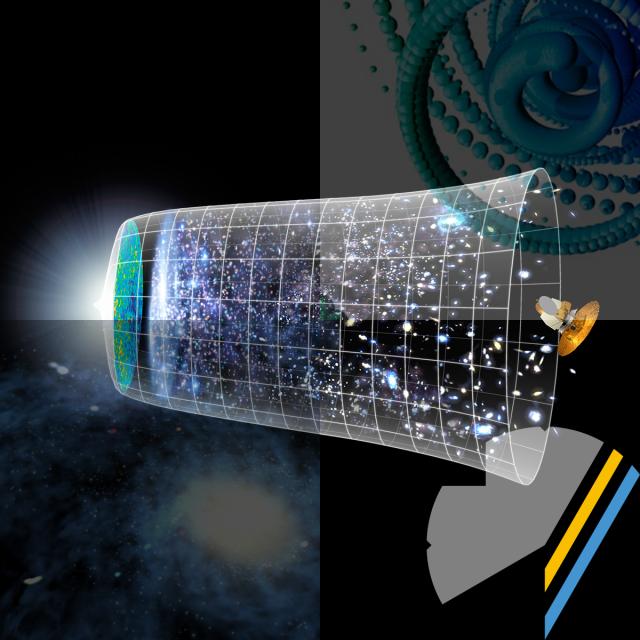
Gravity runs the Universe. This free online course explains why, exploring gravitational waves, black holes and the Big Bang. What is gravity? This fundamental force is the common theme between concepts as intriguing as the Big Bang, black holes, dark energy, space-time, gravitational waves and the expansion of the Universe. If these concepts pique your interest, this free online course is for you. It doesn’t require any background in physics or mathematics, just a simple curiosity about the Universe and our place in it.

Class Deals by MOOC List - Click here and see FutureLearn's Active Discounts, Deals, and Promo Codes.

Discover why the discovery of gravitational waves in 2016 is a real scientific revolution
The theory of gravity, Einstein’s theory of relativity, was published in 1915. This course presents in a simple way the main ideas behind this theory, before explaining why “gravity is the engine of the Universe.”
We will also explore the 2016 discovery of gravitational waves – a phenomenon that Einstein predicted exactly 100 years ago. By the end of the course, we’ll find out:

  • why, the further you look, the more distant the past is;
  • how we can tell what happened just after the Big Bang;
  • what the dark components of the Universe are;
  • what happens when you cross the horizon of a black hole;
  • why the discovery of gravitational waves is opening an extraordinary exploration of our Universe and our space-time.

Learn with gravity experts including a Nobel Prize-winning physicist
Over six weeks, you’ll learn with Pierre Binétruy, the Director of the Paris Centre for Cosmological Physics at Paris Diderot University, as well as the cosmologist, George Smoot, who will explain the discovery that earned him the Nobel Prize for Physics in 2006.
Go to Class
MOOC List is learner-supported. When you buy through links on our site, we may earn an affiliate commission.

Related Courses

The Discovery of the Higgs Boson (FutureLearn) FutureLearn
University of Edinburgh

The Discovery of the Higgs Boson (FutureLearn)

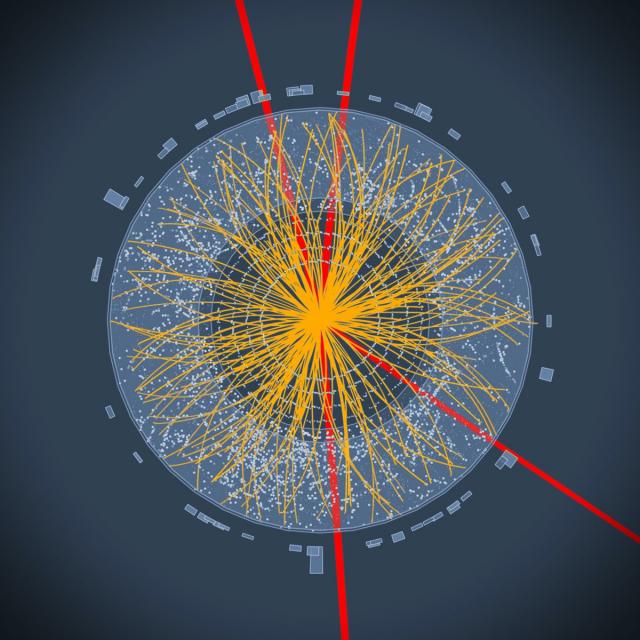
Should we be excited about the Higgs boson? Find out more about particle physics and understanding the universe. The discovery of a new fundamental particle at the Large Hadron Collider (LHC), CERN is the latest step in a long quest seeking to answer one of physics’ most enduring questions: why do particles have mass? The experiments’ much anticipated success confirms predictions made decades earlier by Peter Higgs and others, and offers a glimpse into a universe of physics beyond the Standard Model.

Self Paced
5-12 Weeks
Through Engineers' Eyes: Engineering Mechanics by Experiment, Analysis and Design (FutureLearn) FutureLearn
UNSW Sydney - University of New South Wales

Through Engineers' Eyes: Engineering Mechanics by Experiment, Analysis and Design (FutureLearn)

Learn the techniques of Engineering Mechanics, use them to interpret experiments and apply them to design. When you design anything, how do you know that the design will work? You need Engineering Mechanics - the science-based analysis that engineers use to predict how their designs will perform, so they can meet their responsibilities for performance and safety.

No sessions available
5-12 Weeks
Astrobiology: Exploring Other Worlds (Coursera) Coursera
University of Arizona

Astrobiology: Exploring Other Worlds (Coursera)

How are astronomers approaching their search for life in the universe? What have we learned from the surge of exoplanets discoveries? How likely is it that Earth does not host the only life in the Universe? In this course we explore the field of astrobiology, an emerging multidisciplinary field. Progress in astrobiology is driven by telescopes on the ground and in space, and by new insights on how life emerged on Earth and its diversity.

Jul 27th 2026
5-12 Weeks
The Einstein Revolution (edX) EdX
HarvardX,Harvard University

The Einstein Revolution (edX)

Traces Albert Einstein’s engagement with relativity, quantum mechanics, Nazism, nuclear weapons, philosophy, the arts, and technology. Albert Einstein has become the icon of modern science. Following his scientific, cultural, philosophical, and political trajectory, this course aims to track the changing role of physics in the 20th and 21st centuries.

Self Paced
Self-Paced
AstroTech: The Science and Technology behind Astronomical Discovery (Coursera) Coursera
University of Edinburgh

AstroTech: The Science and Technology behind Astronomical Discovery (Coursera)

Modern astronomy has made some astonishing discoveries - how stars burn and how black holes form; galaxies from the edge of the universe and killer rocks right next door; where the elements come from and how the expanding universe is accelerating. But how do we know all that? The truth is that astronomy would be impossible without technology, and every advance in astronomy is really an advance in technology. But the technology by itself is not enough. We have to apply it critically with a knowledge of physics to unlock the secrets of the Universe.

Jul 27th 2026
5-12 Weeks
Tesoros de la Física y sus Descubridores I (Coursera) Coursera
Universidad de los Andes

Tesoros de la Física y sus Descubridores I (Coursera)

¿Sabes cómo vuelan los aviones, tan pesados y no se caen mientras vuelan? ¿Sabes que viajamos por el espacio sobre el planeta Tierra que se traslada y gira muy rápido y no lo percibimos? ¿O acaso, notas efectos de su movimiento? ¿Cuál es nuestro lugar en el universo? ¿Podemos viajar en el tiempo? ¡Preguntas, muchas preguntas! Con espíritu de descubridores nuestra curiosidad nos motiva a buscar respuestas, a explorar nuestro entorno, a entrar a lo desconocido y hallar nuevo conocimiento.

Aug 3rd 2026
5-12 Weeks
Mysteries Of The Universe (FutureLearn) FutureLearn
National Tsing Hua University

Mysteries Of The Universe (FutureLearn)

Discover how more than ninety per cent of the universe is a mystery, and expand your knowledge of cosmology and astronomy. Investigate the most mysterious and fascinating aspects of the universe The more we learn about how the universe works, the more we realise how much we don’t know. What is a black hole? What is dark energy? Will the universe eventually collapse in on itself? And how does the Earth fit into all this?

Self Paced
5-12 Weeks
Mechanics: Motion, Forces, Energy and Gravity, from Particles to Planets (Coursera) Coursera
UNSW Sydney - University of New South Wales

Mechanics: Motion, Forces, Energy and Gravity, from Particles to Planets (Coursera)

Most of the phenomena in the world around you are, at the fundamental level, based on physics, and much of physics is based on mechanics. Mechanics begins by quantifying motion, and then explaining it in terms of forces, energy and momentum. This allows us to analyse the operation of many familiar phenomena around us, but also the mechanics of planets, stars and galaxies.

Jul 20th 2026
5-12 Weeks