Question Reality: Cosmos (Coursera)

Offered by Dartmouth College,
Question Reality: Cosmos (Coursera)

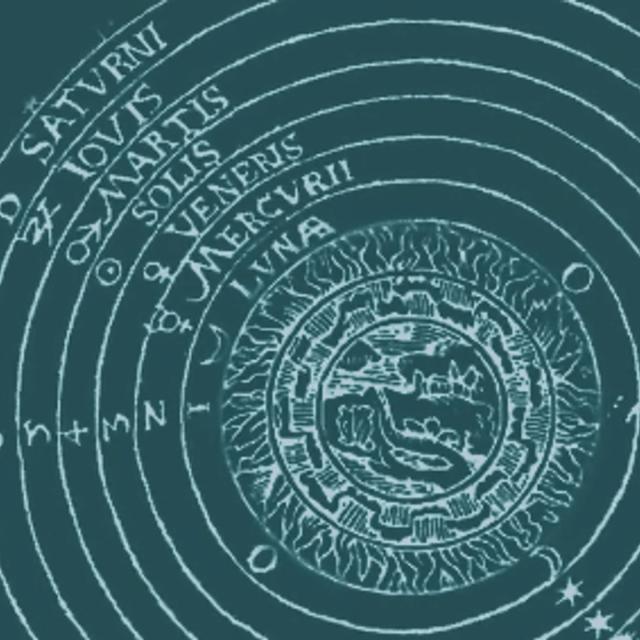
This course explores the concept of reality and the physics of the sky. You will travel through the philosophies and worldviews of early civilizations to the time of early scientists such as Plato, Aristotle, and Copernicus.

Class Deals by MOOC List - Click here and see Coursera's Active Discounts, Deals, and Promo Codes.

You will learn how Galileo's findings with the telescope challenged the Aristotelian interpretation of the cosmos, about Galileo’s revolutionary conclusions on gravity, and Newton's universal law of gravitation.
This course will also introduce you to the scientific methods and their limitations. You will also explore the properties and behaviors of homemade pendulums.
Next, you will explore modern ideas of cosmology, of the Big Bang, and even recent speculations that our universe is not all there is. Mysteries and properties of light and how they were discovered, questioned, and confirmed through experiments over the past few hundred years through the present will also be discussed.

Course 1 of 3 in the Question Reality! Science, philosophy, a search for meaning Specialization.

Syllabus

WEEK 1
Module 1: Cosmos: Part 1
This module explores the concept of reality and physics of the sky.

WEEK 2
Module 2: Cosmos: Part 2
This module will introduce you to the scientific methods. You will also explore the properties and behaviors of homemade pendulums.

WEEK 3
Module 3: Cosmos Part 3
This module explores modern ideas of cosmology, of the Big Bang, and even recent speculations that our universe is not all there is. It further examines various mysteries and properties of light and how they were discovered, questioned, and confirmed through experiments over the past few hundred years through the present.
Go to Class
MOOC List is learner-supported. When you buy through links on our site, we may earn an affiliate commission.

Related Courses

Global Warming I: The Science and Modeling of Climate Change (Coursera) Coursera
University of Chicago

Global Warming I: The Science and Modeling of Climate Change (Coursera)

This class describes the science of global warming and the forecast for humans’ impact on Earth’s climate. Intended for an audience without much scientific background but a healthy sense of curiosity, the class brings together insights and perspectives from physics, chemistry, biology, earth and atmospheric sciences, and even some economics—all based on a foundation of simple mathematics (algebra).

Jun 1st 2026
5-12 Weeks
Vers l'infiniment grand (Coursera) Coursera
École Polytechnique

Vers l'infiniment grand (Coursera)

Partez à la découverte de l'infiniment grand, en compagnie de physiciens et de physiciennes qui vont vous faire découvrir l'Univers aux distances les plus grandes connues à ce jour et les outils scientifiques utilisés pour l'étudier. Vous comprendrez ce que les scientifiques ont pu apprendre sur l'histoire et la structure de l'Univers, ses composantes, et comment ils ont pu accumuler ces observations sur les étoiles, les galaxies, les amas de galaxies, et l'Univers dans son ensemble.

Jun 1st 2026
4 Weeks
Søren Kierkegaard - Subjectivity, Irony and the Crisis of Modernity (Coursera) Coursera
University of Copenhagen

Søren Kierkegaard - Subjectivity, Irony and the Crisis of Modernity (Coursera)

In this course created by former associate professor at the Søren Kierkegaard Research Centre, Jon Stewart, we will explore how Kierkegaard deals with the problems associated with relativism, the lack of meaning and the undermining of religious faith that are typical of modern life. His penetrating analyses are still highly relevant today and have been seen as insightful for the leading figures of Existentialism, Post-Structuralism and Post-Modernism.

May 25th 2026
5-12 Weeks
Physics 101 - Energy and Momentum (Coursera) Coursera
Rice University

Physics 101 - Energy and Momentum (Coursera)

This course serves as an introduction to the physics of energy and momentum. Upon completion, learners will have an understanding of how mathematical laws and conservation principles describe the motions and interactions of objects all around us. They will gain experience in solving physics problems with tools such as graphical analysis, algebra, vector analysis, and calculus.

Jun 1st 2026
4 Weeks
Modern Topics in Condensed Matter Physics (Coursera) Coursera
University of Colorado Boulder

Modern Topics in Condensed Matter Physics (Coursera)

This course will begin by discussing superconductivity - a central example of a macroscopic phenomenon. It will then proceed to discuss various modern topics in quantum condensed matter physics, including fractionalization, anyon statistics, topology, and non-equilibrium phases. The course aims to provide learners with an appreciation for some modern topics in condensed matter physics.

Jun 1st 2026
4 Weeks
Density Functional Theory (Coursera) Coursera
École Polytechnique

Density Functional Theory (Coursera)

The aim of this course is to give a thorough introduction to Density Functional Theory (DFT). DFT is today the most widely used method to study interacting electrons, and its applicability ranges from atoms to solid systems, from nuclei to quantum fluids. In this course, we introduce the most important concepts underlying DFT, its foundation, and basic ideas. We will in particular stress the features and reasons that lead DFT to become the dominant method for simulating quantum mechanical systems.

Jun 1st 2026
3 Weeks
Control of Nonlinear Spacecraft Attitude Motion (Coursera) Coursera
University of Colorado Boulder

Control of Nonlinear Spacecraft Attitude Motion (Coursera)

This course trains you in the skills needed to program specific orientation and achieve precise aiming goals for spacecraft moving through three dimensional space. First, we cover stability definitions of nonlinear dynamical systems, covering the difference between local and global stability. We then analyze and apply Lyapunov's Direct Method to prove these stability properties, and develop a nonlinear 3-axis attitude pointing control law using Lyapunov theory. Finally, we look at alternate feedback control laws and closed loop dynamics.

May 25th 2026
4 Weeks
Mechanics: Motion, Forces, Energy and Gravity, from Particles to Planets (Coursera) Coursera
UNSW Sydney - University of New South Wales

Mechanics: Motion, Forces, Energy and Gravity, from Particles to Planets (Coursera)

Most of the phenomena in the world around you are, at the fundamental level, based on physics, and much of physics is based on mechanics. Mechanics begins by quantifying motion, and then explaining it in terms of forces, energy and momentum. This allows us to analyse the operation of many familiar phenomena around us, but also the mechanics of planets, stars and galaxies.

May 25th 2026
5-12 Weeks