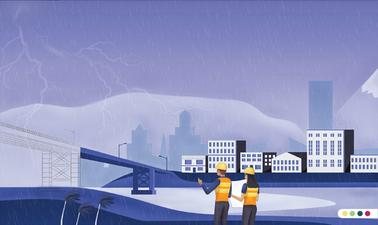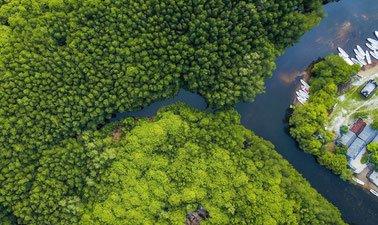
What are ‘Nature-based solutions’, or NbS? How can they help build resilience to disasters and climate change impacts? Why is NbS relevant? How can I apply NbS in my work and everyday life? Nature offers many solutions for reducing the impacts from disasters and climate impacts. This may include protecting forests on steep slopes, maintaining sand dunes along coastlines, wetlands to buffer excess rainwater.
Class Deals by MOOC List - Click here and see EdX's Active Discounts, Deals, and Promo Codes.
These so-called ‘Nature- based solutions’ (NbS) are an important piece in the puzzle to building the resilience of households and communities to an ever-increasing number of disaster events around the world.
For years, experience and evidence on NbS from around the world has been growing. But many people – from policy makers, through to engineers and businesses – don't yet know how NbS can help them solve the challenges they’re facing from events like floods, heatwaves, or droughts. These events affect the lives of millions of people every year.
So, what are ‘Nature-based solutions’, or NbS? How can they help build resilience to disasters and climate change impacts? Why is NbS relevant? How can I apply NbS in my work and everyday life?
In this online course, UNEP and environmental experts from around the world will provide you with answers to those questions, reaching out to you and me, to planners, policy makers, engineers, businesses, and youth. This is an opportunity for you to join a community of learners and environmental advocates.
First touching upon the “why”, the course provides an introduction to nature-based solutions for disaster and climate resilience, the benefits and potential opportunities. Then, specific modules aimed at different target audiences will focus on the practical application of nature-based solutions, the “how”.
Who is the course aimed at? Nature-based solutions are relevant to everyone, and we all benefit from seeing them applied. With this in mind, the course is designed to be accessible to everyone, no matter your background.
What you'll learn
- Learn how to apply Nature-based Solutions in enhancing resilience to disasters and climate change, whether you are a youth leader, practitioner, policy maker, engineer or business owner.
- Learn about how human activities are interlinked with ecological systems and main tools and approaches for applying Nature-based Solutions to reducing disaster and climate risks.
- Learn how policy makers are including nature as a solution in policy processes for reducing disaster and climate risks.
- Learn how practitioners are applying nature-based solutions for reducing risks of natural hazards by investing in restoration and protection.
- Learn about green infrastructure and designing with nature as a viable complement to grey engineered protection structures for reducing impacts of disaster events.
- Learn what young people and teachers, policy makers, practitioners, businesses and engineers can do to get involved in our race against the climate emergency.
Syllabus
Unit 1: Why is this course relevant to me?
This unit introduces the course, its learning objectives and explains why we are currently at cross-roads in terms of disaster and climate risks and how nature can provide solutions.
Unit 2: What are Nature-based Solutions?
This unit explains that Nature-based Solutions is an umbrella term that encompasses many different approaches.
Unit 3: Nature-based Solutions applied to pressing challenges: urbanization, coastal development and dryland expansion
This unit focuses on the applications of Nature-based Solutions in specific contexts that are both challenging but also critical for ensuring disaster and climate resilience worldwide.
Unit 4: Including communities, youth and indigenous people in Nature-based Solutions
This unit focuses on the need to promote inclusive and community-led approaches in Nature-based Solutions initiatives.
Unit 5: From policy to practice
This unit answers two questions.
What do policy makers need to know about Nature-based Solutions?
How can engineers and practitioners implement Nature-based Solutions?
Unit 6: The business case for nature
This unit presents why and how businesses and the private sector can be involved in Nature-based Solutions at different levels.
Unit 7: Over to you: Time for action
This unit provides concluding remarks and rounds off the course.