Microbiology and Forensic Science (Open2Study)

Microbiology and Forensic Science (Open2Study)

Come and explore the basics of Microbiology and Forensic Science so you can better understand the world around you. Have you ever thought about infectious diseases and why we get infected? What is the causative agent? In this course you will be touring through four modules, starting by taking a close look at the bacterial cell structure and functions which will then lead you to the study of viruses. You will go through the differences in the different types of cells which will allow you to distinguish the two major groups of bacteria and techniques. Next, you will focus on Forensic Microbiology, its history and how this discipline has evolved. Finally, we will look at the latest molecular techniques used for detecting microbes’ genetic material.

What will you learn?

  • Bacterial cell structure and function
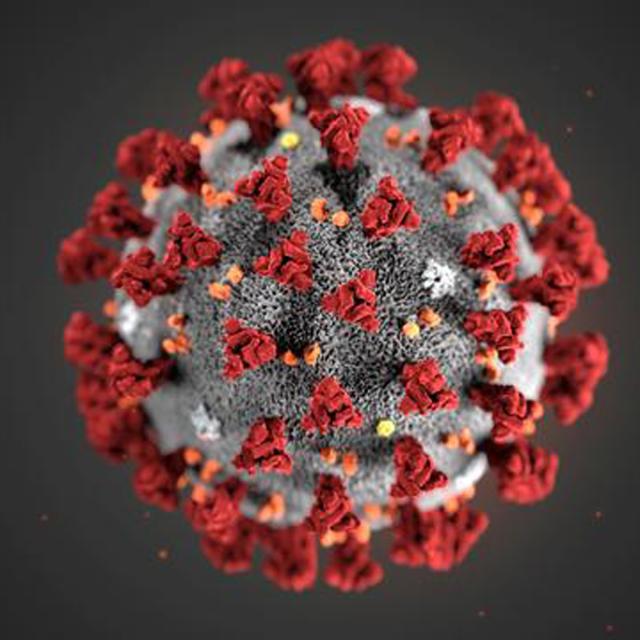
  • Viruses and their structure
  • How Forensic Microbiology has evolved
  • Different types of Forensic Microbiology
  • Differences in Forensic Science versus Forensic Microbiology
  • How to read a scientific journal and review one in a case study
  • Genotyping techniques
  • The role of DNA and RNA in Microbiology and Forensic Science

Note: This course is currently not available.

Related Courses

Teaching in University Science Laboratories (Developing Best Practice) (Coursera) Coursera
University of Amsterdam

Teaching in University Science Laboratories (Developing Best Practice) (Coursera)

This course is developed to improve the effectiveness of laboratory classes in higher education. It aims to support teachers to improve their teaching skills for active learning in university science laboratory courses. It will show you how laboratory sessions can differ with respect to their aim and expected learning outcomes, how to engage students for learning and how to cope with their different levels of pre-knowledge and experience and probe their understanding. Last but not least it will show how you could assess students in laboratory courses.

Aug 3rd 2026
5-12 Weeks
Analyzing the Universe (Coursera) Coursera
Rutgers University

Analyzing the Universe (Coursera)

Using publicly available data from NASA of actual satellite observations of astronomical x-ray sources, we explore some of the mysteries of the cosmos, including neutron stars, black holes, quasars and supernovae. We will analyze energy spectra and time series data to understand how these incredible objects work. We utilize an imaging tool called DS9 to explore the amazing diversity of astronomical observations that have made x-ray astronomy one of the most active and exciting fields of scientific investigation in the past 50 years.

Aug 3rd 2026
5-12 Weeks
Global Warming I: The Science and Modeling of Climate Change (Coursera) Coursera
University of Chicago

Global Warming I: The Science and Modeling of Climate Change (Coursera)

This class describes the science of global warming and the forecast for humans’ impact on Earth’s climate. Intended for an audience without much scientific background but a healthy sense of curiosity, the class brings together insights and perspectives from physics, chemistry, biology, earth and atmospheric sciences, and even some economics—all based on a foundation of simple mathematics (algebra).

Jul 27th 2026
5-12 Weeks
Введение в биоинформатику (Introduction to Bioinformatics) (Coursera) Coursera
Saint Petersburg State University

Введение в биоинформатику (Introduction to Bioinformatics) (Coursera)

Курс «Введение в биоинформатику» адресован тем, кто хочет получить расширенное представление о том, что такое биоинформатика и как она помогает биологам и медикам в их работе. The course is aimed at those who would like to have a better idea of what bioinformatics is and how it helps biologists and medical scientists in research and clinical work.

Jul 27th 2026
5-12 Weeks
Intellectual Humility: Science (Coursera) Coursera
University of Edinburgh

Intellectual Humility: Science (Coursera)

It’s clear that the world needs more intellectual humility. But how do we develop this virtue? And why do so many people still end up so arrogant? Do our own biases hold us back from becoming as intellectually humble as we could be—and are there some biases that actually make us more likely to be humble? Which cognitive dispositions and personality traits give people an edge at being more intellectually humble - and are they stable from birth, learned habits, or something in between? And what can contemporary research on the emotions tell us about encouraging intellectual humility in ourselves and others?

Jul 20th 2026
4 Weeks
Intellectual Humility: Theory (Coursera) Coursera
University of Edinburgh

Intellectual Humility: Theory (Coursera)

Faced with difficult questions people often tend to dismiss and marginalize dissent. Political and moral disagreements can be incredibly polarizing, and sometimes even dangerous. And whether it’s Christian fundamentalism, Islamic extremism, or militant atheism, religious dialogue remains tinted by arrogance, dogma, and ignorance. The world needs more people who are sensitive to reasons both for and against their beliefs, and are willing to consider the possibility that their political, religious and moral beliefs might be mistaken. The world needs more intellectual humility.

Aug 3rd 2026
3 Weeks
Science Literacy (Coursera) Coursera
University of Alberta

Science Literacy (Coursera)

Fake news or good science? In a world where we have access to unlimited information, it is hard to sift through the echo chamber of opinions fueled by emotions and personal biases, rather than scientific evidence. Science Literacy will teach you about the process of science, how to think critically, how to differentiate science from pseudoscience, how indigenous wisdom can inform science, how to understand and design a scientific study, and how to critically evaluate scientific communication in the media.

Jul 27th 2026
5-12 Weeks
Genome Sequencing (Bioinformatics II) (Coursera) Coursera
University of California, San Diego

Genome Sequencing (Bioinformatics II) (Coursera)

You may have heard a lot about genome sequencing and its potential to usher in an era of personalized medicine, but what does it mean to sequence a genome? Biologists still cannot read the nucleotides of an entire genome as you would read a book from beginning to end. However, they can read short pieces of DNA. In this course, we will see how graph theory can be used to assemble genomes from these short pieces. We will further learn about brute force algorithms and apply them to sequencing mini-proteins called antibiotics.

Jul 20th 2026
5-12 Weeks
Classical papers in molecular genetics (Coursera) Coursera
University of Geneva

Classical papers in molecular genetics (Coursera)

You have all heard about the DNA double helix and genes. Many of you know that mutations occur randomly, that the DNA sequence is read by successive groups of three bases (the codons), that many genes encode enzymes, and that gene expression can be regulated. These concepts were proposed on the basis of astute genetic experiments, as well as often on biochemical results. The original articles were these concepts appeared are however not frequently part of the normal curriculum of biologists, biochemists and medical students.

Jul 27th 2026
5-12 Weeks
Pensamiento Científico (Coursera) Coursera
Universidad Nacional Autónoma de México

Pensamiento Científico (Coursera)

¿El pensamiento científico es sólo para científicos? Su utilidad va mucho más allá, ayudando a las personas a tomar mejores decisiones todos los días. El objetivo de este curso es fomentar en pensamiento científico en los alumnos para ayudarles a tomar mejores decisiones profesionales, personales y sociales.

Aug 3rd 2026
5-12 Weeks
Introduction to Genetics and Evolution (Coursera) Coursera
Duke University

Introduction to Genetics and Evolution (Coursera)

Introduction to Genetics and Evolution is a college-level class being offered simultaneously to new students at Duke University. The course gives interested people a very basic overview of some principles behind these very fundamental areas of biology. We often hear about new "genome sequences," commercial kits that can tell you about your ancestry (including pre-human) from your DNA or disease predispositions, debates about the truth of evolution, why animals behave the way they do, and how people found "genetic evidence for natural selection." This course provides the basic biology you need to understand all of these issues better, tries to clarify some misconceptions, and tries to prepare students for future, more advanced coursework in Biology (and especially evolutionary genetics). No prior coursework is assumed.

Aug 3rd 2026
5-12 Weeks