EdX

Mechanics, Part 1 (edX)

Offered by Rice University, RiceX,
Mechanics, Part 1 (edX)

Learn the physics of how things move with this calculus-based course in mechanics. This course is an introduction to mechanics and follows a standard first-semester university physics course. You will learn fundamental mechanics concepts and mathematical problem solving required for all STEM fields.

Class Deals by MOOC List - Click here and see EdX's Active Discounts, Deals, and Promo Codes.

The course begins with kinematics, where you will learn to use equations and graphs to describe the position, velocity, and acceleration of an object, and how those quantities are related through calculus. You will then learn how forces affect motion through Newton’s Laws, and how to understand and calculate several different forces, including gravitational, normal force, drag force, and friction force. The concept of energy will be covered, including kinetic energy, potential energy, and how they are affected by work. You will learn how to use the conservation of energy to solve motion problems. Finally, momentum, another “quantity of motion” will be described. You will learn how to calculate momentum, about its relationship to Newton’s laws, and how to use it to solve motion problems, including collisions.

This course is valuable preparation for the equivalent on-campus course, or as supplementary material.

What you'll learn

  • Kinematics
  • Work and Energy
  • Momentum and Collisions
  • Conservation laws
  • How to apply vector analysis and calculus to solve physics problems

Syllabus

Week 1: 1D Motion
Week 2: 2D Motion
Week 3: Newton’s Laws
Week 4: Energy
Week 5: Momentum and Collisions
Go to Class
MOOC List is learner-supported. When you buy through links on our site, we may earn an affiliate commission.

Related Courses

Energy Markets of Today (edX) EdX
Delft University of Technology,DelftX

Energy Markets of Today (edX)

Understand the European energy market and the economic principles behind it. This course will help you understand the functioning of energy markets as the necessary first step to promotion of the energy transition. By using the European electricity market as an example, you will obtain a deeper understanding of its principles and effectiveness.

Self Paced
5-12 Weeks
Understanding Nuclear Energy (edX) EdX
Delft University of Technology,DelftX

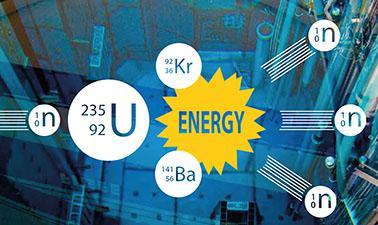
Understanding Nuclear Energy (edX)

Learn the science and technology behind nuclear energy and the special features of this energy source. In this nuclear energy course, we will tackle provocative questions such as: Is nuclear energy a good substitute for fossil fuels to reduce our CO2 emission or not?; Can nuclear reactors operate safely without any harm to the public and environment?; How much nuclear waste is produced and how long does it need to be stored safely?; How can we make nuclear energy clean and more sustainable?; How much are nuclear energy costs?

Self Paced
Self-Paced
Fired Up About Energy (edX) EdX
Smithsonian,SmithsonianX

Fired Up About Energy (edX)

Fired Up About Energy – explores common student misconceptions related to the study of energy and suggests methods for effectively representing and discussing the topic in the classroom. This online workshop: “Fired up about Energy ” is based on ideas presented in Good Thinking! an original animated series developed by the Smithsonian Science Education Center (SSEC) and FableVision Studios as a professional development resource for K-12 science educators.

Self Paced
Self-Paced
Further Mathematics Year 13 course 2: Applications of Differential Equations, Momentum, Work, Energy & Power, The Poisson Distribution, The Central Limit Theorem, Chi Squared Tests, Type I and II Errors (edX) EdX
Imperial College London,ImperialX

Further Mathematics Year 13 course 2: Applications of Differential Equations, Momentum, Work, Energy & Power, The Poisson Distribution, The Central Limit Theorem, Chi Squared Tests, Type I and II Errors (edX)

Develop your thinking skills, fluency and confidence in the applied mathematics content of A-level further maths and prepare for undergraduate STEM degrees. This course by Imperial College London is designed to help you develop the skills you need to succeed in your A-level further maths exams. You will investigate key topic areas to gain a deeper understanding of the skills and techniques that you can apply throughout your A-level study.

Self Paced
5-12 Weeks
Advanced Transport Phenomena (edX) EdX
Delft University of Technology,DelftX

Advanced Transport Phenomena (edX)

Learn how to tackle complex mass and heat transfer problems and apply the results in your own environment. How can you reduce the energy loss of your home? What is the underlying science of energy loss in pipes? Which heat and mass transfer problems do we have to tackle to make consumer products? In this engineering course, you will learn about the engineering principles that play an important role in all of these and more phenomena. You will learn about microbalances, radiation, convection, diffusion and more and their applications in everyday life.

Self Paced
Self-Paced
Climate Change: Carbon Capture and Storage (edX) EdX
University of Edinburgh,EdinburghX

Climate Change: Carbon Capture and Storage (edX)

Explore the technology that can provide a long-term solution to protect our atmosphere from an excess of carbon dioxide, in the context of global energy, our use of fossil fuels, and climate change. The atmosphere is a shared resource and the amount of greenhouse gases it can absorb is a finite resource. This introductory course to the technology of Carbon Capture and Storage is designed for a wider audience with an interest in energy, sustainability and climate change.

Self Paced
Self-Paced
The Basics of Transport Phenomena (edX) EdX
Delft University of Technology,DelftX

The Basics of Transport Phenomena (edX)

Learn the basic framework to work on a broad spectrum of engineering problems concerning transfer of heat, mass and momentum. Learn through examples of everyday processes at home, in the lab and in industry. Have you ever wondered why ventilation helps to cool down your hot chocolate? Do you know why a surfing suit keeps you warm? Why iron feels cold, while wood feels warm at room temperature? Or how air is transferred into aqueous liquids in a water treatment plant? How can we sterilize milk with the least amount of energy? How does medicine spread in our tissue? Or how do we design a new cooling tower of a power plant? All these are phenomena that involve heat transfer, mass transfer or fluid flow.

Self Paced
Self-Paced
Quantum Mechanics of Molecular Structures (edX) EdX
The University of Tokyo,UTokyoX

Quantum Mechanics of Molecular Structures (edX)

Learn two methods used to determine molecular structures and their properties in this introduction to Quantum Mechanics. Knowing the geometrical structure of the molecules around us is one of the most important and fundamental issues in the field of chemistry. This course introduces the two primary methods used to determine the geometrical structure of molecules: molecular spectroscopy and gas electron diffraction.

Self Paced
Self-Paced
Energy Subsidy Reform (edX) EdX
International Monetary Fund - IMF,IMFx

Energy Subsidy Reform (edX)

A course on energy subsidies, their costs, and the design of a successful reform based on country case studies. In the first part of the course, economists from the IMF will introduce the definition and measurement of subsidies, and then describe the economic, social, and environmental implications of subsidies.

Self Paced
Self-Paced