Image Analysis Methods for Biologists (FutureLearn)

Image Analysis Methods for Biologists (FutureLearn)

Get an introduction to image acquisition and analysis for biologists – from basic techniques to the future of image analysis. Improve your image analysis knowledge and ability to analyse your images. The use of automatic image analysis in the biological sciences has increased significantly in recent years, especially with automated image capture and the rise of phenotyping.

Class Deals by MOOC List - Click here and see FutureLearn's Active Discounts, Deals, and Promo Codes.

This online course will help improve your understanding of image analysis methods, and improve your practical skills and ability to apply the techniques to your images.
You will explore the process of image acquisition, through to segmenting regions, counting objects and tracking movement. Importantly, we’ll also try to highlight what to watch out for when using different image analysis approaches.

What topics will you cover?

  • Introduction to image analysis
  • Introduction to digital images and image capture
  • Image noise, and noise reduction approaches
  • Using image analysis to measure traits for phenotyping
  • A brief introduction to computer coding
  • A look at a variety of image segmentation approaches
  • Building 3D models from 2D images
  • Using image analysis to monitor changes over time
  • A first introduction to AI-based approaches, such as deep learning
  • Practical experience of using the Fiji image processing/analysis software

What will you achieve?
By the end of the course, you'll be able to...

  • Improve quality of images captured for scientific experiments
  • Develop an understanding of common image analysis techniques and what goes into making an image analysis tool
  • Apply basic image processing methods to images, such as to reduce the effects of noise
  • Discuss the assumptions and challenges involved in using different image analysis approaches
  • Perform a variety of image segmentation approaches
  • Explore the future of image analysis for phenotyping, including a look at AI-based approaches
  • Investigate computer coding, using the Python language
Go to Class
MOOC List is learner-supported. When you buy through links on our site, we may earn an affiliate commission.

Related Courses

Discovering Science: Global Challenges (FutureLearn) FutureLearn
University of Leeds

Discovering Science: Global Challenges (FutureLearn)

Can chemistry help to feed a growing population, or overcome increasing bacterial resistance? Find out how the Penicillin class of antibiotics has been a major breakthrough in the treatment of patients. However, with bacteria developing efficient ways of resisting antibiotic treatment, discover how scientists are treating patients with infections resulting from resistant bacteria.

Self Paced
2 Weeks
The Discovery of the Higgs Boson (FutureLearn) FutureLearn
University of Edinburgh

The Discovery of the Higgs Boson (FutureLearn)

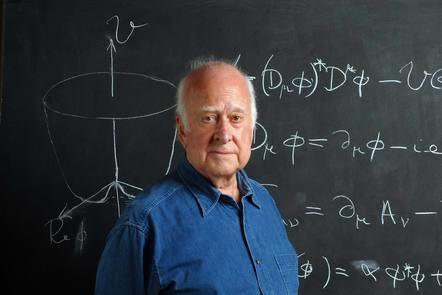
Should we be excited about the Higgs boson? Find out more about particle physics and understanding the universe. The discovery of a new fundamental particle at the Large Hadron Collider (LHC), CERN is the latest step in a long quest seeking to answer one of physics’ most enduring questions: why do particles have mass? The experiments’ much anticipated success confirms predictions made decades earlier by Peter Higgs and others, and offers a glimpse into a universe of physics beyond the Standard Model.

Self Paced
5-12 Weeks
Science Communication and Public Engagement (FutureLearn) FutureLearn
Universidad Autonoma de Madrid,EIT Food,EIT,University of Turin

Science Communication and Public Engagement (FutureLearn)

Discover the importance of public engagement in science, and learn techniques to share and raise awareness of your research. Define your message and share your findings through social and traditional media. Good science communication ensures the public engage with and understand relevant scientific research. On this course, you will learn how best to share your science findings with your intended audience.

Jan 2nd 2023
3 Weeks
Small and Mighty: Introduction to Microbiology (FutureLearn) FutureLearn
University of Reading

Small and Mighty: Introduction to Microbiology (FutureLearn)

Understand the basics of microbiology and explore the diversity of microbial life in our world. Discover the fascinating world of microbes. Microbes may be invisible to the eye, but they dominate every environment on Earth – including you. Microbes are often associated with disease yet the majority of species help to keep us alive. How can you distinguish the good from the bad?

Self Paced
3 Weeks
Getting a Grip on Mathematical Symbolism (FutureLearn) FutureLearn
Loughborough University

Getting a Grip on Mathematical Symbolism (FutureLearn)

Want to be an engineer or scientist? Lack mathematical confidence? Learn to think mathematically and explore essential concepts. This course is aimed at those who aspire to study science or engineering foundation courses at university level. It draws upon the experience of staff from the Mathematics Education Centre at Loughborough University - a centre that has specialised for many years in mathematics teaching and mathematics support for science and engineering students who find the transition to university mathematics particularly challenging.

No sessions available
3 Weeks
The Scientific Revolution: Understanding the Roots of Modern Science (FutureLearn) FutureLearn
University of Groningen

The Scientific Revolution: Understanding the Roots of Modern Science (FutureLearn)

Learn about the seventeenth-century Scientific Revolution and its role in shaping the modern Western world. How did the science of today come about? What constitutes ‘modern’ science? How does science relate to religion? Answer these questions and more with this course that travels back in time to the seventeenth-century Scientific Revolution to explore the roots of modern science.

Self Paced
3 Weeks
Biochemistry: the Molecules of Life (FutureLearn) FutureLearn
University of East Anglia

Biochemistry: the Molecules of Life (FutureLearn)

Explore the impact of biochemistry on bioenergy and health, discovering why graduates are in demand; with the Biochemical Society. Biochemistry brings together all of the sciences to study the chemical and physical processes that occur in living organisms. It truly is the science of life. As a scientific discipline in its own right, biochemistry has a major impact on all areas of the life sciences and biochemists are in high demand among employers.

Self Paced
3 Weeks
Understanding Ramon Llull: Philosophy, Arts and Science through the Ars Combinatoria (FutureLearn) FutureLearn
Universitat Pompeu Fabra,Centre de Cultura Contemporània de Barcelona - CCCB

Understanding Ramon Llull: Philosophy, Arts and Science through the Ars Combinatoria (FutureLearn)

Explore the fascinating work of philosopher Ramon Llull and its impact with this free online course. Ramon Llull, born in Majorca in the 13th Century, was an influential philosopher, writer and pioneering thinker. This controversial man was admired and scorned alike by some of the most enlightened minds in European culture. He was also one of the leading lights in the intellectual circles of the late 13th century, in which Arab, Jewish and Christian philosophers and scientists participated.

No sessions available
2 Weeks
The Genomics Era: the Future of Genetics in Medicine (FutureLearn) FutureLearn
St George's, University of London,St George's University Hospitals NHS Foundation Trust

The Genomics Era: the Future of Genetics in Medicine (FutureLearn)

Get an introduction to the growing role of genomics in healthcare, for patient diagnoses, treatment and disease prevention. This free online course will provide healthcare professionals with a basic grounding in genomic medicine. It will introduce you to new genomic technologies, which are revolutionising medicine and will, in time, provide the mainstay of patient diagnosis, treatment and disease prevention.

Self Paced
5-12 Weeks