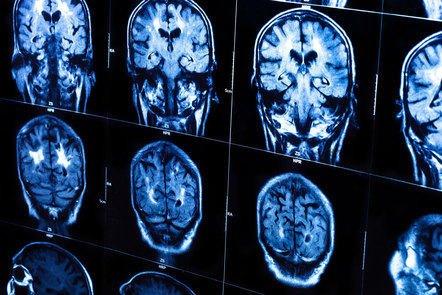
Good Brain, Bad Brain: basics (FutureLearn)

Good Brain, Bad Brain: basics (FutureLearn)

What do we know and what are we discovering about the form and function of the human brain? Find out with this online course. We will look at what your brain is made of, how these components are organised and how they function.

Class Deals by MOOC List - Click here and see FutureLearn's Active Discounts, Deals, and Promo Codes.

This information is helping neuroscientists across the globe understand the brain - and how it is able to do everything from stopping you falling off your bike, to making you feel sad that your football team lost their game, to helping you learn how your brain works.

What topics will you cover?

  • The cells of the nervous system: neurones and glia
  • Basic neuroanatomy of the brain and the concept of the relationship between structure and function
  • Basic properties of neurones, including an introduction to the action potential
  • A brief introduction to the functioning of the synapse
  • Examples of drugs (legal and therapeutic) that alter the function of neurones and synapses
  • Examples of brain disorders that illustrate how some functions are highly localised, such as the sensory systems, whilst others are distributed throughout the brain, such as emotion

What will you achieve?
By the end of the course, you'll be able to...

  • Describe the key features of the cells that make up the human nervous system that allow them to carry out their function
  • Explain how the arrangement of these cells within the human brain relates to brain function
  • Explain how drugs can impact on the normal function of neurones of the brain
  • Discuss how brain disorders can impact on the functioning of the brain

This course is part of the Good Brain, Bad Brain program, which will enable you to explore the human brain, for CPD or as a gateway to further study.

Go to Class
MOOC List is learner-supported. When you buy through links on our site, we may earn an affiliate commission.

Related Courses

What is a Mind? (FutureLearn) FutureLearn
University of Cape Town

What is a Mind? (FutureLearn)

Explore the most pertinent scientific and philosophical concepts for understanding our own minds with this free online course. This free online course will bring together learners and practitioners interested in how the mind works. It aims to build bridges between traditionally antagonistic approaches to understanding the mind.

Jul 25th 2022
5-12 Weeks
Evolution: A Course for Educators (Coursera) Coursera
American Museum of Natural History

Evolution: A Course for Educators (Coursera)

How are all of the species living on Earth today related? How does understanding evolutionary science contribute to our well-being? In this course, participants will learn about evolutionary relationships, population genetics, and natural and artificial selection. Participants will explore evolutionary science and learn how to integrate it into their classrooms.

Jun 1st 2026
4 Weeks
Bioinformatic Methods I (Coursera) Coursera
University of Toronto

Bioinformatic Methods I (Coursera)

Large-scale biology projects such as the sequencing of the human genome and gene expression surveys using RNA-seq, microarrays and other technologies have created a wealth of data for biologists. However, the challenge facing scientists is analyzing and even accessing these data to extract useful information pertaining to the system being studied. This course focuses on employing existing bioinformatic resources – mainly web-based programs and databases – to access the wealth of data to answer questions relevant to the average biologist, and is highly hands-on.

Jun 1st 2026
5-12 Weeks
Seeing: How the Brain Creates the Visual World (FutureLearn) FutureLearn
National Yang Ming Chiao Tung University (NYCU)

Seeing: How the Brain Creates the Visual World (FutureLearn)

Gain insights into how we perceive sensory system input when it reaches our brains, and the factors affecting that process. Explore how our visual system and human psychology influence our world view. Our visual system is complicated; using our eyes and brains to convert external information into internal feelings and enabling us to see and interpret the world. On this four-week course from the National Chiao Tung University (NCTU), you’ll explore how our eyes and brains constitute the visual world for us and discover that seeing is not always believing.

Jul 11th 2022
4 Weeks
Small and Mighty: Introduction to Microbiology (FutureLearn) FutureLearn
University of Reading

Small and Mighty: Introduction to Microbiology (FutureLearn)

Understand the basics of microbiology and explore the diversity of microbial life in our world. Discover the fascinating world of microbes. Microbes may be invisible to the eye, but they dominate every environment on Earth – including you. Microbes are often associated with disease yet the majority of species help to keep us alive. How can you distinguish the good from the bad?

Available now
3 Weeks
The Mind is Flat: The Shocking Shallowness of Human Psychology (FutureLearn) FutureLearn
The University of Warwick

The Mind is Flat: The Shocking Shallowness of Human Psychology (FutureLearn)

Make better personal and professional decisions and consider the psychological dimension to key ethical and political choices. What are the forces shaping human behaviour? How do we think and decide? This course, from Professor Nick Chater and Warwick Business School, explores the origins of human rationality and irrationality.

Available now
5-12 Weeks
Teaching Primary Biology: Classification (FutureLearn) FutureLearn
National STEM Learning Centre

Teaching Primary Biology: Classification (FutureLearn)

Learn KS2 biology subject knowledge and teaching strategies that will engage pupils in the primary science national curriculum. Enhance your KS2 biology classes with CPD from STEM learning. To teach primary science effectively primary education teachers must have sound subject knowledge, but many primary teachers are not science subject experts. This course will equip you with the key subject knowledge required to effectively teach the biology elements of the primary science national curriculum, focusing on the topic of classification.

Not Available
Course Not Available
Food for Thought: The Relationship Between Food, Gut and Brain (FutureLearn) FutureLearn
EIT Food,EIT,University of Turin

Food for Thought: The Relationship Between Food, Gut and Brain (FutureLearn)

The gut and brain are very closely linked. Explore how neurology, the microbiome and more interact to affect health. Find out how your diet affects your brain, and your brain affects your diet. Over the last few years, the importance of the link between gut and brain has become clear. On this course you’ll explore this complex relationship.

Jan 2nd 2023
5-12 Weeks
Childhood Adversity: The Impact of Childhood Maltreatment on Mental Health (FutureLearn) FutureLearn
University College London

Childhood Adversity: The Impact of Childhood Maltreatment on Mental Health (FutureLearn)

Explore the connection between childhood adversity and mental health, and enhance your knowledge of mental health in young people. Learn how childhood trauma impacts a child’s beliefs, behaviour, and development. We know half of all mental health conditions emerge before age fourteen, but there’s a need for a greater understanding of young people’s mental wellbeing. On this course, you’ll improve your understanding of how early adverse experiences can impact a young person’s mental health.

Jan 17th 2022
3 Weeks
Foundations of Science for Undergraduate Degrees (FutureLearn) FutureLearn
The University of Nottingham

Foundations of Science for Undergraduate Degrees (FutureLearn)

Develop the right skills for study and assessment in higher education while refreshing your core science knowledge.Give yourself an advantage for starting a university degree. With interruptions to education occurring all the time, many school students intending to go to university in the coming years may not feel prepared.

Aug 23rd 2021
5-12 Weeks