How to Survive on Mars: the Science Behind the Human Exploration of Mars (FutureLearn)

Offered by Monash University,
How to Survive on Mars: the Science Behind the Human Exploration of Mars (FutureLearn)

Learn the basic science needed for humans to survive on Mars, with this free online science course. Mars has captivated the human imagination since the very earliest civilisations. It is the most explored planet in the solar system and that is unlikely to change. Getting to Mars is relatively easy, surviving on Mars will be the real challenge.

Class Deals by MOOC List - Click here and see FutureLearn's Active Discounts, Deals, and Promo Codes.

Learn the basic science needed to survive on Mars
This free online course will introduce the key scientific concepts needed for humans to survive on Mars, where there is no air to breath, no water to drink and no food to eat. The course will also examine interdisciplinary skills and meticulous planning required to sustain human life in such a hostile environment. Case studies and insights from leading experts in the field of Chemistry, Astronomy, Physics and Geology will demonstrate the basic science and problem solving skills you can use in everyday life.

Explore essential science and problem solving skills
By the end of the course, you will be able to:

  • apply basic science to explore possible ways of producing water, oxygen, food and energy on Mars
  • describe possible solutions and outcomes to problem-based scenarios.

Learn from leaders in the field of science
The course is based on the approaches that lead educators, Tina Overton and Jasmina Lazendic-Galloway, deliver to their science undergraduate students at the Monash University Faculty of Science – a vibrant, dynamic and world-renowned community in Australia at the forefront of innovation and discovery.

What topics will you cover?

  • Water: the properties of water, and how to extract water on Mars
  • Energy: solar energy, wind energy and energy from other sources
  • Oxygen: the Martian atmosphere, oxygen on Mars, and how to recycle oxygen
  • Food: nutrients for life, the challenge of growing food on Mars
  • Concept Maps: how to create them to synthesise and organise knowledge

What will you achieve?
By the end of the course, you'll be able to...

  • Apply basic science to explore possible ways of producing water, oxygen, food and energy on Mars.
  • Describe possible solutions and outcomes to problem-based scenarios.
  • Synthesise key information from across the course to produce a plan for how to survive on Mars.
  • Discuss the pros and cons of different survival strategies on Mars.

Go to Class
MOOC List is learner-supported. When you buy through links on our site, we may earn an affiliate commission.

Related Courses

Develop Conceptual Thinking for Problem-Solving (FutureLearn) FutureLearn
FutureLearn

Develop Conceptual Thinking for Problem-Solving (FutureLearn)

Use critical thinking and the conceptual thinking framework to approach problems effectively and communicate your solutions. Learn to solve complex problems with strategic thinking Life and business are getting faster and more complex every day. The faster pace ramps up the pressure to act quickly but this complexity demands careful, strategic, conceptual thinking, which takes time.

Jul 26th 2021
4 Weeks
Leadership tools for ethical problem-solving (FutureLearn) FutureLearn
Nottingham Trent University

Leadership tools for ethical problem-solving (FutureLearn)

Learn how to lead values-driven action in your organisation and to manage ethical risks systematically and collaboratively. Develop essential leadership skills to manage ethical risks. On this three-week course, you’ll discover how to manage and lead effectively within your organisation. You’ll learn how to identify and overcome ethical dilemmas as you develop your understanding of leadership issues and trends in organisations.

Self Paced
3 Weeks
Introduction to Systems Biology (Coursera) Coursera
Icahn School of Medicine at Mount Sinai

Introduction to Systems Biology (Coursera)

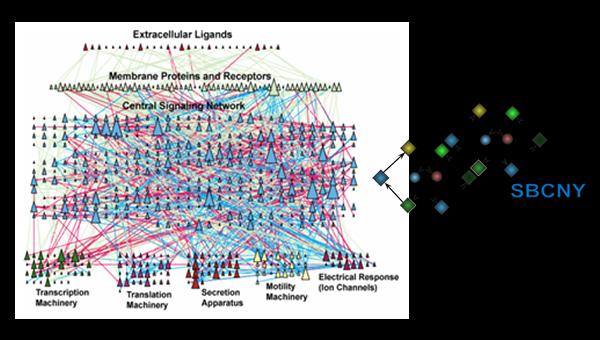
This course will introduce the student to contemporary Systems Biology focused on mammalian cells, their constituents and their functions. Biology is moving from molecular to modular. As our knowledge of our genome and gene expression deepens and we develop lists of molecules (proteins, lipids, ions) involved in cellular processes, we need to understand how these molecules interact with each other to form modules that act as discrete functional systems.

Oct 5th 2026
5-12 Weeks
Teaching Science at University (Coursera) Coursera
University of Zurich

Teaching Science at University (Coursera)

This course will prepare you for teaching science in higher education. In this MOOC you will learn to make your knowledge as an excellent researcher accessible to your students. We will show you how to communicate science to novices as well as advanced students in science.

Oct 12th 2026
5-12 Weeks
Inside Cancer: How Genes Influence Cancer Development (FutureLearn) FutureLearn
University of Bath

Inside Cancer: How Genes Influence Cancer Development (FutureLearn)

Understand how genetics influence the development and spread of cancer, with this free, introductory online course. What is the one thing that all cancers have in common? They begin as mutant or rebel cells! In this course we will explore how changes in cancer genetics and epigenetics enables these cells to grow uncontrollably, by exploiting our blood vessels and immune system along with other systemic changes.

Self Paced
4 Weeks
UFOs: Scanning the Skies Teach-Out (FutureLearn) FutureLearn
University of Michigan

UFOs: Scanning the Skies Teach-Out (FutureLearn)

Explore possible explanations for UFO sightings as you delve into fascinating accounts of unidentified flying objects. Unpack the myths and facts surrounding UFOs. Following the release of the U.S. Pentagon UFO report, there has been a surge of interest in unidentified aerial phenomena (UAPs). People across the world are gripped by the history of UFOs and the stories told by those who have witnessed them.

Feb 7th 2022
2 Weeks
Introduction to Business Improvement: Lean Six Sigma, Kaizen, and Problem Solving (FutureLearn) FutureLearn
Lean 6 Services

Introduction to Business Improvement: Lean Six Sigma, Kaizen, and Problem Solving (FutureLearn)

Explore key business improvement techniques, and start working towards Lean Six Sigma Yellow Belt. Discover business improvement methods that can help identify and eliminate waste. Being able to minimise waste and maximise efficiency is crucial for any business, be it manufacturing or office-based. On this course, you’ll explore some of the most commonly used tools and techniques in business today, including Lean Six Sigma, Kaizen, Continuous Improvement, and Problem Solving. You’ll learn how you can practically improve your work processes, and successfully eliminate waste in your business.

Jun 28th 2021
3 Weeks
Teaching for Home Learning: Secondary Science (FutureLearn) FutureLearn
National STEM Learning Centre

Teaching for Home Learning: Secondary Science (FutureLearn)

Ease the transition to teaching science to secondary pupils during the COVID-19 pandemic with online and offline approaches. Overcome the challenges of teaching science remotely to your secondary students. Due to COVID-19 related school closures around the world, many teachers are having to adjust their teaching. Whilst teaching remotely may be new, this course will help you to develop new online and offline teaching strategies for supporting learning at home and at a distance.

No sessions available
2 Weeks
Humphry Davy: Laughing Gas, Literature, and the Lamp (FutureLearn) FutureLearn
Lancaster University,Royal Institution - RI

Humphry Davy: Laughing Gas, Literature, and the Lamp (FutureLearn)

Discover Humphry Davy and his contribution to science and the arts. Before culture was divided into the sciences and the arts there was a chemist who was also a poet. Sir Humphry Davy (1778-1829) is one of the best known men of science of the nineteenth century: he was the first person to inhale nitrous oxide; he isolated nine chemical elements; and he invented the miners’ safety lamp known as the Davy lamp. This course will consider Davy’s life and career using manuscript sources held at the Royal Institution of Great Britain.

Oct 9th 2023
4 Weeks
Getting a Grip on Mathematical Symbolism (FutureLearn) FutureLearn
Loughborough University

Getting a Grip on Mathematical Symbolism (FutureLearn)

Want to be an engineer or scientist? Lack mathematical confidence? Learn to think mathematically and explore essential concepts. This course is aimed at those who aspire to study science or engineering foundation courses at university level. It draws upon the experience of staff from the Mathematics Education Centre at Loughborough University - a centre that has specialised for many years in mathematics teaching and mathematics support for science and engineering students who find the transition to university mathematics particularly challenging.

No sessions available
3 Weeks