EdX

Human-Centered Design for Work at a Distance: Toolbox Essentials (edX)

Human-Centered Design for Work at a Distance: Toolbox Essentials (edX)

Learn and apply human-centered design tools to transform your work with others at a distance. In this course, you will gain a foundational understanding of human-centered design tools, and apply lessons learned to improve your work with others at a distance. Learn how HCD principles can be applied to multiple aspects of working at a distance, and can be used to help decipher complex organizational challenges.

Class Deals by MOOC List - Click here and see EdX's Active Discounts, Deals, and Promo Codes.

To prepare you for this course, we recommend completing the free 3-hour introductory MOOC Re-Imagine Work - Strategies During COVID-19 and Beyond.
Each module features conversations with experts and/or novices who are seeking to adjust and re-invent their work at home. Examine conversations as a case study, gain key takeaways, and learn to adapt and apply these strategies to your own distributed work situation. You will be taught how to exercise visual thinking and produce visual maps to help frame the specific challenges you are facing.
At the conclusion of the course, verified learners will apply teachings to prototype a solution for a real-life case study.
This course is taught by a UBC professor who has helped over 50 clients from a range of industries decipher “wicked” problems and create scalable MVP’s (minimum viable prototypes).
This course is part of the Human-Centered Design for Work at a Distance Professional Certificate.

What you'll learn

  • Understand the foundational components of human-centered design and how these may be applied to identify problems, generate ideas and propose solutions.
  • Use human-centered design tools to tackle distributed work challenges, improve your work with others, and better understand client, colleague and customer needs
  • Apply visual thinking to generate solutions for working-at-a-distance with others.

Syllabus

Week 1: Introduction to the human-centered design process and strategies for managing wellness while working with others at a distance. Guest speaker case study: Brent Steven, Physiotherapist.
Week 2: Managing team well-being and improving culture in remote teams. Guest speaker case study: Dr. Kimberly Voll and Andy Moore Game Designers.
Week 3: Deepening your understanding of the needs of colleagues, clients and customers. Guest speaker case study: Kirsten Wicklund Ballet dancer and yoga teacher.
Week 4:
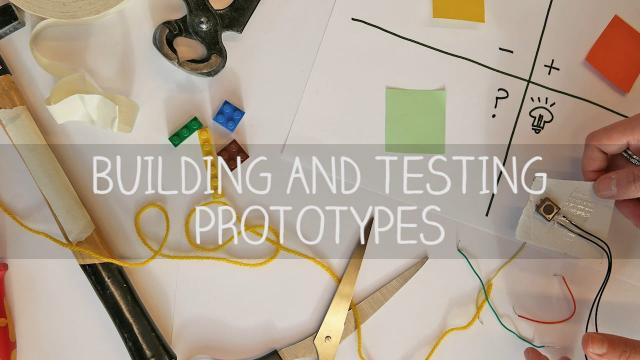
Prototyping and user-testing your at-a-distance communication technologies. Guest speaker case study: Alana-Thorburn Watt- Photographer/Videographer.
Culminating capstone assignment: Applying human-centered tools to prototype a solution for a real-world case study of someone struggling to transform how they work with others from a distance. Guest case study: Leonard Vogt- Interior Designer.

Go to Class
MOOC List is learner-supported. When you buy through links on our site, we may earn an affiliate commission.

Related Courses

Writing, Presenting and Submitting Scientific Papers in English (edX) EdX
Tsinghua University,TsinghuaX

Writing, Presenting and Submitting Scientific Papers in English (edX)

Learn how to properly write a scientific paper, based on international standards, and effectively make a presentation to submit proposals for funding. In this communications course, you will learn how to properly write a paper in English, cite references and give attributions. You will also learn how to choose research topics and write proposals for research funding.

Self Paced
Self-Paced
English for Journalists, Part 1 (edX) EdX
University of California, Berkeley,BerkeleyX

English for Journalists, Part 1 (edX)

Improve your English grammar, vocabulary and writing skills through exciting topics in journalism and world news. English for Journalists offers instruction in English language development for students who are studying journalism, or working journalists who want to improve their English proficiency. Students with a basic understanding and interest in journalism are encouraged to sign up.

Self Paced
Self-Paced
Human Factors in AI (Coursera) Coursera
Duke University

Human Factors in AI (Coursera)

This third and final course of the AI Product Management Specialization by Duke University's Pratt School of Engineering focuses on the critical human factors in developing AI-based products. The course begins with an introduction to human-centered design and the unique elements of user experience design for AI products.

Nov 9th 2026
4 Weeks
eHealth: Combining Psychology, Technology and Health (FutureLearn) FutureLearn
University of Twente

eHealth: Combining Psychology, Technology and Health (FutureLearn)

How can technology make you healthy? Learn about the design, application, implementation and evaluation of eHealth. eHealth refers to the use of technologies to improve well-being, health, and healthcare. It is an umbrella term that captures concepts about the health context, technology, and people. In this free online course, we will provide you with insight into the domain of eHealth, describe methods to develop eHealth, and explain theories that enable behaviour change and facilitate implementation.

Available now
5-12 Weeks
Content Strategy for Professionals: Managing Content (Coursera) Coursera
Northwestern University

Content Strategy for Professionals: Managing Content (Coursera)

In the second course of the Content Strategy Specialization - "Managing Content" - you will dive deeper into Content Strategy by learning some great options for managing your important content once it's been created. You will look at media platforms and how best to tell an organization’s “content story” across those platforms using a human-centered design. Then, you'll take a close look at ways to best utilize social and mobile media, as well as some of the issues around insourcing/outsourcing content.

Sep 9th 2024
3 Weeks
Build Better Products with a Human-Centered Product Backlog (openSAP) OpenSAP
SAP

Build Better Products with a Human-Centered Product Backlog (openSAP)

Join this free online course to learn how to build better products by balancing human needs, business values, and technical feasibilities with a human-centered product backlog. The world is becoming more complex and digital transformation is radically changing people’s lives. This in turn leads to rising expectations for products and services that are expected to help users get their job done – both at work and in their private lives. Hence, product organizations have to change the way they build products.

Jun 21st 2022
4 Weeks
English for Journalists, Part 2 (edX) EdX
University of California, Berkeley,BerkeleyX

English for Journalists, Part 2 (edX)

Improve your English grammar, vocabulary and writing skills through topics in journalism including free speech, sports, humor and broadcast writing. English for Journalists offers instruction in English language development for students who are studying journalism, or working journalists who want to improve their English proficiency. Students with a basic understanding and interest in journalism are encouraged to sign up.

Self Paced
Self-Paced
Human-Centered Design for Work at a Distance: Prototype Solutions (edX) EdX
The University of British Columbia,UBCx

Human-Centered Design for Work at a Distance: Prototype Solutions (edX)

Draw from human-centered design tools learned in Human-Centered Design for Work at a Distance: Toolbox Essentials to identify and solve real-world case studies for individuals reinventing their work at a distance. This course builds on the teachings in Human-Centered Design for Work at a Distance: Toolbox Essentials. It must be completed before enrolling in this course.

Self Paced
Self-Paced
Introduction to the Music Business (edX) EdX
Berklee College of Music,BerkleeX

Introduction to the Music Business (edX)

Learn the latest about the rapidly changing music industry from recording, publishing, and distribution to legal issues confronting music commerce. Three things are clear about today’s music industry: The consumption of music is expanding at the greatest rate in history and from the most portals ever imagined, the cost of producing music is decreasing, and the number of artists creating and seeking to expose their work and develop careers through the Internet has increased dramatically.

Self Paced
Self-Paced