Global Strategy I: How The Global Economy Works (Coursera)

Global Strategy I: How The Global Economy Works (Coursera)

This course seeks to help you understand the forces of globalization and how cross-cultural management and the relationship of a multinational organization to various host countries is becoming more and more critical in today’s global economy. This course begins with the discussion of these issues and global relationships and delves into a deeper understanding of business strategy in today’s global business marketplace.

Class Deals by MOOC List - Click here and see Coursera's Active Discounts, Deals, and Promo Codes.

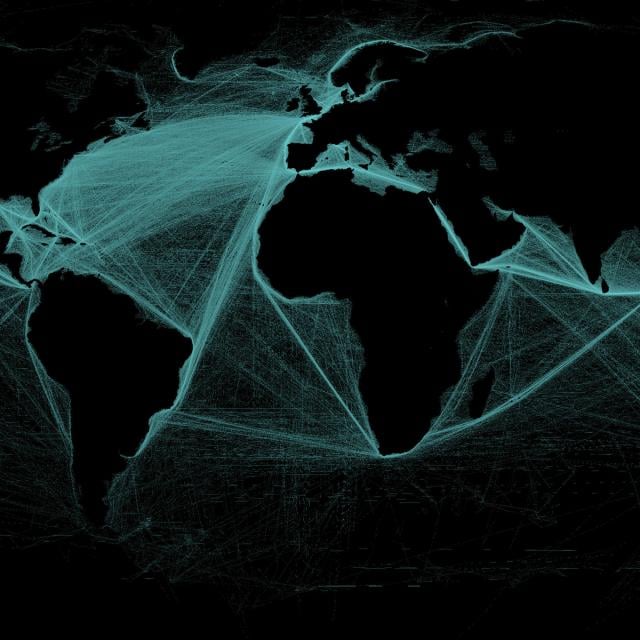
Starting in the late 1990s, “globalization” became a buzzword to describe the apparent integration of markets in the world economy. Many authors and pundits claimed that the world was converging towards a market-friendly democratic place, while gurus and consulting firms were not short of formulae and advice on how to make profits out of the global economy. Decades later, new realities show that globalization does not mean political, cultural, and economic convergence and that forces against it are strong.
Upon successful completion of this course, you will be able to:
• Understand how we got here and why it matters
• Understand the complexities of the current globalization (not all countries are the same)
• Evaluate the effects of international trade regulations on international business
• Evaluate when and why should we operate as multinationals

Course 3 of 7 in the Global Challenges in Business Specialization.

Syllabus

WEEK 1
Course Content
You will become familiar with the course, your classmates, and our learning environment. The orientation will also help you obtain the technical skills required for the course.
How Did We Get Here? Why Does It Matter?
The current global world is not unique nor is it stable. The world has been more globally integrated in the past than in the present times. Many emerging economies are actually re-emerging from a not-so-distant past when they dominated the global economy. An understanding of these processes will allow us to conduct sophisticated analyses of the global economy that take into account political and economic issues as well as historical processes.

WEEK 2
The Big Disappointment: The World Did Not Converge
During the 1990s, many analysts forecasted a global cultural, economic, and political convergence. Reality shows that this did not happen. Business people engaged in global activities need to understand how to analyze the differences between countries. This module provides tools for this type of analysis and ways to determine how they affect businesses.

WEEK 3
Why We Trade and How We Do It
The most basic way by which corporations develop international operations is through trade. These operations are determined by the way nations arrange trade with each other. In this section we explore what determines what and how countries trade with each other, the mechanisms regulating this trade, and the way corporations adapt to them.

WEEK 4
Why Do We Have Multinationals? What Determines the Type of Multinational?
You don’t need to be a multinational to succeed in the business world. In fact, not all successful firms become multinational and not all multinationals are successful. This module explains what the main elements are in determining whether firms become multinational or not, what characteristics they exploit when going abroad, and where their competitive advantage is.


Go to Class
MOOC List is learner-supported. When you buy through links on our site, we may earn an affiliate commission.

Related Courses

Operations Management: Analysis and Improvement Methods (Coursera) Coursera
University of Illinois at Urbana-Champaign

Operations Management: Analysis and Improvement Methods (Coursera)

In this course, you will learn about the role of operations and how they are connected to other business functions in manufacturing- and service-focused organizations. You will learn and practice the use of decision-making frameworks and techniques applicable at all levels, from management-level strategic decisions such as connecting process to the needs of various customer segments, to front-line tactical decisions such as choosing between ordering larger quantities vs. ordering more frequently.

Jun 1st 2026
4 Weeks
Business Growth Strategy (Coursera) Coursera
University of Virginia

Business Growth Strategy (Coursera)

Get the tools you need to analyze, evaluate and recommend specific actions organizations can take to grow their value and avoid common growth pitfalls. In this course, developed at the Darden School of Business at the University of Virginia and taught by top-ranked faculty, you will learn to determine how best to build value, whether by scaling existing markets, entering established markets or creating new markets through innovation and acquisitions.

Jun 1st 2026
4 Weeks
Business Strategy (Coursera) Coursera
University of Illinois at Urbana-Champaign

Business Strategy (Coursera)

In this course you will learn how organizations create, capture, and maintain value, and how it is fundamental for sustainable competitive advantage. You will be able to better understand value creation and capture, and learn the tools to analyze both competition and cooperation from a variety of perspectives, including the industry level (e.g., five forces analysis), and the firm level (e.g., business models and strategic positioning).

Jun 1st 2026
4 Weeks
International Business II (Coursera) Coursera
University of New Mexico

International Business II (Coursera)

This course, Introduction to the Global Business Environment II, focuses on managing organizations in the international economy. Building on Introduction to the Global Business Environment I, this second course focuses on organizational level and management issues in international settings. The course prepares students with practical as well as research-based knowledge and skills necessary to successfully operating an organizational across borders.

Jun 1st 2026
5-12 Weeks
Construction Cost Estimating and Cost Control (Coursera) Coursera
Columbia University

Construction Cost Estimating and Cost Control (Coursera)

This course introduces the types of cost estimation from the conceptual design phase through the more detailed design phase of a construction project. In addition, the course highlights the importance of controlling costs and how to monitor project cash flow. Students will work on a break-even analysis of construction tasks in a project.

Jun 1st 2026
5-12 Weeks
Construction Scheduling (Coursera) Coursera
Columbia University

Construction Scheduling (Coursera)

Learners will discover the key project scheduling techniques and procedures including; how to create a network diagram, how to define the importance of the critical path in a project network, and defining project activities float. Also covered are the fundamentals of Bar Charts, Precedence Diagrams, Activity on Arrow, PERT, Range Estimating, and linear project operations and the line of balance.

Jun 1st 2026
5-12 Weeks
Economics: Society, Markets, and [In]equality (Coursera) Coursera
Parsons School of Design, The New School

Economics: Society, Markets, and [In]equality (Coursera)

Thinking critically about today's economy can help you understand the world around you. Economics: Society, Markets, and [In]equality will pique your curiosity and inspire you to learn more about the power dynamics that determine how people and resources are valued, how goods move around the world, and how we manage our planet and the future.

Jun 6th 2026
5-12 Weeks
Strategy Formulation (Coursera) Coursera
Copenhagen Business School

Strategy Formulation (Coursera)

The purpose of this course is to present, analyze and discuss the different facets of business strategy formulation. Emphasizing that strategy can be seen as a unified theme that provides coherence and direction to the actions and decisions of a firm, we will cover a variety of business strategy topics concerned with firm positioning in the context of different markets, industries and locations.

Jun 1st 2026
5-12 Weeks
América Latina en los cambios internacionales: amenazas y oportunidades. (Coursera) Coursera
Universidad de Chile

América Latina en los cambios internacionales: amenazas y oportunidades. (Coursera)

El curso busca que comprendas y analices la mayor participación de América Latina en la política internacional. Además, te ayudará a conocer el entorno macro-estratégico en el cual se desarrolla la región, incluyendo la dimensión política, económica, cultural, social, además de las nuevas amenazas y oportunidades. El curso entrega un mapa general de las diferencias entre las distintas regiones de América Latina y sus contribuciones en sus políticas exteriores con los centros de poder mundial.

Jun 1st 2026
4 Weeks
Strategy Implementation (Coursera) Coursera
Copenhagen Business School

Strategy Implementation (Coursera)

Even thoroughly developed business strategies may fail if not enough attention is paid to their implementation. This rings particularly true with strategies based on innovation or implemented in complex or fast-changing environments. In the 20th century successful implementation leveraged stability and typically proceeded through hierarchy and control. Today the key is to stay vibrant and able to quickly respond to trends in competition and technology while not losing sight of the strategic objective. In this course we'll build a toolbox of techniques to execute today's business strategies to help them succeed.

Jun 1st 2026
5-12 Weeks
Research kitchen (Coursera) Coursera
Ludwig-Maximilians-Universität München

Research kitchen (Coursera)

The research kitchen is a unique format that we have developed extra for you: curious learners interested in competitive strategy and organization design yearning for a first glimpse into the world of research. It is voluntary and "just for fun" - so please, go on and have a look! Different to other courses of our specialization Competitive Strategy and Organization Design it is comprised of brief paper sessions rather than modules. For a change, you will experience the instructor Tobias Kretschmer at the whiteboard of his very own institute at LMU Munich. Here he will summarize key findings of recent research papers on topics relating to the three courses Competitive Strategy, Advanced Competitive Strategy and Strategic Organization Design. Topics that researchers today are working on to enhance the knowledge of tomorrow. We hope you enjoy this innovative format and possibly even find some inspiration and motivation for your own future research.

Jun 1st 2026
1 Week
Cities are back in town : urban sociology for a globalizing urban world (Coursera) Coursera
Sciences Po

Cities are back in town : urban sociology for a globalizing urban world (Coursera)

Urbanization is reaching a new peak in the contemporary world with the rise of mega cities. Researchers try to make sense of these large urban areas using a variety of concepts. The class will review debates and present social science models of cities to analyse and compare contemporary developments. The class will review debates and present social science models of cities and metropolis to analyse and compare contemporary developments.

Jun 1st 2026
5-12 Weeks