EdX

Genetics: Population Genetics and Human Traits (edX)

Offered by MIT, MITx,
Genetics: Population Genetics and Human Traits (edX)

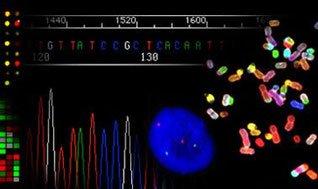
How do we know what we know about heredity? Enhance your scientific thinking and experimental design skills with this in-depth adventure through genetics. This is the third genetics course in a three-part series. Building upon the concepts from biochemistry, genetics, and molecular biology from our 7.00x Introductory Biology MOOC, these genetics courses go to a new level of depth. How do we determine the content of genomes? What can allele frequencies tell us about the genetics of different populations? And why does this matter to human society?

Class Deals by MOOC List - Click here and see EdX's Active Discounts, Deals, and Promo Codes.

Professors Mary Gehring and Olivia Corradin will challenge you to expand your understanding of genetics. You will study the content of genomes, quantitative methods for studying traits, and the impact of genetics on population structures.
We developed the 7.03x Genetics series with an emphasis on:

  • Developing your scientific thinking skills including articulating hypotheses, designing experiments, performing thought experiments, and interpreting data.
  • Using data based on real scientific experiments and highlighting the scientific process in assessments.
  • Demonstrating that biology is an active field that changes daily through examples of research and relevance to medicine, not static information in a textbook.
  • Uniting themes and principles that inform how scientists conduct and interpret research.
  • Implementing the science of learning in the course design.

What you'll learn

  • How to appreciate the applications of genetics to everyday life.
  • How to apply terminology appropriately to concepts in genetics.
  • How to justify the use of specific sequencing methods for answering genetic questions.
  • How to interpret the patterns and driving forces of genetic variation within and between human populations.
  • How to analyze results from genome-wide association studies.
  • How to use a quantitative approach to determine genetic features of different populations.
  • How to explain the impact of genetic tools on human society.

Syllabus

  • Genomes and DNA Sequencing
  • Population Genetics
  • Genetics of Quantitative Traits
  • Human Genetics

Prerequisites:
Undergraduate introductory genetics and and molecular biology (as found in 7.00x Introductory Biology, 7.03.1x Genetics, 7.03.2x Genetics)

Go to Class
MOOC List is learner-supported. When you buy through links on our site, we may earn an affiliate commission.

Related Courses

Useful Genetics, Part 2: Genes and Genetic Inheritance (edX) EdX
The University of British Columbia,UBCx

Useful Genetics, Part 2: Genes and Genetic Inheritance (edX)

Learn how genes are inherited and how they affect important personal and societal issues. Genetics permeates every aspect of the 21st century, from our doctors' offices to our judicial systems. By the end of this course, you’ll be well prepared to deal with both today’s genetic issues and new questions that are sure to arise in the future.

No sessions available
5-12 Weeks
Introduction to Statistical Methods for Gene Mapping (edX) EdX
Kyoto University,KyotoUx

Introduction to Statistical Methods for Gene Mapping (edX)

Learn about statistical methods used to identify genetic variants responsible for phenotypes. This data course is a primer to statistical genetics and covers an approach called linkage disequilibrium mapping, which analyzes non-familial data and has been successfully used to identify genetic variants associated with common and complex genetic traits.

This course is archived
4 Weeks
Cell Biology: Transport (edX) EdX
MIT,MITx

Cell Biology: Transport (edX)

How do we know what we know about cells? Enhance your scientific thinking and data analysis skills with this in-depth adventure through cell biology. This is the first cell biology course in a four-part series. How do we know what we know about cells at a molecular level and how can we use that knowledge to design experiments to test hypotheses in cell biology?

Feb 8th 2022
5-12 Weeks
AP® Psychology - Course 2: How the Brain Works (edX) EdX
The University of British Columbia,UBCx

AP® Psychology - Course 2: How the Brain Works (edX)

Learn how your brain works and the basics of neuroscience, genetics and consciousness. This psychology course will show you how the brain works. You will learn the basics of neuroscience, genetics and evolutionary psychology. We will also cover the visual system and other sensory systems. The course concludes with coverage of the variety of states of consciousness.

No session available
5-12 Weeks
Tropical Coastal Ecosystems (edX) EdX
University of Queensland,UQx

Tropical Coastal Ecosystems (edX)

Take the challenge and understand problems and solutions to managing tropical coastal ecosystems. Do you want to develop the skills and knowledge needed to help preserve tropical coastal ecosystems? These habitats provide goods and services for hundreds of millions of people but human activities have led to their global decline.

Self Paced
Self-Paced
Super-Earths And Life (edX) EdX
HarvardX,Harvard University

Super-Earths And Life (edX)

Learn about the Earth, life, and how we can search for life elsewhere in the universe. Are we alone in this universe? What new information and observations on exoplanets have we discovered? In the past decade, astronomers have made incredible advances in the discovery of planets outside our solar system. Thirty years ago, we knew only of the planets in our own solar system. Now we know of thousands circling nearby stars.

Self Paced
Self-Paced
Cell Biology: Mitochondria (edX) EdX
HarvardX,Harvard University

Cell Biology: Mitochondria (edX)

A human-centered approach to the fundamentals of cell biology with a focus on the power plants of the cell - mitochondria. The cell is a powerful case study to help us explore the functional logic of living systems. All organisms, from single-celled algae to complex multicellular organisms like us, are made up of cells. In this course, you will learn the how and why of biology by exploring the function of the molecular components of cells, and how these cellular components are organized in a complex hierarchy.

Self Paced
Self-Paced
Nutrition and Health: Macronutrients and Overnutrition (edX) EdX
Wageningen University,WageningenX

Nutrition and Health: Macronutrients and Overnutrition (edX)

Learn the fundamentals of nutrition and its impact on human health. There is an overload of information about nutrition and health, but what is the truth and what can you do to improve the health of your patients? Learn more about nutrition and how our diet profoundly impacts our current and future health. This course addresses the relationship between nutrition and human health, with a focus on health problems related to overnutrition.

Self Paced
Self-Paced