EdX

Genetics: Analysis and Applications (edX)

Offered by MIT, MITx,
Genetics: Analysis and Applications (edX)

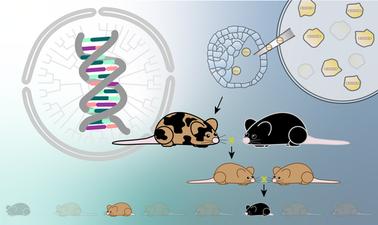
How do we know what we know about heredity? Enhance your scientific thinking and experimental design skills with this in-depth adventure through genetics. This is the second genetics course in a three-part series. Building upon the concepts from biochemistry, genetics, and molecular biology from our 7.00x Introductory Biology MOOC, these genetics courses go to a new level of depth.

Class Deals by MOOC List - Click here and see EdX's Active Discounts, Deals, and Promo Codes.

What are different types of genetic changes? How do nature and scientists create these genetic variations? How do we design and perform analyses to identify the genetic basis of a trait or disease?
Professors Peter Reddien and Mary Gehring will challenge you to expand your understanding of genetics. You will study the variety of genetic changes, different approaches to genetic analyses, and the impact of genetics on development and behavior.
We developed the 7.03x Genetics series with an emphasis on:

  • Developing your scientific thinking skills including articulating hypotheses, designing experiments, performing thought experiments, and interpreting data.
  • Using data based on real scientific experiments and highlighting the scientific process in assessments.
  • Asserting that biology is an active field that changes daily through examples of research and relevance to medicine, not static information in a textbook.
  • Uniting themes and principles that inform how scientists conduct and interpret research.
  • Implementing the science of learning in the course design.

Prerequisites:

Go to Class
MOOC List is learner-supported. When you buy through links on our site, we may earn an affiliate commission.

Related Courses

Introduction to Genetics and Evolution (Coursera) Coursera
Duke University

Introduction to Genetics and Evolution (Coursera)

Introduction to Genetics and Evolution is a college-level class being offered simultaneously to new students at Duke University. The course gives interested people a very basic overview of some principles behind these very fundamental areas of biology. We often hear about new "genome sequences," commercial kits that can tell you about your ancestry (including pre-human) from your DNA or disease predispositions, debates about the truth of evolution, why animals behave the way they do, and how people found "genetic evidence for natural selection." This course provides the basic biology you need to understand all of these issues better, tries to clarify some misconceptions, and tries to prepare students for future, more advanced coursework in Biology (and especially evolutionary genetics). No prior coursework is assumed.

Aug 3rd 2026
5-12 Weeks
Understanding Plants - Part I: What a Plant Knows (Coursera) Coursera
Tel Aviv University

Understanding Plants - Part I: What a Plant Knows (Coursera)

For centuries we have collectively marveled at plant diversity and form—from Charles Darwin’s early fascination with stems and flowers to Seymour Krelborn’s distorted doting in Little Shop of Horrors. This course intends to present an intriguing and scientifically valid look at how plants themselves experience the world—from the colors they see to the sensations they feel. Highlighting the latest research in genetics and more, we will delve into the inner lives of plants and draw parallels with the human senses to reveal that we have much more in common with sunflowers and oak trees than we may realize.

Aug 3rd 2026
5-12 Weeks
Genomic Medicine Gets Personal (edX) EdX
Georgetown University,GeorgetownX

Genomic Medicine Gets Personal (edX)

This course will provide an introduction to genomic medicine and a better understanding of the issues associated with personal genomic information. While the advances in genomics promise to usher a new era in medical practice and create a major paradigm shift in patient care, the ethical, legal and social impact of genomic medicine will be equally significant. The information and potential use of genomic discoveries are no longer issues left for scientists and medical professionals to handle, but have become ones for the public at large.

No sessions available
4 Weeks
Genetic Models for Animal Breeding (edX) EdX
Wageningen University,WageningenX

Genetic Models for Animal Breeding (edX)

Understand the genetic and statistic principles that enable responsible animal breeding. Animal breeding involves the selective breeding of domestic animals with the intention to improve desirable (and heritable) qualities in the next generation. This course introduces the steps required to design a program for breeding animals and teaches the genetic and statistical concepts that are needed to build a solid breeding program.

Self Paced
Self-Paced
Algorithms and Data Structures Capstone (edX) EdX
University of California, San Diego,UC San DiegoX

Algorithms and Data Structures Capstone (edX)

Synthesize your knowledge of algorithms and biology to build your own software for solving a biological challenge. Building a fully-fledged algorithm to assemble genomes from DNA fragments on a real dataset is an enormous challenge with major demand in the multi-billion dollar biotech industry. In this capstone project, we will take the training wheels off and let you design your own optimized software program for genome sequencing.

Self Paced
Self-Paced
Analyze your Genome! (edX) EdX
University of California, San Diego,UC San DiegoX

Analyze your Genome! (edX)

Learn how to use existing tools and pipelines to analyze next generation sequencing (NGS) data. Are you interested in analyzing biological datasets but don’t have a strong computational background? Do you want to focus on the biology and learn how to use modern best-practice pipelines that use existing tools? This introductory course, geared towards non-computational biologists, will introduce a specific biological problem each week centered around next generation sequencing and teach you how to use Illumina’s BaseSpace platform to run workflows conveniently and in a user-friendly manner.

No sessions available
4 Weeks
Lo que todos deberían saber del Genoma Humano (edX) EdX
The Pontificia Universidad Javeriana,JaverianaX

Lo que todos deberían saber del Genoma Humano (edX)

En este MOOC introductorio al conocimiento del genoma humano, aprenderá acerca de la estructura, función y aplicación básica del genoma humano en la investigación biomédica actual. ¿Ha escuchado muchas cosas sobre el genoma humano, pero desea entender los aspectos básicos que lo describen o lo explican? ¡Este es un curso para usted! Reconozca de forma amigable las generalidades del genoma humano, y sobre todo el impacto de su estudio.

No sessions available
5-12 Weeks
Neuroscience Reconstructed: Genetics and Development (edX) EdX
École Polytechnique Fédérale de Lausanne,EPFLx

Neuroscience Reconstructed: Genetics and Development (edX)

This course will cover the basic concepts in neurogenetics; introduce the fields of genomics, transcriptomics, translatomics; classical and cutting-edge experimental approaches; and how integrative simulation can be used to derive biological meaning from genetics data and build bridges from genetics all the way to behaviour.

Self Paced
Self-Paced
Useful Genetics, Part 2: Genes and Genetic Inheritance (edX) EdX
The University of British Columbia,UBCx

Useful Genetics, Part 2: Genes and Genetic Inheritance (edX)

Learn how genes are inherited and how they affect important personal and societal issues. Genetics permeates every aspect of the 21st century, from our doctors' offices to our judicial systems. By the end of this course, you’ll be well prepared to deal with both today’s genetic issues and new questions that are sure to arise in the future.

No sessions available
5-12 Weeks
Introduction to Statistical Methods for Gene Mapping (edX) EdX
Kyoto University,KyotoUx

Introduction to Statistical Methods for Gene Mapping (edX)

Learn about statistical methods used to identify genetic variants responsible for phenotypes. This data course is a primer to statistical genetics and covers an approach called linkage disequilibrium mapping, which analyzes non-familial data and has been successfully used to identify genetic variants associated with common and complex genetic traits.

This course is archived
4 Weeks