EdX

Proteins: Biology's Workforce (edX)

Offered by Rice University, RiceX,
Proteins: Biology's Workforce (edX)

Learn how the protein you eat keeps you alive and healthy by powering key functions from metabolism to DNA replication. Protein is found in virtually every part of your body. At least 10,000 different proteins make you what you are and keep you that way. In this biology course you will learn how proteins drive almost all living processes.

Class Deals by MOOC List - Click here and see EdX's Active Discounts, Deals, and Promo Codes.

Proteins manufactured by cells perform a broad range of essential functions — the molecular workforce of living organisms.
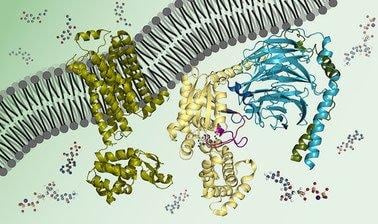
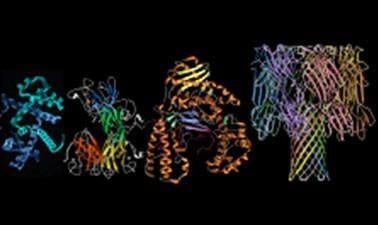
You will learn how proteins are the cellular manifestation of genetic information. They are assembled into a polymeric structure from monomers derived in part from components in our diet. Proteins catalyze metabolic reactions, replicate DNA, respond to stimuli, provide movement, and much more. Using video lectures, articles, case studies, and molecular models, we will explore how proteins are constructed, how they fold into 3-dimensional shapes, the kinds of bonds that hold these folded structures together, and the immense range of roles that proteins assume ‑ from structural proteins found in muscle to catalysts for cellular chemical reactions.
Purification and characterization are essential to understand protein structure and function, and we will identify a variety of methods to uncover how these tiny machines drive almost all living processes.

What you'll learn:

  • How proteins are structured and fold into functional forms
  • The variety of functions that proteins perform, including enzyme catalysis
  • How to purify, analyze, and characterize protein structure and function

Syllabus

Lecture 1: Protein Structure
Introduction tocentral concepts important for understanding biological molecules, components of proteins, and discovering how these components determine a protein's active, dynamic form.

Lecture 2: Protein Function
Examination of structure and function of the various classes of proteins, how shape determines function, how binding small molecules is important for function, and the nature of transport proteins that move materials

Lecture 3: Protein Function and Purification
Exploration of the dynamic nature and exquisite specificity of enzymes and the methods that can be used to purify a specific protein.

Lecture 4: Protein Characterization
Understanding methods that determine protein concentration, assess molecular weight, determine structure, and identify contribution to cell function.
Go to Class
MOOC List is learner-supported. When you buy through links on our site, we may earn an affiliate commission.

Related Courses

Tropical Coastal Ecosystems (edX) EdX
University of Queensland,UQx

Tropical Coastal Ecosystems (edX)

Take the challenge and understand problems and solutions to managing tropical coastal ecosystems. Do you want to develop the skills and knowledge needed to help preserve tropical coastal ecosystems? These habitats provide goods and services for hundreds of millions of people but human activities have led to their global decline.

Self Paced
Self-Paced
Specialized Cells (edX) EdX
University of Queensland,UQx

Specialized Cells (edX)

An introduction to cell physiology. Learn how specialized cells perform specific functions. The human body is composed of trillions of cells working together to perform essential body functions. Cells operate in a regulated internal environment, with different types of cells having unique properties suited to their specific functions. In this course we will dive into the complex world of human physiology, starting at the cellular level.

May 31st 2022
5-12 Weeks
The Chemistry of Life (edX) EdX
Kyoto University,KyotoUx

The Chemistry of Life (edX)

Learn how to generate ideas at the interface between chemistry and biology. Chemistry and biology are traditionally taught as separate subjects at the high school level, where students memorize fundamental scientific principles that are universally accepted. However, at the university level and in industry, we learn that science is not as simple as we once thought. We are constantly confronted by questions about the unknown and required to use creative, integrated approaches to solve these problems.

Self Paced
Self-Paced
Cell Biology: Transport (edX) EdX
MIT,MITx

Cell Biology: Transport (edX)

How do we know what we know about cells? Enhance your scientific thinking and data analysis skills with this in-depth adventure through cell biology. This is the first cell biology course in a four-part series. How do we know what we know about cells at a molecular level and how can we use that knowledge to design experiments to test hypotheses in cell biology?

Feb 8th 2022
5-12 Weeks
AP® Biology - Part 2: Genetics (edX) EdX
Rice University,RiceX

AP® Biology - Part 2: Genetics (edX)

The second course in a comprehensive series designed to prepare you for the AP Biology exam, focusing on genetics and DNA. Preparing for the AP Biology exam requires a deep understanding of many different topics in biology as well as an understanding of the format of the AP exam and the types of questions it asks. This course is Part 2 of the AP Biology series designed to prepare you for the AP Biology exam.

No sessions available
5-12 Weeks
Global Warming Science (edX) EdX
MIT,MITx

Global Warming Science (edX)

Learn about the physics, chemistry, biology, and geology of the earth’s climate system. Global Warming Science teaches you about the risks and uncertainties of future climate change by examining the science behind the earth’s climate. You will be able to answer such questions as, “What is the Greenhouse Effect?” and “How and why has earth’s climate changed through geologic history?”

No sessions available
13-24 Weeks
Genomic Medicine Gets Personal (edX) EdX
Georgetown University,GeorgetownX

Genomic Medicine Gets Personal (edX)

This course will provide an introduction to genomic medicine and a better understanding of the issues associated with personal genomic information. While the advances in genomics promise to usher a new era in medical practice and create a major paradigm shift in patient care, the ethical, legal and social impact of genomic medicine will be equally significant. The information and potential use of genomic discoveries are no longer issues left for scientists and medical professionals to handle, but have become ones for the public at large.

No sessions available
4 Weeks
Fundamentals of Neuroscience, Part 2: Neurons and Networks (edX) EdX
HarvardX,Harvard University

Fundamentals of Neuroscience, Part 2: Neurons and Networks (edX)

Discover what makes your brain tick in this second part of a four-part introductory series in Neuroscience. Neurons in isolation are fascinating and complicated, but the real magic of neuroscience happens in the interaction between neurons. In this course, we examine how neurons pass signals to one another and how complex dynamics can result from just a few neurons arranged in relatively simple circuits.

Self Paced
Self-Paced