EdX

Introduction to Bioconductor (edX)

Introduction to Bioconductor (edX)

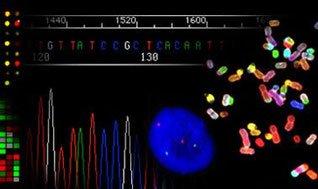
The structure, annotation, normalization, and interpretation of genome scale assays. We begin with an introduction to the biology, explaining what we measure and why. Then we focus on the two main measurement technologies: next generation sequencing and microarrays. We then move on to describing how raw data and experimental information are imported into R and how we use Bioconductor classes to organize these data, whether generated locally, or harvested from public repositories or institutional archives.

Class Deals by MOOC List - Click here and see EdX's Active Discounts, Deals, and Promo Codes.

Genomic features are generally identified using intervals in genomic coordinates, and highly efficient algorithms for computing with genomic intervals will be examined in detail. Statistical methods for testing gene-centric or pathway-centric hypotheses with genome-scale data are found in packages such as limma, some of these techniques will be illustrated in lectures and labs.

Given the diversity in educational background of our students we have divided the series into seven parts. You can take the entire series or individual courses that interest you. If you are a statistician you should consider skipping the first two or three courses, similarly, if you are biologists you should consider skipping some of the introductory biology lectures. Note that the statistics and programming aspects of the class ramp up in difficulty relatively quickly across the first three courses. By the third course will be teaching advanced statistical concepts such as hierarchical models and by the fourth advanced software engineering skills, such as parallel computing and reproducible research concepts.
This course is part of the Data Analysis for Genomics Professional Certificate.

These courses make up two Professional Certificates and are self-paced:
Data Analysis for Life Sciences:
PH525.1x: Statistics and R for the Life Sciences
PH525.2x: Introduction to Linear Models and Matrix Algebra
PH525.3x: Statistical Inference and Modeling for High-throughput Experiments
PH525.4x: High-Dimensional Data Analysis
Genomics Data Analysis:
PH525.5x: Introduction to Bioconductor
PH525.6x: Case Studies in Functional Genomics
PH525.7x: Advanced Bioconductor

What you'll learn

  • What we measure with high-throughput technologies and why
  • Introduction to high-throughput technologies

. Next Generation Sequencing
. Microarrays

  • Preprocessing and Normalization
  • The Bioconductor Genomic Ranges Utilities
  • Genomic Annotation

Prerequisites:
Statistical Inference and Modeling for High-throughput Experiments
High-Dimensional Data Analysis

Go to Class
MOOC List is learner-supported. When you buy through links on our site, we may earn an affiliate commission.

Related Courses

Neuroscience Reconstructed: Genetics and Development (edX) EdX
École Polytechnique Fédérale de Lausanne,EPFLx

Neuroscience Reconstructed: Genetics and Development (edX)

This course will cover the basic concepts in neurogenetics; introduce the fields of genomics, transcriptomics, translatomics; classical and cutting-edge experimental approaches; and how integrative simulation can be used to derive biological meaning from genetics data and build bridges from genetics all the way to behaviour.

Self Paced
Self-Paced
Data Visualization for Genome Biology (Coursera) Coursera
University of Toronto

Data Visualization for Genome Biology (Coursera)

The past decade has seen a vast increase in the amount of data available to biologists, driven by the dramatic decrease in cost and concomitant rise in throughput of various next-generation sequencing technologies, such that a project unimaginable 10 years ago was recently proposed, the Earth BioGenomes Project, which aims to sequence the genomes of all eukaryotic species on the planet within the next 10 years. So while data are no longer limiting, accessing and interpreting those data has become a bottleneck. One important aspect of interpreting data is data visualization. This course introduces theoretical topics in data visualization through mini-lectures, and applied aspects in the form of hands-on labs.

Sep 21st 2026
5-12 Weeks
Metagenómica y sus principales aplicaciones (edX) EdX
The Pontificia Universidad Javeriana,JaverianaX

Metagenómica y sus principales aplicaciones (edX)

En este curso, los participantes podrán reconocer las aplicaciones que tiene la metagenómica partiendo de la identificación de las estrategias de trabajo de esta ciencia omica y los campos de aplicación que esta puede tener, para entender la importancia de desarrollar estudios metagenómicos que impacten en las ciencias biológicas.

No session available
5-12 Weeks
Введение в биоинформатику (Introduction to Bioinformatics) (Coursera) Coursera
Saint Petersburg State University

Введение в биоинформатику (Introduction to Bioinformatics) (Coursera)

Курс «Введение в биоинформатику» адресован тем, кто хочет получить расширенное представление о том, что такое биоинформатика и как она помогает биологам и медикам в их работе. The course is aimed at those who would like to have a better idea of what bioinformatics is and how it helps biologists and medical scientists in research and clinical work.

Sep 21st 2026
5-12 Weeks
Bioinformatic Methods I (Coursera) Coursera
University of Toronto

Bioinformatic Methods I (Coursera)

Large-scale biology projects such as the sequencing of the human genome and gene expression surveys using RNA-seq, microarrays and other technologies have created a wealth of data for biologists. However, the challenge facing scientists is analyzing and even accessing these data to extract useful information pertaining to the system being studied. This course focuses on employing existing bioinformatic resources – mainly web-based programs and databases – to access the wealth of data to answer questions relevant to the average biologist, and is highly hands-on.

Sep 21st 2026
5-12 Weeks
Analyze your Genome! (edX) EdX
University of California, San Diego,UC San DiegoX

Analyze your Genome! (edX)

Learn how to use existing tools and pipelines to analyze next generation sequencing (NGS) data. Are you interested in analyzing biological datasets but don’t have a strong computational background? Do you want to focus on the biology and learn how to use modern best-practice pipelines that use existing tools? This introductory course, geared towards non-computational biologists, will introduce a specific biological problem each week centered around next generation sequencing and teach you how to use Illumina’s BaseSpace platform to run workflows conveniently and in a user-friendly manner.

No sessions available
4 Weeks
Lo que todos deberían saber del Genoma Humano (edX) EdX
The Pontificia Universidad Javeriana,JaverianaX

Lo que todos deberían saber del Genoma Humano (edX)

En este MOOC introductorio al conocimiento del genoma humano, aprenderá acerca de la estructura, función y aplicación básica del genoma humano en la investigación biomédica actual. ¿Ha escuchado muchas cosas sobre el genoma humano, pero desea entender los aspectos básicos que lo describen o lo explican? ¡Este es un curso para usted! Reconozca de forma amigable las generalidades del genoma humano, y sobre todo el impacto de su estudio.

No sessions available
5-12 Weeks
Bioinformatics: Introduction and Methods 生物信息学: 导论与方法 (Coursera) Coursera
Peking University

Bioinformatics: Introduction and Methods 生物信息学: 导论与方法 (Coursera)

A big welcome to “Bioinformatics: Introduction and Methods” from Peking University! In this MOOC you will become familiar with the concepts and computational methods in the exciting interdisciplinary field of bioinformatics and their applications in biology, the knowledge and skills in bioinformatics you acquired will help you in your future study and research.

Sep 14th 2026
13-24 Weeks
Principles, Statistical and Computational Tools for Reproducible Science (edX) EdX
HarvardX,Harvard University

Principles, Statistical and Computational Tools for Reproducible Science (edX)

Learn skills and tools that support data science and reproducible research, to ensure you can trust your own research results, reproduce them yourself, and communicate them to others. Today the principles and techniques of reproducible research are more important than ever, across diverse disciplines from astrophysics to political science. No one wants to do research that can’t be reproduced. Thus, this course is really for anyone who is doing any data intensive research. While many of us come from a biomedical background, this course is for a broad audience of data scientists.

Self Paced
Self-Paced
Genetics: Analysis and Applications (edX) EdX
MIT,MITx

Genetics: Analysis and Applications (edX)

How do we know what we know about heredity? Enhance your scientific thinking and experimental design skills with this in-depth adventure through genetics. This is the second genetics course in a three-part series. Building upon the concepts from biochemistry, genetics, and molecular biology from our 7.00x Introductory Biology MOOC, these genetics courses go to a new level of depth.

Self Paced
Self-Paced