EdX

Fundamentos de la Investigación Científica (edX)

Fundamentos de la Investigación Científica (edX)

Evalúa las principales posturas respecto al problema de la verdad, cómo saber si un conocimiento es verdadero, qué criterios se emplean para tal efecto, qué diferencia hay entre la certeza y la verdad, ¿todo conocimiento científico es verdadero? Una de las preguntas más importantes e ineludibles de la existencia humana es la referente a la verdad de nuestros conocimientos. Las personas, las organizaciones y las disciplinas científicas coinciden en indagar la validez de sus convicciones, premisas y supuestos.

Class Deals by MOOC List - Click here and see EdX's Active Discounts, Deals, and Promo Codes.

A lo largo de la historia del pensamiento la pregunta por la verdad se ha manifestado de diversas formas, así mismo las respuestas que se han dado varían y en no pocas ocasiones se contraponen.
Toda disciplina académica o científica emplea una serie de métodos tanto para aproximarse a su objeto de estudio como para corroborar la veracidad de sus planteamientos respecto de la realidad que estudia.
La epistemología es la disciplina que estudia la estructura, supuestos y validez del conocimento humano.
En este curso evaluaremos el origen, fundamentos y estructura de los distintos métodos de investigación y especialmente elaboraremos una valoración critica de la validez.
Haremos un recorrido histórico y a la vez sincrónico de las principales teorías epistemológicas, esto es, aquellas que se presentaron en un singular momento histórico y la evolución y repercusión que están teniendo en la actualidad.
Analizaremos la manera como la mente humana conoce la realidad y los criterios que empleamos para discernir la verdad de la falsedad.
Identificaremos los distintos estados de la mente que cada uno tenemos ante distintas realidades y los evaluaremos.

What you'll learn

  • Las principales respuestas que al problema de la verdad se han dado.
  • Las repercusiones que en el modo de vida de las personas y las organizaciones tienen las distintas posturas epistemológicas.
  • El origen de la situación actual (postmodernidad), sus implicaciones y los retos que ello genera para el desarrollo científico y de la persona.
  • Los fundamentos epistemológicos de las disciplinas científicas
  • La perspectiva epistemológica que cada participante compartimos.
  • La formación de un criterio realista que permita evaluar los postulados de las disciplinas científicas y los saberes cotidianos.

Syllabus

Semana 1: El hombre y su realidad
Durante la primera semana analizarás la epistemología platónica y su repercusión en la historia del pensamiento. Construirás una noción de epistemología y evaluarás el origen, fundamentos y validez del racionalismo e idealismo.
Semana 2: Posturas sobre el conocimiento
Valorarás críticamente las perspectivas empiristas, racionalistas y criticistas del conocimiento, especialmente sus equivalencias y discidencias.
Semana 3: Posturas sobre la realidad
Valorarás críticamente las perspectivas realistas, idealistas y dialécticas del conocimiento, especialmente sus equivalencias y disidencias. Además, evaluarás la perspectiva epistemológica del existencialismo y su influencia en el personalismo.
Semana 4: Conocimiento y ciencia
Por último, evaluarás críticamente la validez del conocimiento científico. Evaluarás críticamente las posturas epistemológicas, su influencia y aplicación de Popper, Kuhn, Lakatos, Fayerabend, Morin, entre otros. Elaborarás una noción de ciencia y conocerás los fundamentos epistemológicos del pensamiento complejo.
Go to Class
MOOC List is learner-supported. When you buy through links on our site, we may earn an affiliate commission.

Related Courses

Finding Purpose Across Your Life (edX) EdX
BerkeleyX,Berkeley College

Finding Purpose Across Your Life (edX)

Learn research-based techniques to hone your sense of purpose throughout life’s challenges and transitions. Leading scientists and educators will inspire you to connect with what brings meaning to your life and give you practical strategies to find or rediscover it, no matter what stage of life you’re in.

Self Paced
Self-Paced
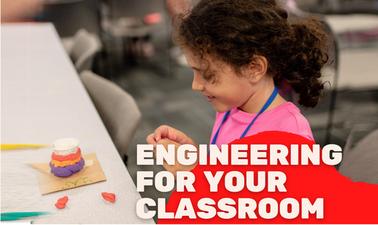
Engineering for Your Classroom K – 3 (edX) EdX
The University of British Columbia,UBCx

Engineering for Your Classroom K – 3 (edX)

Self-paced, asynchronous course aimed to help educators introduce Science, Math, Engineering and Technology (STEM) concepts to K-3 students. This course is designed for educators to learn about ways to teach Engineering and STEM concepts to their students through fun, hands-on activities.

Self Paced
Self-Paced
Backyard Meteorology: The Science of Weather (edX) EdX
HarvardX,Harvard University

Backyard Meteorology: The Science of Weather (edX)

Learn to forecast the weather just by looking out your window. The weather forecasts we see every day are based on an army of meteorological sensing networks and intensive computer modeling. Before the rise of these technologies, predictions were made by methods like discerning cloud formations and wind directions.

Self Paced
Self-Paced
That's So Meta(cognitive)! (edX) EdX
Smithsonian,SmithsonianX

That's So Meta(cognitive)! (edX)

That’s so Meta(cognitive)! — investigates how explicitly teaching students metacognitive strategies helps them become more effective learners, able to integrate knowledge rather than just memorize isolated science facts and definitions.

Self Paced
Self-Paced
Drawing Nature, Science and Culture: Natural History Illustration 101 (edX) EdX
The University of Newcastle, Australia,NewcastleX

Drawing Nature, Science and Culture: Natural History Illustration 101 (edX)

Learn how to see and draw nature like an illustrator. Build observational and visual interpretation skills in an interactive and enjoyable way. Whether an aspiring scientific or medical illustrator or someone who enjoys drawing nature’s wonders, this first-of-its-kind MOOC course is for you. The field of Natural History Illustration is about observing and illustrating subjects from nature, science and culture, with their linkages to the environment being central.

Feb 22nd 2023
5-12 Weeks
Dentistry & Human Life (edX) EdX
Seoul National University,SNUx

Dentistry & Human Life (edX)

An introductory lecture on dentistry as a science and life culture. Have fun learning about the history, story, and science of dentistry that are closely related to our lives. The course “Dentistry and Human Life” is composed of 8 introductory lectures on dentistry. The Dentistry is the discipline of convergence applications, often summarized as art and science. In this course, you can learn basic but diverse perspectives of dentistry as a science and life cultures.

Self Paced
Self-Paced
The Science and Business of Biotechnology (edX) EdX
MIT,MITx

The Science and Business of Biotechnology (edX)

Explore the latest scientific innovations in biotechnology, and novel business and financing models for commercializing them. This course focuses on early-stage biotechnology companies, with particular emphasis on understanding the underlying science, technology, and disease targets—together with the application of novel business structures and financing methods—to facilitate drug discovery, clinical development, and greater patient access to new therapies.

Self Paced
Self-Paced
Psychological Influences on Decision Making (edX) EdX
American Psychological Association,APA

Psychological Influences on Decision Making (edX)

The goal of this course is to introduce you to the many psychological influences on decision making. Knowing more about the cognitive and social psychological factors underlying decision making will help you make more informed decisions and help you analyze how other people make decisions. If you are an employee, this course can help you understand how your supervisor makes decisions and how you can affect those decisions. If you are a parent, the course can help you better understand the factors that affect your children’s decision making and perhaps how you can shape it. The goal is to help you better understand your own decisions and the decisions of others.

Self Paced
Self-Paced
Quantum Mechanics for Scientists and Engineers 2 (edX) EdX
StanfordOnline

Quantum Mechanics for Scientists and Engineers 2 (edX)

This course covers key topics in the use of quantum mechanics in many modern applications in science and technology, introduces core advanced concepts such as spin, identical particles, the quantum mechanics of light, the basics of quantum information, and the interpretation of quantum mechanics, and covers the major ways in which quantum mechanics is written and used in modern practice.

Self Paced
Self-Paced